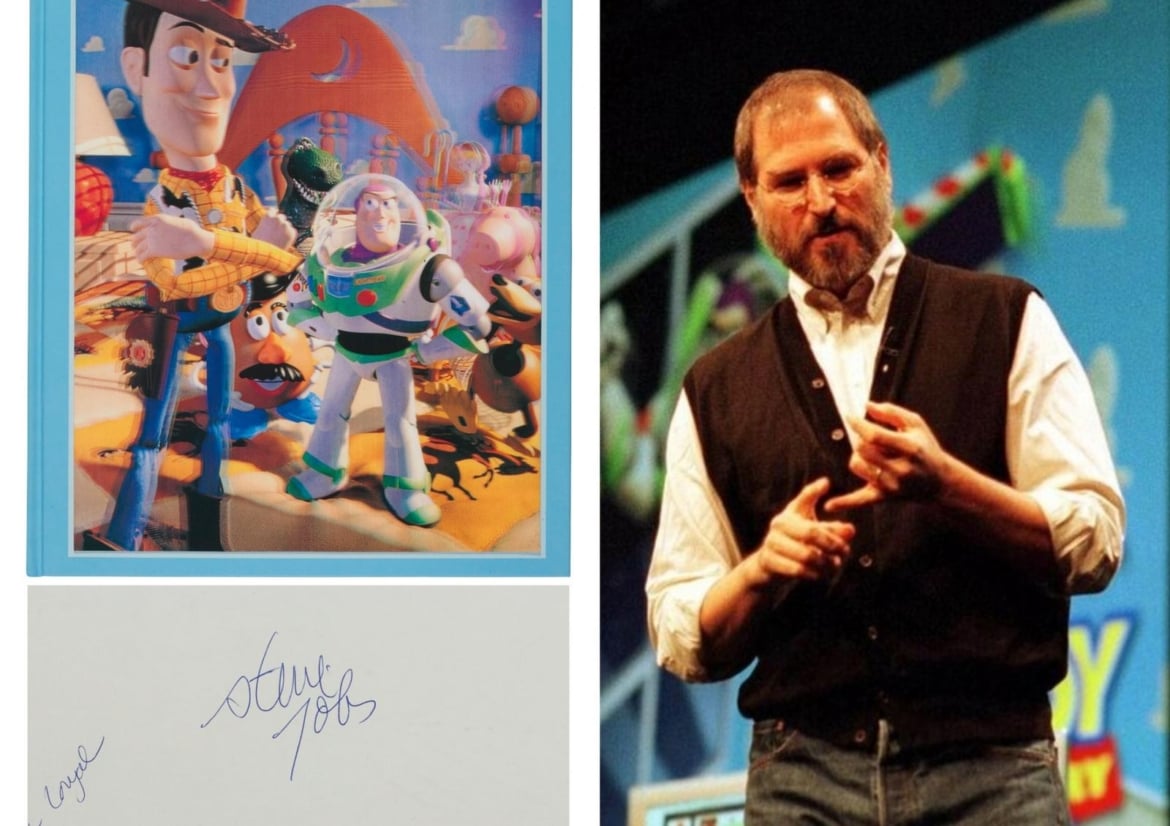
A rare piece of Pixar history is about to change hands, and it carries the signatures of two men who turned a fragile experiment into a cultural and financial juggernaut. A first edition copy of Toy Story: The Art and Making of the Animated Film, signed by Steve Jobs and John Lasseter, is heading to auction with a starting bid of $20,000, a figure that feels less like a price tag and more like an opening move in what could become a closely watched bidding contest among serious collectors.

The book itself is not just a collectible tied to Toy Story; it is a snapshot of a moment when Pixar stood on the edge of something far larger than anyone in Hollywood fully understood. Jobs’ signature represents the relentless financial backing that kept the company alive through years of uncertainty, while Lasseter’s name captures the creative conviction that made the film possible in the first place. Together, they transform a beautifully produced companion book into a tangible artifact from one of the most improbable success stories in modern entertainment.

What makes this offering more compelling is its provenance, which traces back to a software developer who worked on the film during production. That detail anchors the book inside Pixar’s own walls during its most formative period, long before the studio became a dominant force under the Apple founder’s watchful eye and eventual strategic alignment with Disney. For collectors, authenticity is everything, and this kind of direct lineage is difficult to replicate and even harder to dispute.

The timing of the book’s release adds another layer of significance. Published in November 1995, it arrived just days before the film’s premiere and within the same month as the Pixar IPO, a sequence that would redefine Jobs’ career and reshape the animation industry overnight. The IPO transformed Pixar from a cash-hungry studio into a market sensation, and it turned Jobs into a billionaire, validating nearly a decade of persistence that often looked, from the outside, like stubbornness bordering on folly.

That tension between risk and reward is what gives this book its real weight. By the time Toy Story reached theaters, Jobs had already poured tens of millions of dollars into Pixar to keep it afloat, navigating failed deals and near shutdowns that could have erased the company entirely. The signatures inside this volume, therefore, mark more than authorship or approval; they represent survival, belief, and the precise moment when a long shot finally paid off.

The piece will go under the hammer on April 30, 2026, through Nate D. Sanders Auctions, where bidding is set to open at $20,000. However, the final price will likely reflect more than condition or scarcity. It will measure how much value collectors place on owning a fragment of the story that turned Pixar into a powerhouse and cemented Jobs’ legacy far beyond the confines of Silicon Valley.