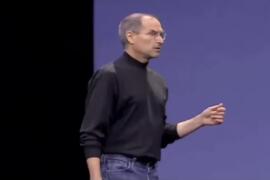
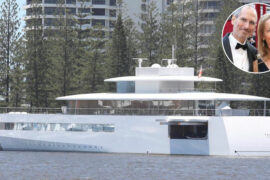
When people think of Steve Jobs’s fortune, the reflex is to connect it to Apple. The iMac, iPod, and iPhone are synonymous with his name. Yet the counterintuitive truth is that Apple was not the company that made him a billionaire. That distinction belongs to Pixar, a small animation studio Jobs bought from George Lucas in 1986. The chain of events began with a Hollywood divorce and ended with one of the most lucrative investments in corporate history.

The divorce discount and a risky bet
In the early 1980s, George Lucas was riding high on the success of Star Wars but was financially stretched. Building Skywalker Ranch and a costly divorce settlement with his wife, Marcia, left him cash-strapped. To raise money, Lucas carved up his empire and decided to sell his computer graphics division. That small team included Ed Catmull, Alvy Ray Smith, and John Lasseter, pioneers in computer animation who were already experimenting with the tools that would change filmmaking.

Steve Jobs, fresh from his ouster at Apple in 1985, was searching for his next move. He saw potential where others saw a technical sideshow. Lucas wanted $30 million for the division, but Jobs struck a deal for $5 million to acquire it and committed another $5 million as working capital.

The renamed Pixar was not a smooth ride. For nearly a decade, the company burned cash on expensive hardware products that failed to catch on. Jobs covered payroll out of his own pocket and came close to shutting it down. His $10 million entry ticket eventually grew to about $50 million of personal money sunk into a company that seemed destined to fail.

The turning point came in November 1995. Pixar’s first feature film, Toy Story, opened to acclaim and strong box office. Just days later, the company went public. Shares were priced at $22, opened at $47, and closed at $39, as pointed out by the LA Times. Jobs, who held roughly 80 percent of Pixar, instantly crossed the billionaire threshold. In one trading session, his risky decade-long bet transformed from a financial sinkhole into one of the most celebrated IPOs of the decade.

Disney, dividends, and a fortune outside Apple
Pixar continued to deliver hit after hit, from Finding Nemo to The Incredibles, cementing its reputation as the studio that could consistently out-innovate Disney in the very medium Disney had pioneered. By 2006, the relationship between the two companies reached its climax when Disney agreed to buy Pixar in an all-stock deal valued at $7.4 billion. Jobs owned just over 50 percent of Pixar at the time and walked away with approximately 138 million Disney shares, or about 7 percent of the company. Overnight, he became Disney’s largest individual shareholder and gained a seat on the board.

The Disney windfall ultimately outweighed what he held at Apple. By September 2011, weeks before his death, Jobs owned about 5.5 million Apple shares worth $2.1 billion. His 138 million Disney shares were valued at $4.4 billion. Bloomberg estimated his net worth at no less than $6.7 billion, with Disney as the crown jewel of his portfolio. Those shares had also delivered more than $240 million in dividends by then, providing a steady stream of cash that Apple stock at the time did not.

The irony is stark. Steve Jobs returned to Apple in 1997 and saved the company with products that reshaped culture and technology. Yet the foundation of his billionaire status was not the Mac, the iPod, or the iPhone. It was a $10 million bet on a struggling graphics group George Lucas let go in the aftermath of his divorce. What looked like a desperate sale became the butterfly effect that made Jobs one of the wealthiest and most influential figures in modern history.