California has always sold itself as more than a place. It is a promise. The weather helps, the coastline flatters, and the mythology does the rest. Come here, build something improbable, become unimaginably rich, and you are not merely rewarded with money. You are crowned. For decades, Silicon Valley’s greatest fortunes were treated as proof that California’s gravitational pull was permanent, that the state could mint billionaires and keep them in orbit through prestige, proximity, and a sense that leaving would be culturally unthinkable.
That story is now unfolding with a quieter ending than anyone expected, written not in moving trucks and farewell speeches, but in trusts, addresses, and entities that change jurisdictions with the ease of a signature.

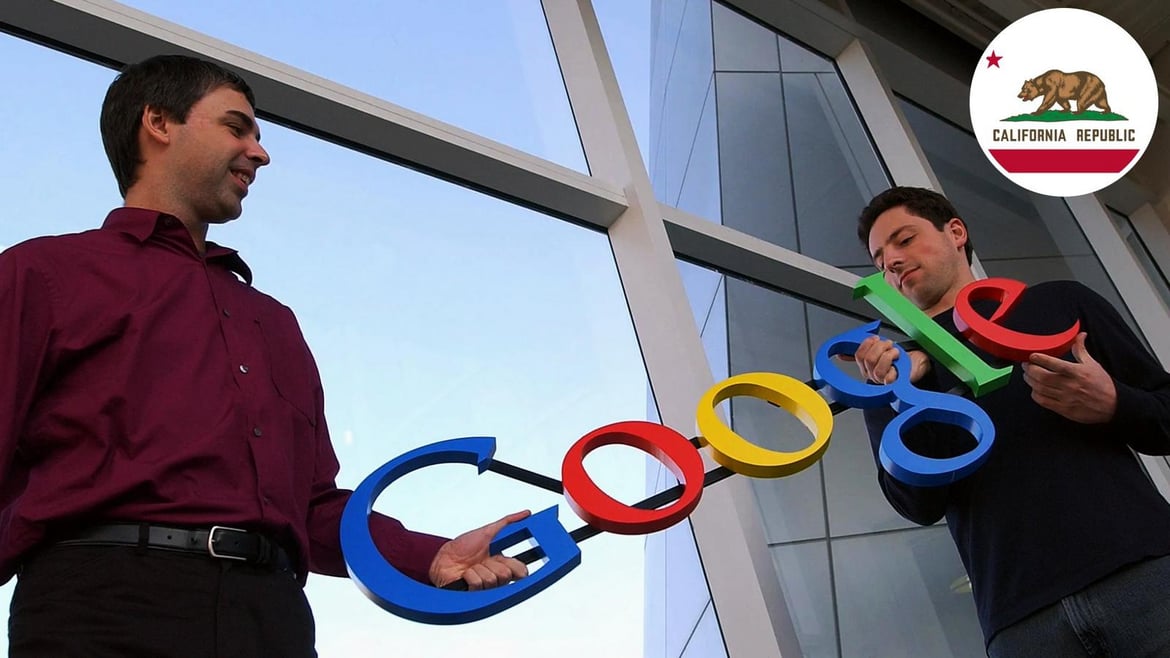
Larry Page and Sergey Brin called California home from around 1995 onward, long before Google became a verb and long before the Bay Area turned into the modern cathedral of tech wealth. They arrived as students, built Google in the late 1990s, and spent nearly thirty years as the cleanest embodiment of the state’s dream. California did not simply host their success. It framed it, legitimized it, and amplified it into a cultural export. If you had to name two men who should be untouchable by the politics of exit, it would be these two.

And yet, in late 2025, both Google co-founders quietly began shifting dozens of personal and family business entities out of California, just as the California Billionaire Tax Act moved toward the November 2026 ballot, as reported by The New York Times. The proposal is simple enough to fit on a campaign sign and heavy enough to shake boardrooms. It calls for a one-time emergency 5% tax on the net worth of Californians worth more than $1 billion, a group estimated at around 200 people holding roughly $2 trillion combined.

Supporters argue the state is staring at the loss of about $100 billion in federal healthcare funding over the next five years, a drop that could hollow out services, close facilities, and erase as many as 145,000 healthcare jobs. Their pitch is moral and urgent. Make the richest pay once, so the system does not break.

The California 2026 Billionaire Tax Act is a measure designed to feel politically elegant. A concentrated tax burden on a tiny number of people, paired with a public benefit that touches almost everyone. In theory, it could raise something like $100 billion over five years, with 90% earmarked for healthcare and 10% for K-14 education and food assistance, as pointed out by Baker Botts. The message is clean. If California is about to have billions less to spend on healthcare and education, then billionaires should help absorb the shock.

But what makes California powerful is also what makes it fragile. The state’s finances are unusually dependent on the ultra-rich. Personal income tax accounts for about 62% of the General Fund, and the top 1% of earners typically contribute around 40 to 45 percent of those receipts. This is a structure that prints cash in boom years and becomes brutally volatile when markets soften or when the most valuable taxpayers decide their best move is to stop being taxpayers here.

Page and Brin are not just any rich residents. Together, they are worth roughly $500 billion or more today. If they were fully exposed to a one-time 5% wealth tax as California residents, their bill alone could plausibly land in the mid $20 billion range, spread over years. Some critics argue that in an extreme reading of how the proposal interacts with tech’s super-voting share structures, the burden could feel even more punishing in practice, pushing founders toward selling stakes they never intended to touch.

Unsurprisingly, online commentary has started treating this as a vote-with-your-feet moment. Figures like Garry Tan warn that the tax, as drafted, could function like forced liquidation for founders who hold special voting shares.

Larry Page, for his part, appears to be doing what wealthy Americans increasingly do when the political weather shifts. He is building an exit that looks like a lifestyle upgrade. He has been establishing a Florida base, reportedly buying at least two adjacent waterfront mansions in Miami’s Coconut Grove for roughly $71.9 million, followed by additional deals that bring his South Florida residential spend to around $173 million. That kind of buying spree is not a casual second home. It is the creation of a new center of gravity, complete with the inevitable entourage of staff, advisers, and family-office infrastructure.

Sergey Brin’s moves look less glamorous but arguably more revealing. Around late December 2025, Brin or his family office moved or dissolved at least 15 California LLCs, with seven re-registered in Nevada. These include entities tied to his superyacht and a private air terminal at San Jose airport, along with other investment and real-estate vehicles. The point is not that a superyacht suddenly sails to Nevada. The point is that legal domicile can move even when the asset stays put, and in the world of billionaire taxation, the legal home often matters more than the physical one.

It also matters where they are heading. Florida and Nevada are not merely pleasant alternatives. They are engineered for this moment. Both states levy no personal income tax, and they do not impose state-level wealth or estate taxes. They will still collect meaningful revenue from property taxes, business fees, payroll-linked taxes, and the high-end local spending attached to billionaires and their operations. Aviation services, yacht maintenance, private security, luxury construction, philanthropic activity. The states do not need a wealth tax when they can host wealth itself.

If this sounds familiar, it should. Jeff Bezos moved from Washington to Florida after Washington’s new capital gains tax, and the aftermath was not symbolic. It was reported that the move contributed to the loss of roughly a billion dollars in expected tax revenue. It was a reminder that the modern billionaire is not just a person. He is a tax base that can board a plane.

There is an important nuance California will point to, and it is true. Alphabet remains a California company. Google’s payroll, offices, and corporate tax streams tied to its operations do not disappear simply because the founders adjust their personal maps. What moves is personal exposure. The future capital gains, investment income, and estate planning that determine whether California benefits when these fortunes grow even larger.
That is the real tension underneath the headlines. California is trying to stabilize healthcare and education funding by targeting concentrated wealth, but concentrated wealth is also the most mobile form of money ever created. The state can pass a ballot measure, rally voters, and craft a moral case. It cannot easily prevent its richest residents from treating residency like a financial instrument.

For 30 years, Page and Brin represented the perfect California fairy tale. Now their quiet retreat is turning into something else entirely, a lesson in how the internet age has rewritten the meaning of home, loyalty, and the price of being the place where fortunes are made.