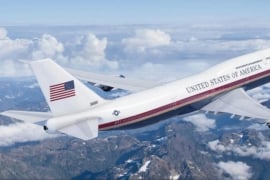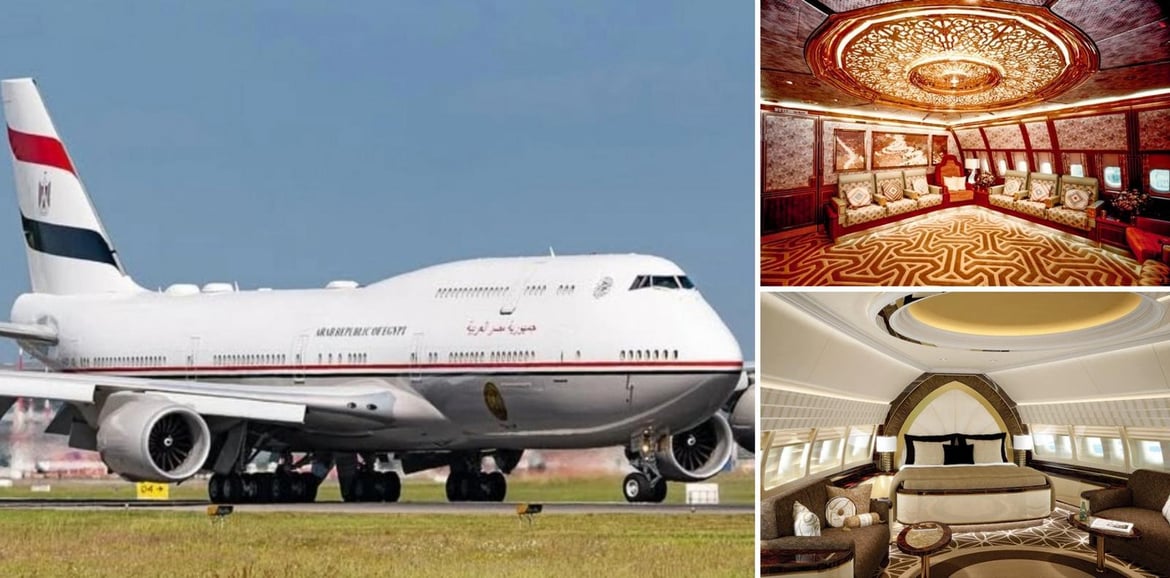
A Boeing 747 still has the ability to silence a room, even in an age of composite twins and ultra-long-range business jets. When one appears wearing the markings of a head of state, the effect is even stronger. Egypt’s newest presidential aircraft, a Boeing 747-8 carrying the registration SU-EGY, has now arrived in Cairo, and with it comes a reminder that some forms of power projection have never really gone out of style.
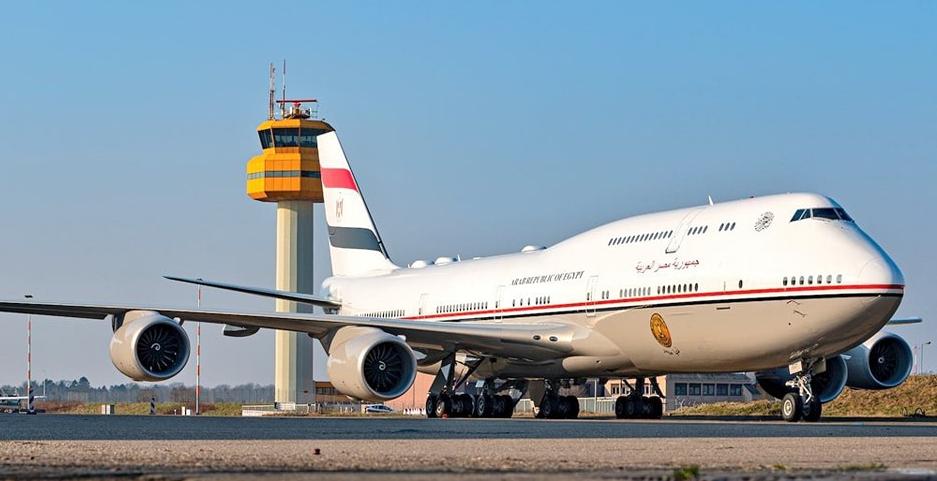
The jet touched down at Cairo International Airport on December 11, 2025, after a ferry flight from Hamburg, where it had undergone its final round of preparation, as reported by Aero-News Journal. Officially, it is a VVIP transport. Unofficially, it is Egypt’s answer to the Air Force One concept: a flying command platform designed to carry the president, senior officials, and the machinery of government across the globe without compromise. The reported price tag of around $500 million buys far more than an airplane. It buys autonomy.

A flying palace that is really a flying office
From the outside, SU-EGY is a familiar shape, the stretched upper deck and long wings of the final-generation 747. Inside, however, almost nothing remains of its airline origins. Before the rebuild even began, the aircraft was stripped to its bare fuselage. Seats, galleys, wiring, insulation, and everything associated with hauling hundreds of passengers were removed. What replaced it was not just luxury, but purpose.

Presidential 747s are designed as airborne workplaces. Lounges flow into offices and conference spaces. There are bedrooms and private lavatories with showers, crew rest areas, and multiple galleys capable of supporting a large delegation. Fixed furniture modules, known as monuments, are engineered like aircraft structures and certified to survive extreme loads. Noise and vibration are treated so aggressively that the cabin becomes a calm bubble, even when crossing continents.

Lufthansa Technik, which handled the transformation, has described 747-8 VVIP completions as showcases of its skills and competencies, calling them among the most extraordinary aircraft it has ever completed. That is not marketing fluff. Few projects demand such a complete reimagining of an already complex machine.

Power, silence, and staying connected at 40,000 feet
The most dramatic changes are the ones no passenger ever sees. A presidential aircraft lives on electricity and cooling. SU-EGY’s power architecture was redesigned to support secure communications, mission systems, and layers of redundancy. Cooling systems were heavily upgraded to keep sensitive electronics stable over ultra-long flights. Fire detection and protection were reworked to account for new equipment zones scattered throughout the jet.

Communications sit at the heart of the aircraft’s mission. Multiple satellite systems, layered for redundancy, allow secure voice, data, and video links well beyond 14,000 kilometers (about 8700 miles) of range. Antennas are blended into the fuselage and crown, while inside the aircraft, hardened networks keep systems isolated and protected. This is how a head of state remains reachable and informed while halfway around the world.

The flight deck, too, is more than standard. Navigation, surveillance, and datalink systems are updated to meet modern airspace demands and mission needs. Specialized crew coordination systems support long, complex flights where the aircraft effectively becomes an extension of the presidential office.

Security details are deliberately vague, but the categories are well understood. Certain zones are hardened. Access is tightly controlled. Electronics are managed so they function in high-power radio environments. Many aircraft also integrate defensive countermeasure provisions, quietly tested to ensure they do not interfere with core avionics.

When SU-EGY rolled to a stop in Cairo, it marked more than a delivery. It marked Egypt’s decision to invest in endurance, reach, and independence. In a world where schedules shift and crises travel fast, the ability to lift a president, an entire staff, and the tools of governance onto one aircraft still matters. The Queen of the Skies may be nearing the end of her commercial reign, but in presidential service, she remains very much alive.