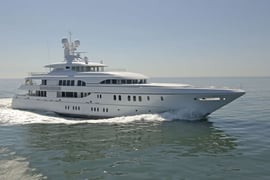
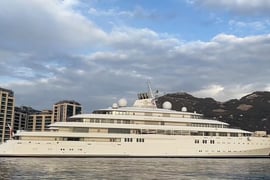
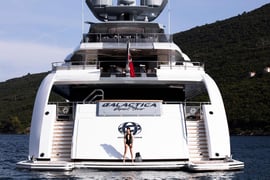
For 70 years, the Miami Seaquarium occupied 38 acres of county-owned land on Virginia Key, becoming one of South Florida’s most recognizable attractions. Opened in 1955 and once billed as the world’s largest marine attraction, it drew more than 500,000 visitors annually at its peak, hosted the filming of scores of Flipper episodes and was once the third-largest single contributor to Miami-Dade County revenue. Now, the shuttered marine park could make way for a $100 million waterfront development centered around one of the county’s largest marinas, with space for superyachts measuring up to 200 feet long.

The sheer scale of the proposed marina has attracted particular attention. Plans call for 325 wet slips and dry-stack storage for around 500 additional boats, while nearly 90 slips could accommodate yachts longer than 80 feet, according to WLRN. Floating docks and finger piers would stretch more than halfway across the channel separating Virginia Key from fragile seagrass flats, while a wave break doubling as a fishing pier would extend for more than four football fields. The fuel dock alone would cover over 19,000 square feet, nearly seven times the roughly 2,800-square-foot footprint of the tank where the Seaquarium’s famous orca Lolita spent decades.

From Flipper and Lolita to a billionaire-sized marina
The Miami Seaquarium permanently closed on October 12, 2025, after years of deteriorating infrastructure, animal-welfare citations and controversy. Lolita, also known as Tokitae, died in 2023, while a dolphin named Bimini died shortly before the park closed. Miami-Dade County had already moved to evict the Mexico-based Dolphin Company in 2024, and the operator filed for Chapter 11 bankruptcy the following year.

A bankruptcy judge subsequently approved the transfer of the lease to Resilient Aquarium LLC, wholly owned by David Martin, co-founder and CEO of Miami developer Terra. The transaction was valued at approximately $22.5 million, and county commissioners later voted unanimously to advance a 99-year lease.

Martin plans to invest between $75 million and $100 million in transforming the property into a “Fisherman’s Village” that could open by 2030. Renderings show an open-air dining and retail village, a public baywalk, a landscaped lagoon, kayak launches and a two-story walk-through outdoor aquarium with glass walls. Unlike its predecessor, the new aquarium would have no marine mammals, while the Seaquarium’s landmark Golden Dome would be preserved and converted into an event venue.

Under the proposed arrangement, Martin would retain 95% of profits from the marina’s boat slips while paying the county at least $3 million annually and sharing between 3% and 5% of the redeveloped property’s yearly revenue. Estimates prepared for the county project around $50 million in annual sales from the restaurants, shops and marina, while Martin has said the development could generate approximately $750 million for Miami-Dade over the life of the lease.

The superyacht plan faces serious environmental questions
The ability to accommodate 200-foot yachts gives the redevelopment particular significance in a city increasingly associated with billionaires and their enormous vessels. South Florida has become home to or a major base for billionaires including Ken Griffin and Jeff Bezos, while Mark Zuckerberg and Sergey Brin are also among the world’s most prominent owners of enormous private yachts.

Yet Biscayne Bay is a shallow and fragile estuary rather than a natural superyacht harbor. The bay has lost between 70% and 90% of the seagrass flats that once supported sea turtles, bonefish, lobsters and wading birds over the past decade. Florida environmental regulators have already responded to the marina application with a six-page list of questions concerning potential damage to wetlands, seagrass, coral and water quality, along with concerns about dredging, sewage pump-outs, fuel spills and navigation through the narrow channel.

The proposed transformation is therefore striking. A marine park that once introduced generations of Americans to dolphins, killer whales and Flipper could be replaced by restaurants, shops, a marine-mammal-free aquarium and a vast marina built to welcome some of the largest privately owned yachts in the world, all on the shores of an already vulnerable Biscayne Bay.