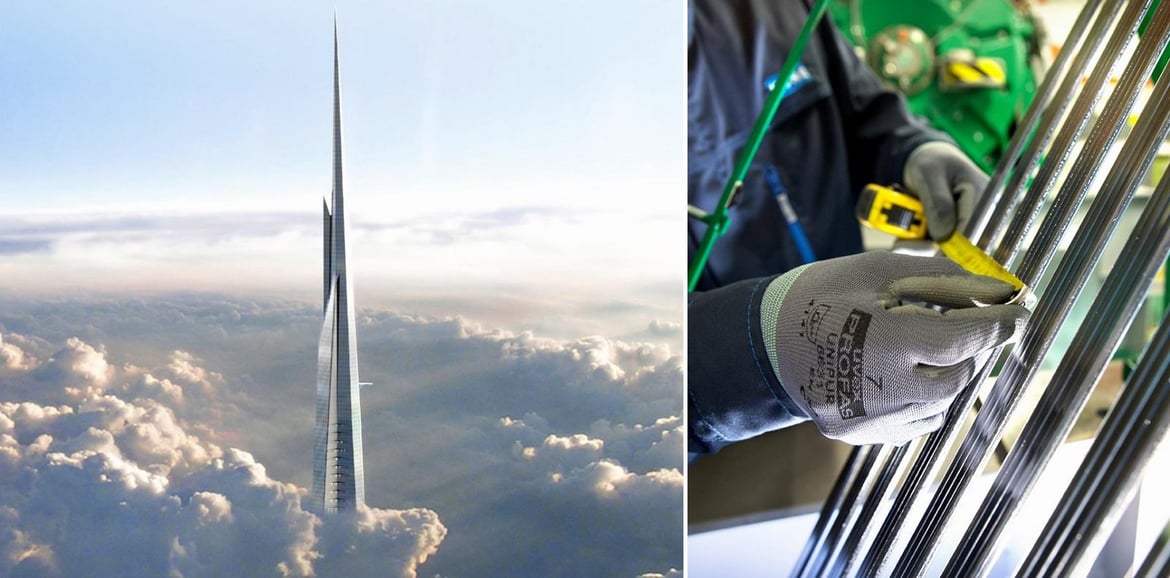
Saudi Arabia is building a skyscraper so tall that even its elevators are redefining engineering limits. Rising over a kilometer above the Red Sea coast, the Jeddah Tower will soon claim the title of the world’s tallest building, and it will also host the world’s highest elevator ride, which is over 630 meters to the observation deck.

The record-breaking journey will be made possible by KONE’s revolutionary UltraRope technology, which replaces traditional steel cables with carbon-fiber ropes, making the elevator lighter, faster, and far more efficient.

UltraRope is not just a material innovation; it is a fundamental rethinking of how vertical transport works in extreme heights. The carbon-fiber rope’s low weight dramatically reduces the moving mass of the elevator system, translating to smoother rides and substantial energy savings. KONE’s internal documentation reports energy reductions of about 15 percent on 500-meter rides and over 40 percent on those reaching 800 meters.

Because UltraRope does not stretch or require lubrication, it needs less maintenance and eliminates many of the issues caused by steel ropes, including downtime from building sway. KONE describes it as a breakthrough that “eliminates the disadvantages of existing steel ropes” and enables elevator travel heights of up to 1,000 meters.
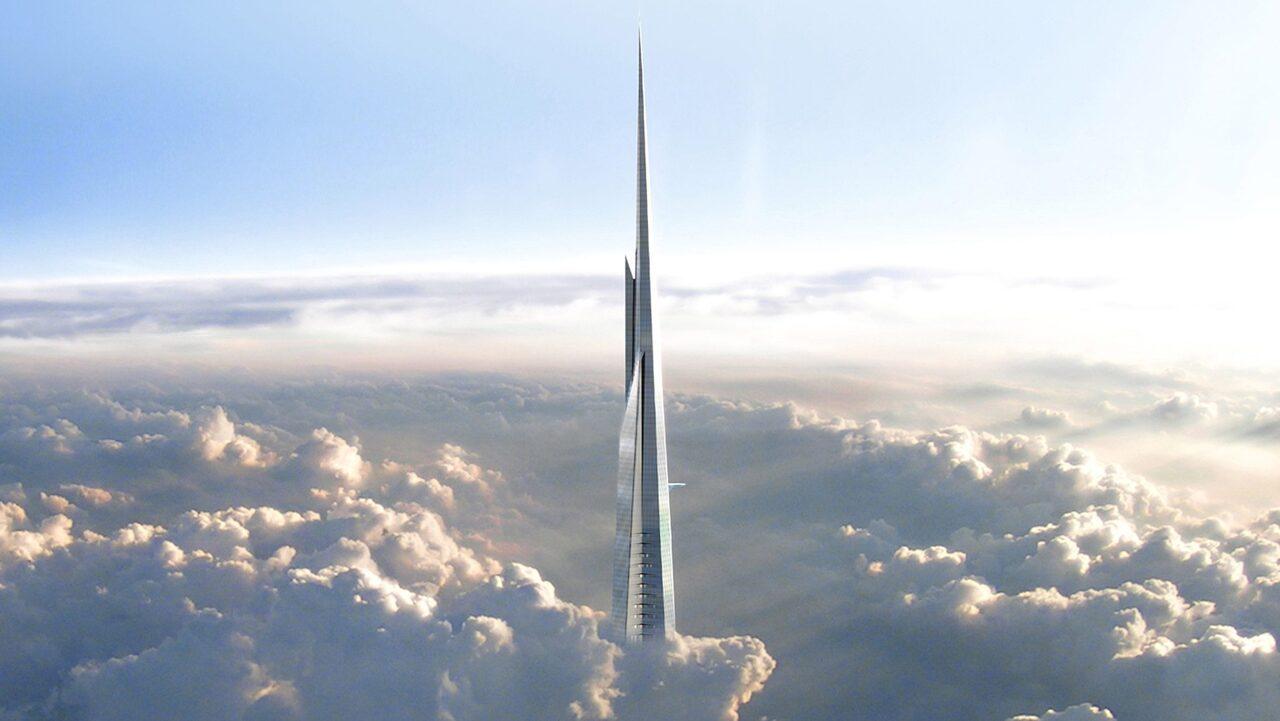
At Jeddah Tower, the UltraRope-equipped elevators will power the journey to the observation deck located at approximately 630 meters above ground on Level 157. Known as the sky terrace, this circular outdoor platform is roughly 30 meters wide and will become the world’s highest public observatory once complete.

Visitors will reach it through double-deck shuttles moving at speeds of up to 10 meters per second. These elevators will use smart destination grouping systems to reduce stops and waiting times, offering a faster and more seamless ascent than even the Burj Khalifa’s 504-meter lift experience.

Architecturally, the Jeddah Tower is designed by Adrian Smith + Gordon Gill Architecture, with structural engineering by Thornton Tomasetti. The pair previously collaborated on the Burj Khalifa, but this project pushes their ambitions far beyond that achievement. The tower’s three-petal form, inspired by desert plant growth, tapers elegantly as it rises, reducing wind vortex effects and optimizing structural performance. Its façade is wrapped in a high-performance curtain wall system, with carefully sculpted notches that create self-shading pockets and outdoor terraces.

The structure’s interior spans over 530,000 square meters of floor area, housing a mix of hotel rooms, offices, serviced apartments, condominiums, retail spaces, and the record-breaking observatory. A total of 59 elevators and 12 escalators will handle vertical transportation throughout the building, including seven double-deck systems and two JumpLift elevators used during construction to save months of time by moving people and materials inside the permanent shaft.

Located within the 5.3-million-square-meter Jeddah Economic City development, the tower stands as a centerpiece of Saudi Arabia’s Vision 2030 plan. After years of delays, construction has resumed with renewed momentum, backed by new management teams and updated engineering contracts.

When completed, the Jeddah Tower will rise higher than any building ever constructed. But perhaps even more remarkable than its height will be the smooth, silent, and carbon-fiber-powered journey that takes visitors to its sky terrace. In the race to the heavens, Saudi Arabia’s next architectural icon is setting new benchmarks not only in skyline design but also in the very mechanics of how humanity moves vertically.