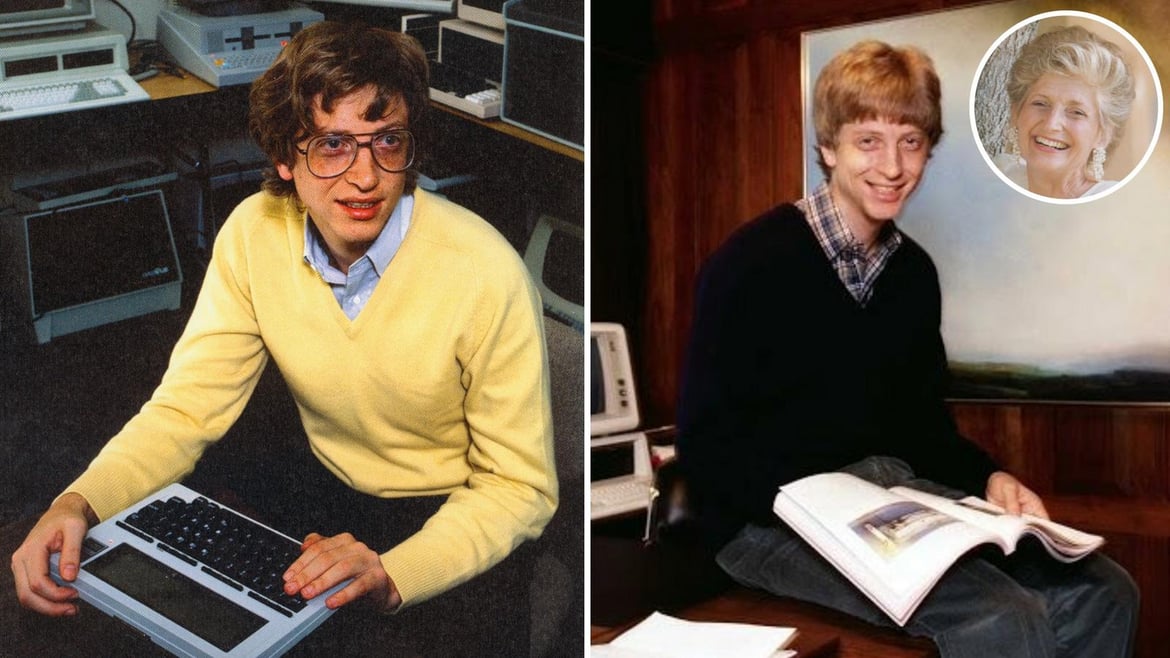
Bill Gates is a lot of things, a maverick, an innovator, a creator, a billionaire, an entrepreneur, and a philanthropist. As a businessman, he has only grown. But there is one element that, for years, seemed missing from day one: fashion. Today, the 70-year-old can look sharp in well-tailored suits. But back in the 1990s, the decade that marked Microsoft’s “big bang” moment and also saw Gates rise to the top of the rich list, he remained the undisputed king of anti-fashion.

Go further down memory lane, back to the years before ‘billionaire’ became permanently attached to his name, and the story gets even better. Until his twenties, Gates’ mother, Mary Maxwell Gates, dressed her son and even color-coördinated his clothes. Widely considered one of the most significant influences on both his character and Microsoft’s early success, she gave his wardrobe a system rather than a style. There were green days, beige days, and blue days, a routine that must have simplified the job, especially when the fashion baton was later passed on to girlfriends.

Some of the most quoted observations about Gates’ indifference to appearance come from a 1994 piece in The New Yorker, which captured the Microsoft founder at the height of his early-90s ascent. Silicon Valley venture capitalist Ann Winblad recalled, “A lot of his friends have said, ‘Bill, come on, let’s go on a shopping spree, we’ll buy you some clothes,’ but it never works.” The woman in Bill’s life for five years added, “Bill just doesn’t think about clothes. And his hygiene is not good. And his glasses, how can he see out of them? But Bill’s attitude is, I’m in this pure mind state, and clothes and hygiene are last on the list.” Esther Dyson, who edited a computer industry newsletter called Release 1.0, says, “I’m told that within Microsoft, certain people are allowed to take Bill’s glasses off and wipe them, but I’ve never done it. You know, it’s like, ‘Don’t try this at home.’”

That indifference extended well beyond the office. On one occasion, Gates reportedly turned up for a trip without a suitcase at all, then bought a cheap pair of shorts at his destination and proceeded to wear them repeatedly. Clothing was purely functional, something to solve quickly and move past. Clearly, there was little on Gates’ mind beyond Microsoft and momentum. He became a billionaire at 31, and keeping everything else at bay seemed to work.

By the mid-1990s, Gates was widely seen as the richest private individual in the world, a position he held for much of the next two decades. That said, ignoring fashion is hardly a universal blueprint for success. Other billionaires and the corporate world clung to the padded-shoulder power suits of the 1980s. Meanwhile, Gates’s lack of fashion sense became an aesthetic of its own. The contrast was impossible to miss. Oracle founder Larry Ellison was the polar opposite, dressed like a Bond villain in expensive Italian-cut suits and double-breasted jackets with peak lapels. He looked like the richest man in the room, while Gates rarely looked the part.
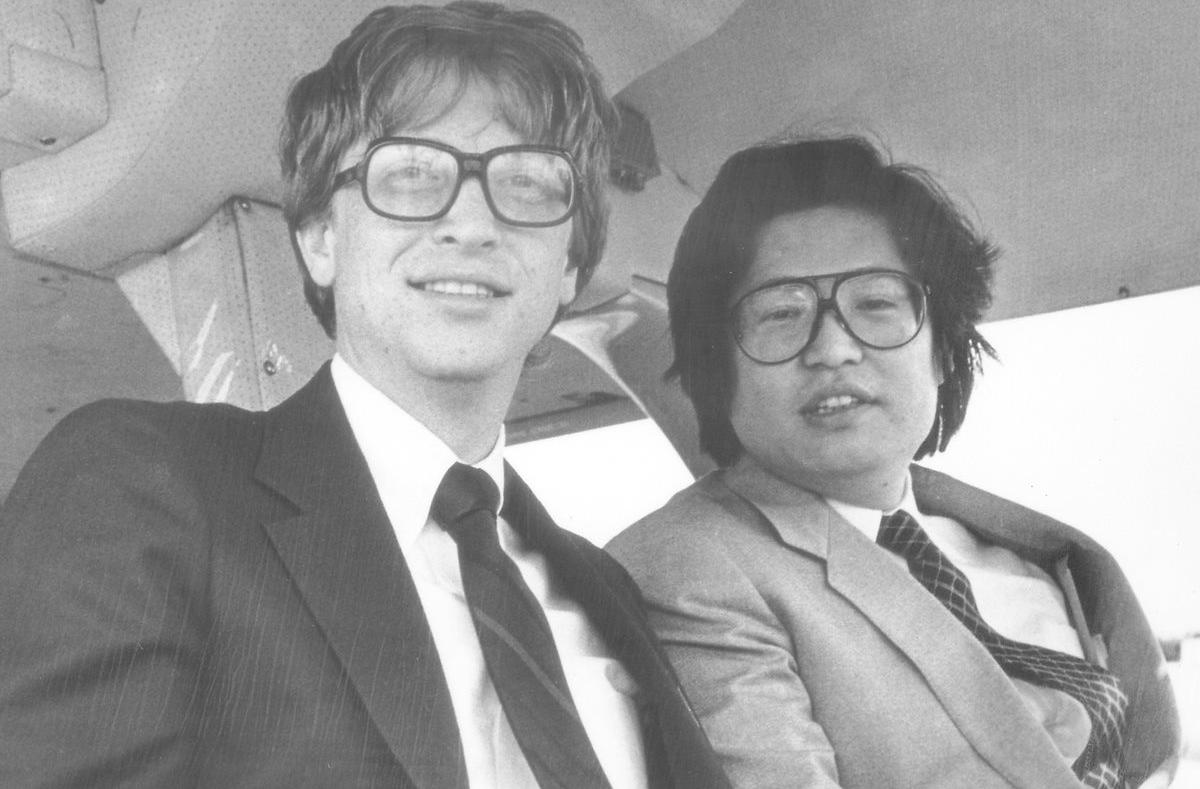
His frenemy Steve Jobs, meanwhile, embraced a uniform with intention, even entrusting Japanese designer Issey Miyake to create his iconic black mock turtleneck. Gates did have his color-coordinated days, but personal style, or billionaire flair, was one segment he never quite mastered. The irony is that today, the $105 billion man, according to Bloomberg, has a daughter, reshaping how people think about fashion itself, with Phoebe Gates co-founding the fashion discovery platform Phia.