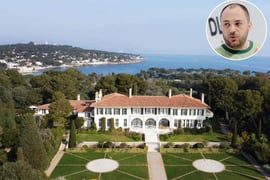
Mark Zuckerberg has become the latest emblem of California’s slow-motion billionaire exodus, adding his name to a growing list of tech titans trading Pacific cliffs for Atlantic waterfronts. After reports that Google co-founders Larry Page and Sergey Brin shifted their primary residences out of California amid rising tax pressures, Zuckerberg’s move to Florida reads less like a coincidence and more like choreography.

At the center of this migration is California’s proposed 2026 Billionaire Tax Act, a ballot initiative that would impose a one-time 5% wealth tax on individuals worth more than $1 billion, alongside the state’s already steep top marginal income-tax rate of 12.3% plus an additional 1% millionaire surcharge. The decisions by Page and Brin to reposition themselves outside California underscored how seriously the tech elite is treating the proposal, and Zuckerberg’s shift to Florida signals that the calculus is spreading beyond Google’s founders to the next tier of Silicon Valley power. Florida, by contrast, levies no state income tax, and for individuals whose wealth compounds at an extraordinary scale, that difference is measured in nine- and ten-figure terms rather than political talking points.

Zuckerberg is hardly new to trophy real estate. His portfolio already spans multiple homes in Palo Alto, a compound in Lake Tahoe reportedly assembled for more than $59 million across adjacent properties, a residence in San Francisco’s Noe Valley, and extensive land holdings on the Hawaiian island of Kauai. The Florida purchase does not replace that footprint so much as rebalance it.

The annual drain on the general fund
According to the Bloomberg Billionaires Index, Mark Zuckerberg’s net worth is estimated at roughly $237 billion, making him the fourth richest person on the planet and wealthier than the GDP of the gas-rich Gulf state of Qatar. California’s top effective income-tax rate for high earners sits around 13.3%. While no one outside his accountants knows how much Meta stock he sells in a given year, even conservative assumptions illustrate the stakes. If he were to realize just 0.5% of his net worth annually as taxable income, roughly $1.13 billion, California would collect in the neighborhood of $150 million each year.

If that realization rate rose to 1%, the state’s take would approach $300 million. At 2%, the figure could swell to roughly $600 million annually. These are directional estimates rather than audited returns, yet they frame the magnitude. The departure of a single ultra-high-net-worth resident could mean forfeiting hundreds of millions of dollars in annual income-tax revenue.

Relative to California’s approximately $230 billion general-fund budget for 2025–26, $300 million amounts to roughly 0.1% to 0.2% of annual spending. On its own, that does not destabilize Sacramento. The state would continue to fund its roughly $83 billion allocation for K–12 education, another $83 billion for Health and Human Services, about $23 billion for higher education, and more than $13 billion for corrections and rehabilitation. Yet those headline figures depend on a tax base that remains unusually concentrated among a small number of ultra-high earners. Remove enough of them, and the margin for error narrows.

The more dramatic number is attached to the proposed wealth tax. The 5% levy would apply to net worth above $1 billion, measured at a specified snapshot date in late 2026. For someone with a fortune of nearly $226 billion, that could translate into a one-time tax bill of roughly $11.3 billion. That single payment would equal about 5% of a full year of general-fund spending at today’s levels. If Zuckerberg is no longer deemed a California resident when that snapshot is taken, and if the measure passes and survives legal challenges, Sacramento could miss out on a sum that rivals the annual budgets of entire state departments.

Ordinary income-tax revenue flows into the general fund and is allocated across public schools, Medi-Cal and other health programs, universities, courts, wildfire prevention, and environmental initiatives. The proposed wealth tax, by contrast, has been framed by its backers as a one-time stabilizer to bolster health care, public education, and food and nutrition programs amid fiscal uncertainty. If a major billionaire leaves before the snapshot date, that multibillion-dollar slice of the anticipated $100 billion pool simply disappears, forcing lawmakers to scale back ambitions, raise taxes elsewhere, or borrow more aggressively.

In isolation, one billionaire’s relocation barely shifts a $300 billion-plus public apparatus. Symbolically and cumulatively, however, the exit of multiple tech founders alters the long-term revenue calculus. California’s fiscal model relies heavily on capital gains and high-income earners whose fortunes can move as quickly as their primary residence. Florida gains another resident with a vast balance sheet, while California confronts the reality that in an era of mobile capital, tax policy and geography are increasingly inseparable.
Note – According to the IMF, Qatar’s GDP is $239 billion.