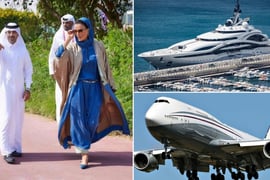
A wide-bodied jetliner that once served as a symbol of opulence is now at the center of one of the most ambitious aircraft conversions underway. The $400 million Boeing 747-8, donated by the Qatar royal family earlier this year, has officially entered the process of being transformed from a flying palace into something closer to a flying bunker. While its spacious cabins and luxury finishes might have suited royal guests, the aircraft’s new mission is to carry the President of the United States with the highest levels of security and resilience ever engineered into a civilian airframe.

The first step in this metamorphosis is a complete strip-out of the interiors and systems that came with the Qatari gift. Every panel, cable, and electronic component is subject to forensic-level inspection to confirm that nothing unknown remains. Non-cleared electronics, entertainment systems, and proprietary sensors are being removed in order to provide a clean slate. This stage may not be as dramatic as installing new technology, but it is essential to ensuring that the platform starts life in US service free of any security risks.

Once the cabin is bare, the real rebuilding begins with the wiring and electrical backbone. Unlike a standard luxury airliner, an aircraft designed to act as a command center in the sky must carry redundant power systems, shielded harnesses, and electrical pathways that can withstand extremes, including electromagnetic pulses. The uprated power network will support everything from secure communications terminals to defensive systems that draw far more power than any passenger aircraft would normally require.

Perhaps the most demanding element of the conversion is the communications suite. For a president, being airborne must never mean being out of touch. Engineers will integrate global, multi-band satellite communications, including protected links comparable to those used in military spacecraft. Secure voice, video, and data lines, together with strict electromagnetic shielding and TEMPEST standards, will create a digital fortress. Entire sections of the cabin will be transformed into White House Communications Agency workspaces and secure operations rooms, allowing presidential duties to continue uninterrupted at 40,000 feet.

Survivability upgrades are equally critical. The aircraft will gain missile warning sensors, directional infrared countermeasure systems, and the ability to confuse or deflect threats from the ground. Hardened cabling, structural shielding, and aperture protection will help guard against electromagnetic effects, while defensive systems will provide both soft-kill and potentially hard-kill layers of protection. The exterior may not advertise these features, but they form the hidden armor that makes a presidential aircraft more than just a luxury jet.

Structural modifications also play a role. Dedicated airstairs will allow the president to board and disembark without reliance on airport equipment. Reinforced doors and windows, a secure medical suite, and conference spaces are being added. To support all of this, the environmental control systems will be uprated, along with additional auxiliary power units and specialized avionics. Even baggage handling and storage solutions are being redesigned to allow greater independence on foreign trips.

Cost and timeline remain a matter of debate. Independent defense analysts and Pentagon officials suggest that the full scope of modifications could climb as high as $1 billion and might require two years to complete. The Air Force, however, has offered a more conservative estimate, as reported by The New York Times. In testimony before Congress, Air Force Secretary Troy E. Meink stated that the work would likely be finished for considerably less, projecting the bill at under $400 million.

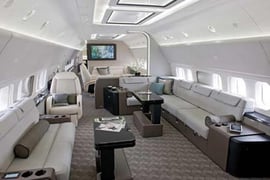
Interestingly, not everything is being torn out. Much of the Qatari luxury fit-out, such as lounges, dining salons, and private bedrooms, is compatible with presidential use. These areas may be refaced or lightly modified, allowing the aircraft to retain some of its regal character. Behind the panels, however, the transformation will be profound, turning a gift of diplomacy into an aircraft built for command and resilience.

Unlike the forthcoming VC-25B replacement aircraft, which the Air Force has decided will not include aerial refueling, this converted jet is also unlikely to receive that capability. It will therefore operate within standard range limits, though with enough endurance and redundancy to serve as a capable interim presidential aircraft.
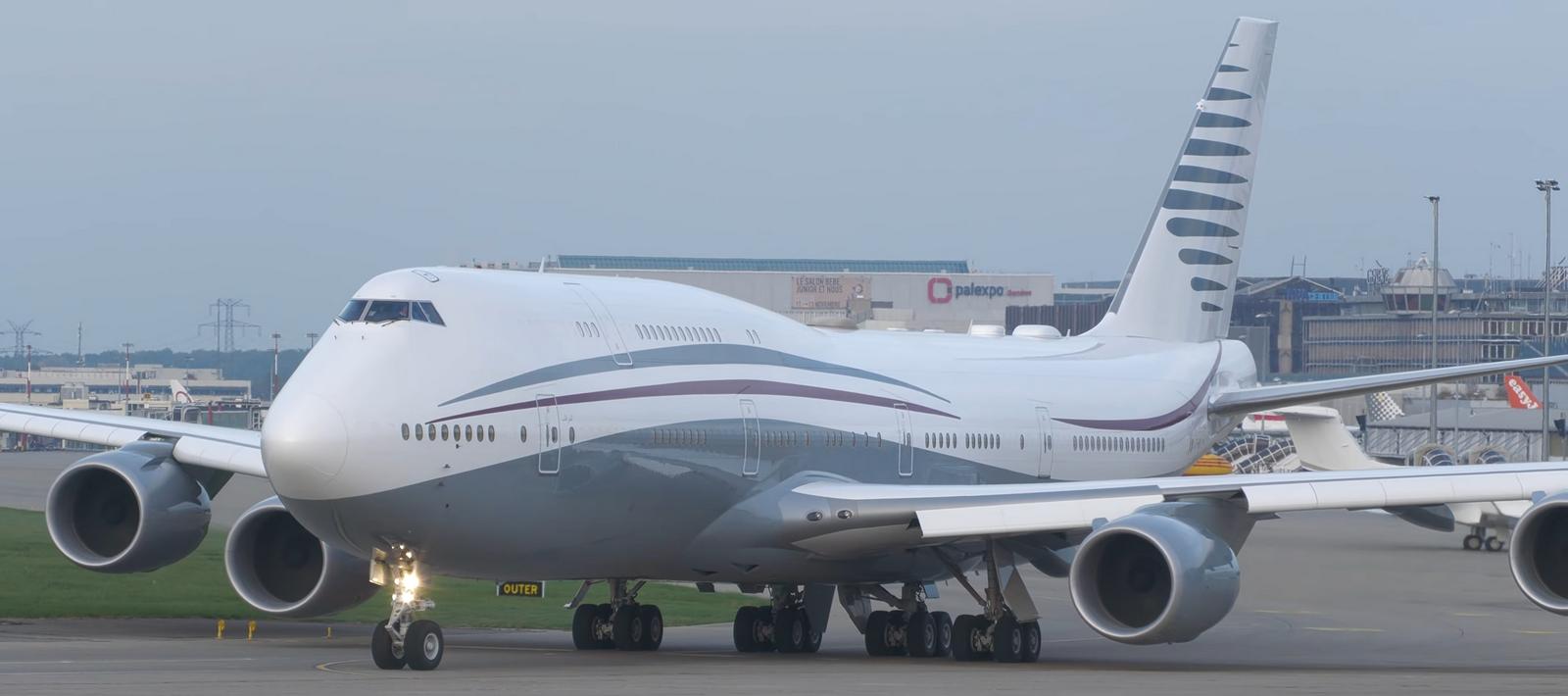
From the outside, the plane may continue to look like an elegant jet. On the inside, every wire, panel, and system will soon reflect its new purpose. The heavily customized Boeing 747 that once carried dignitaries in luxury is being remade into one of the most secure and sophisticated aircraft in the world, blending the trappings of a palace with the resilience of a fortress in the sky.