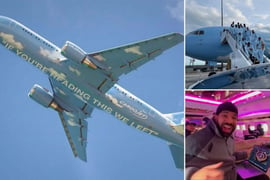
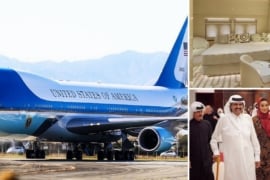
The VVIP Boeing 747-8i gifted by Qatar has now crossed the line from political curiosity to operational reality, emerging fully modified and flight tested as the United States’ interim Air Force One, a bridge aircraft designed to carry the presidency through an uncomfortable gap between aging Cold War machinery and a delayed future. What began as a controversial acquisition has been compressed into one of the fastest high-consequence aircraft conversions in modern American aviation, and the result is a jet that carries enormous symbolism even as it quietly reveals the compromises required to get it into the air this quickly.

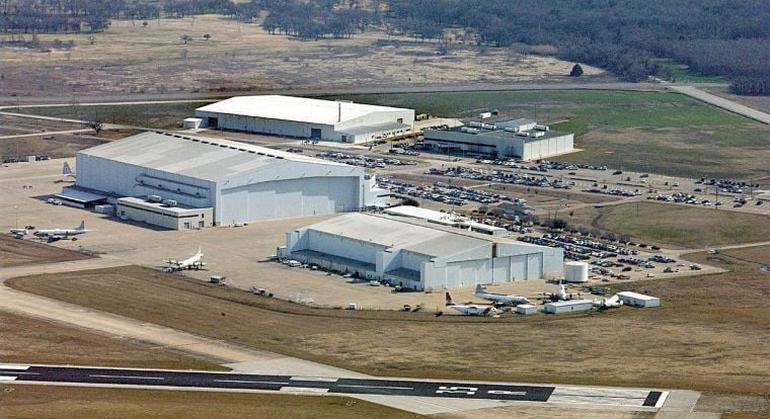
According to the San Antonio Express News, the transformation did not happen in a single, neatly labeled facility but instead unfolded across Texas in a way that reflects both urgency and discretion. The aircraft first surfaced at San Antonio International Airport in early 2025, then moved through Fort Worth before appearing at Texas State Technical College Waco Airport by late summer, and ultimately settling at Greenville Municipal Airport, where flight testing activity became visible between February and April 2026. Official imagery later showed the jet returning to Waco for final maintenance and paint, a multi-stop journey that underscores how this program was executed across a distributed industrial footprint rather than a single publicized production line.

A new look signals a break from the Kennedy-era identity
According to the USAF, what has emerged from that process is not just a modified aircraft but a rebranded one. The bridge jet is now being painted in a new executive airlift livery that signals a sharp visual break from the past. While the Air Force initially described the scheme in simple red, white, and blue terms, official imagery and reporting reveal a more specific palette of white, red, gold, and dark blue, replacing the light blue and white aesthetic long associated with the Kennedy era. The variation in descriptions reflects shorthand rather than disagreement, because the direction is unmistakable, with the broader presidential fleet now moving toward a distinctly modern and personalized visual identity.

23LAVIATION
The speed of this transformation is what makes the aircraft remarkable. The Air Force began assessing the 747-8 market in December 2024, accelerated the effort into a full program by February 2025, formally accepted the aircraft in May of that year, and by May 1, 2026 had completed both modification and flight testing. Depending on how the timeline is framed, the conversion spans roughly seventeen months from initial assessment or about a year from formal acceptance, with the most visible phase of modification and testing compressed into less than eight months. By the standards of presidential aircraft programs, which usually stretch across many years, this is not just fast but almost implausibly fast, and it explains why the aircraft has been deliberately scoped as an interim capability rather than a full replacement.
That compressed timeline also shaped what the aircraft does not do. The bridge jet has been explicitly excluded from the Golden Eagle mission, the designation used for flights carrying the remains of a former U.S. president. Achieving that capability would have required larger rear doors and deeper structural changes, which would have slowed the program and complicated certification. The decision to omit it is more than a technical footnote because it reveals how carefully the Air Force drew the boundary around this aircraft’s role, prioritizing immediate transport and communications capability over specialized ceremonial functions that demand additional structural complexity.

A presidential aircraft built on speed and selective capability
The flight testing itself reflects that same pragmatic focus. While the Air Force has not published detailed test cards, the framework is clear from aviation certification practices and what the service has disclosed. Trials would have examined how the aircraft handles after structural modifications, whether newly integrated communications systems function reliably under operational conditions, and how power, cooling, and cabin systems behave after reconfiguration.

They would also have validated crew procedures and emergency protocols while qualifying pilots and maintainers on a platform that had not previously been part of the presidential fleet. The leasing of a 747-8 freighter from Atlas Air and the acquisition of additional aircraft for training and parts reinforce that this was as much about building an ecosystem around the aircraft as it was about modifying the aircraft itself.

Seen in full, the bridge aircraft is a study in controlled compromise. It carries the authority and visibility of Air Force One, yet it has been engineered under constraints that prioritize speed over absolute capability. It exists because the future arrived late and the present could not wait, and in doing so it offers a rare glimpse into how even the most symbolically loaded machine in American aviation can be reshaped when time, politics, and engineering are forced to meet on the same runway.