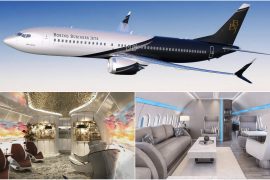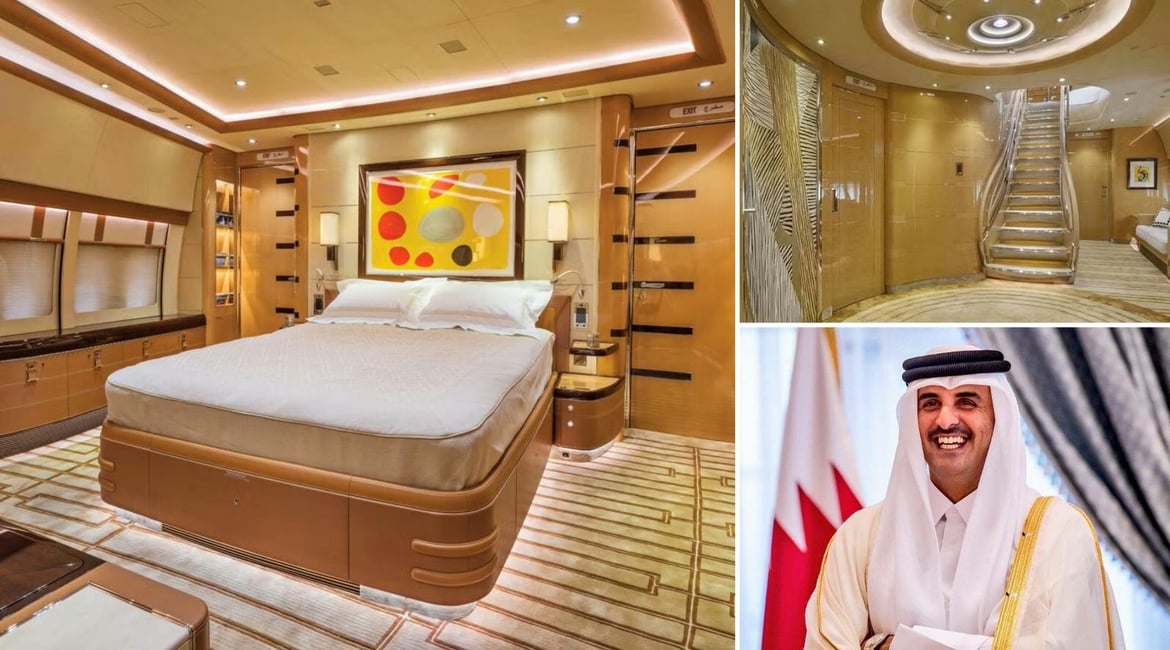
There are only a handful of Boeing 747-8 Business Jets in existence, and the one donated by the State of Qatar to the United States is among the most remarkable. Originally built for the Qatar Amiri Flight, this aircraft was delivered in 2012 and completed as a VVIP “flying palace” by AMAC Aerospace in Basel. Its interior concept was led by Yves Pickardt of Cabinet Alberto Pinto, the Parisian design house renowned for luxury projects that balance craftsmanship with restraint.
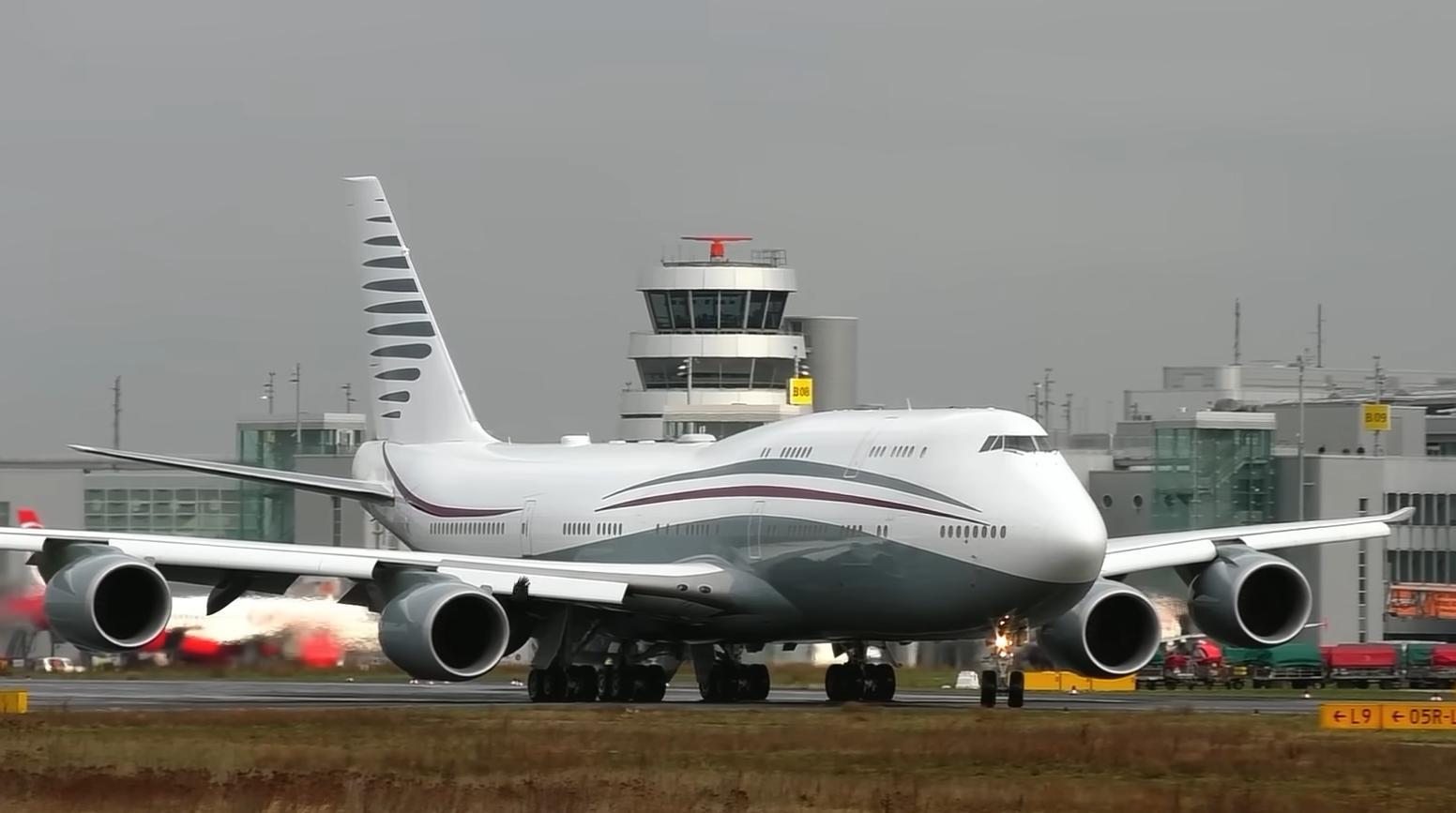
The completion took about two and a half years of build time, following a lengthy design phase that stretched the project timeline to nearly four years. Here’s a virtual tour inside the new Air Force One.

Inside, the scale of the aircraft is immediately impressive. The cabin spans about 420 square meters across two decks and seats roughly 89 passengers plus crew. Five full galleys and nine lavatories serve the interior, an unusually high number for a private widebody and a clue to the head-of-state operations it was built for. Each level flows as a sequence of zones, with spaces that transition naturally from private suites to shared lounges.

The layout begins with an entry foyer that sets the tone for the rest of the jet. This grand space features curved walls, wood paneling, and a gleaming staircase that spirals to the upper deck.

The main deck continues forward into a master suite placed in the nose, the quietest area of the plane, with its own direct stairway entrance from the ramp for discreet boarding. Yves Pickardt once said, “The owner gave us carte blanche… he wasn’t looking for anything outrageously luxurious… simplicity, which in the end is indeed the true luxury.”

The master suite stretches the full width of the cabin and includes a king-sized bed, built-in counters, and an en-suite bathroom with an enclosed shower. A guest suite sits nearby, finished in the same soft palette with diamond-stitched leather panels and mother-of-pearl inlays. Both rooms show a rare level of detailing that feels more residential than aeronautical.

Behind the private quarters lies the aircraft’s social core. The main lounge is organized into several seating clusters, with a six-person settee, four recliners along the windows, and a round dining table for six. The finishes feature wakapou and sycamore woods, stone, wool, and silk fabrics, all chosen to reflect a calm, contemporary aesthetic. Pickardt described the look as soft modern, with simplicity as the true measure of luxury.

Adjacent to the main lounge is a private office that doubles as an intimate dining room. Further aft, a separate boardroom provides a more formal setting for business meetings. Each space is fitted with handcrafted furniture and subtle decorative details that give the cabin a consistent identity from nose to tail.

A wide staircase leads to the upper deck, where the mood becomes warmer and more domestic. Here, a living room described by designers as a children’s salon features bookshelves, a corner sofa, and a large-screen television. Eight plush club seats face each other over coffee tables, creating a comfortable environment for family gatherings or private briefings. BizJet Advisor aptly describes it as “the world’s only flying palace.”

In night mode, the jet reveals its most unique feature: an Overhead Passenger Module that provides eight extra bunks. This system adds true sleeping capacity without taking up valuable floor space, allowing the cabin to convert into a restful environment for long international flights.

Behind the passenger zones, the aircraft’s service architecture is equally sophisticated. Its five galleys include a forward production galley designed for fine cuisine, supported by additional service stations. An upper-deck galley connects to the main deck via a lift, allowing smooth catering logistics. Nine lavatories are distributed throughout the aircraft, two with full shower facilities.

Technology and comfort systems play an equally important role. More than 40 integrated display screens, ranging from 15 to 55 inches, are placed throughout the cabin. A dedicated communications center manages secure voice and data, while a theater-style lounge supports live news, films, and global broadcasts.

The air humidity system maintains cabin comfort during ultra-long sectors, and programmable lighting scenes tailor the atmosphere for dining, rest, or work.

From a design perspective, the aircraft feels as much a piece of architecture as an airplane. The flow between its four passenger zones, the consistent materials, and the human scale of each space make it an extraordinary example of modern cabin design. AMAC Aerospace described the build phase as one of the most challenging and rewarding completions ever undertaken, with work running from November 2012 to July 2015.

What began as a private commission has now entered a new chapter. The process of converting this Boeing 747-8 BBJ into an official Air Force One aircraft has begun at the L3Harris Aerospace facility in Texas, which is estimated to cost $400 million. Once complete, it will not only be a flying fortress with the most advanced technology and safety features but also carry a legacy of craftsmanship, design, and aviation excellence that began in Basel more than a decade ago.