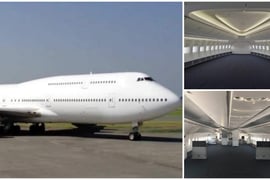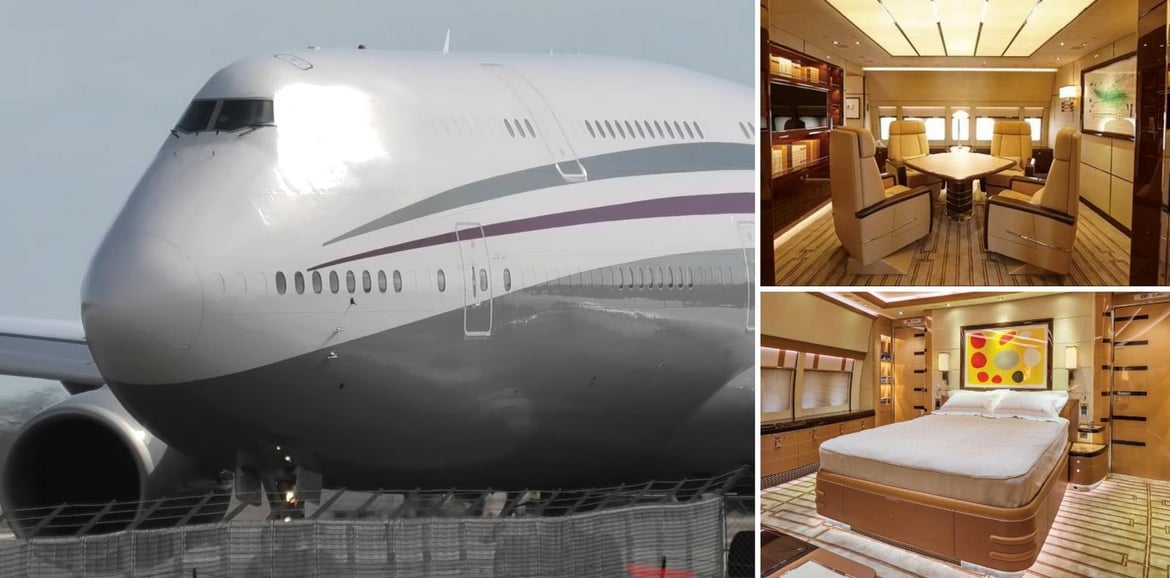
Take a long look at what the US Air Force is doing right now and it becomes clear this is no longer a simple aircraft replacement story. It is a hedge. A backup plan. And a quiet admission that the next era of Air Force One is arriving far more messily than anyone originally planned. The Air Force has confirmed it is buying two Boeing 747-8 jumbo jets from Lufthansa for a combined $400 million, not to carry the president, but to support everything around that mission.

The first aircraft is expected to arrive in early 2026, with the second delivery scheduled before the end of the year, according to Reuters. That timing matters, because it lands well before the next-generation Air Force One from Boeing, which has been delayed yet again and is now pushed to mid-2028.

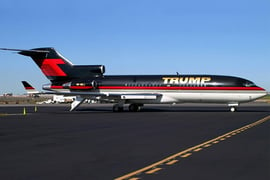
This purchase sits at the center of a presidential airlift program that has quietly morphed from a clean two-aircraft upgrade into a layered, stopgap-heavy ecosystem. The Air Force is keeping the aging VC-25A fleet alive, waiting on two heavily modified VC-25B aircraft from Boeing, overseeing the transformation of a gifted Qatari 747-8 in Texas, and now adding two ex-Lufthansa jets to serve as the connective tissue holding the whole thing together.

Why the Air Force is buying used airline 747-8s
According to the Air Force and confirmed by Reuters, the two Lufthansa aircraft are being acquired specifically to stand up a training and sustainment program as the service transitions from the 747-200 to the 747-8. Boeing no longer builds the 747-8, production having ended years ago, and the differences between the old and new variants are not trivial. This is not a cosmetic update. The 747-8 brings different avionics, systems architecture, maintenance tooling, and support realities.

The airframes in question are well known. Multiple aviation outlets identify them as Lufthansa’s D-ABYD, delivered in August 2012, and D-ABYG, delivered in March 2013. By the time they enter US Air Force service in 2026, both will be roughly 13 years old. In airline terms, that is middle-aged. In military terms, especially for a platform no longer in production, it is prime donor material.

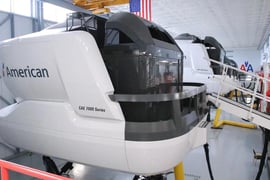
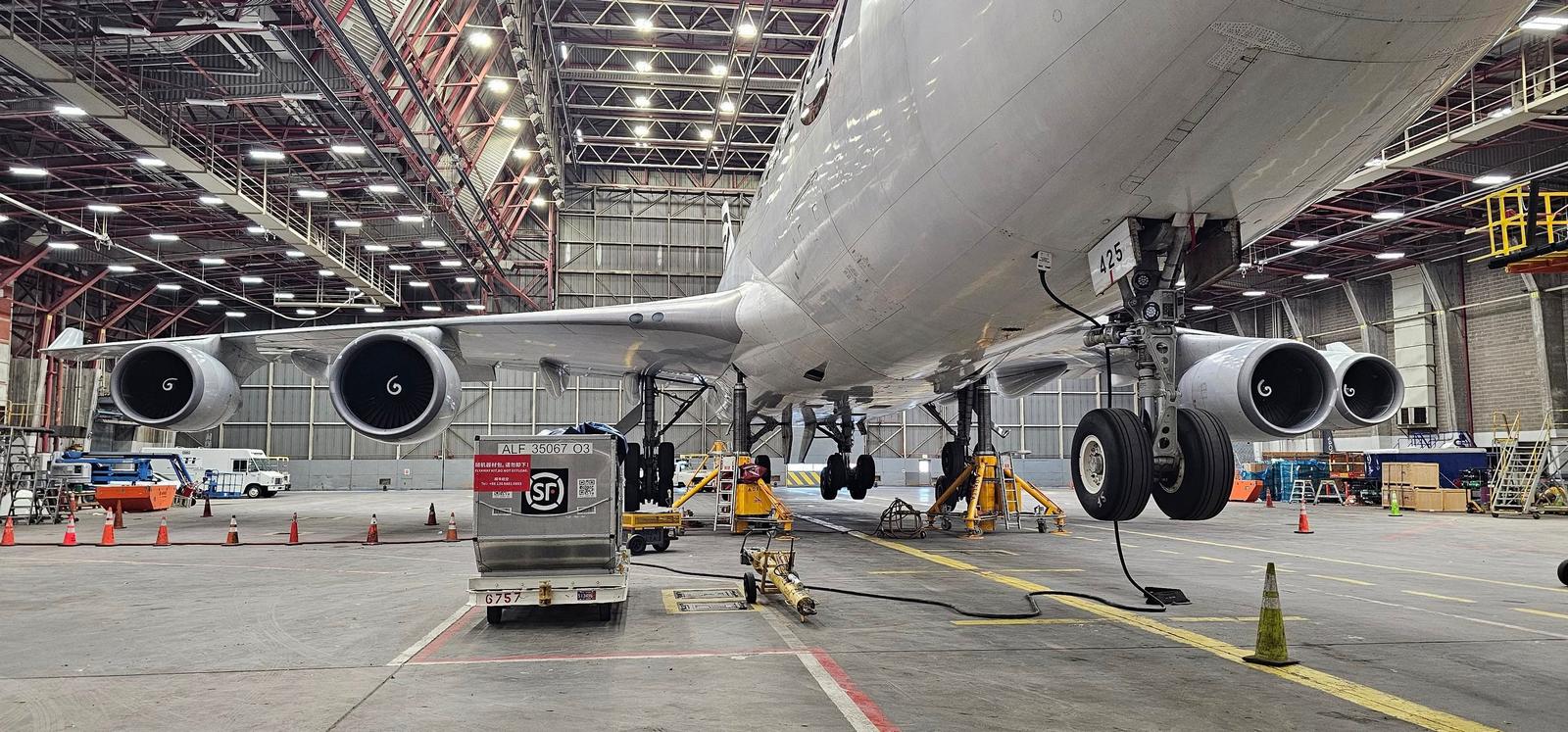
One will function as a flying training aircraft, giving pilots real-world experience on the 747-8 rather than simulators alone. Maintenance crews will train on actual systems, learn failure modes, and build muscle memory around a jet that differs significantly from the 747-200-based Air Force One aircraft flying today. Ground and operations teams will also get hands-on exposure to what it actually takes to support a modern 747 variant.

The second aircraft will serve primarily as a sustainment and spare parts bank. This is the unglamorous core of the deal. With the 747-8 orphaned by the end of production, parts availability becomes a strategy. For a fleet that may ultimately number only a handful of aircraft, even minor supply disruptions can ground missions. Owning entire airframes gives the Air Force control, predictability, and time.

The Qatar jet, the Boeing delay, and the bigger picture
This move cannot be separated from the broader reality that Boeing’s VC-25B program is late, expensive, and politically sensitive. The contract signed in 2018 was a $3.9 billion fixed-price deal. Since then, timelines have slipped repeatedly. The latest estimate puts the first delivery in mid-2028, years behind the original plan.

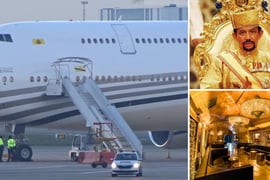
That delay is why the gifted Qatari 747-8 matters so much. Public reporting indicates the aircraft is being modified at a sprawling L3Harris Aerospace facility in Waco, Texas, as a potential interim presidential carrier. The Air Force has said the cost of converting that jet will come in under $400 million, a fraction of a full Air Force One-level transformation, but still a serious effort involving communications, power systems, and security upgrades.

If that Qatari aircraft ends up carrying the president, even temporarily, it will rely on the same underlying 747-8 ecosystem. Training, spare parts, and operational familiarity suddenly become urgent rather than theoretical. This is where the Lufthansa jets fit perfectly. They are not glamorous, but they are foundational.

It is also why the $400 million price tag should not be misunderstood. This is not $400 million to create two new Air Force One aircraft. A true presidential conversion is a years-long marathon of hardened systems, defensive capabilities, secure communications, and power redundancy. What the Air Force is buying here is infrastructure. Training capacity. Parts control. Insurance against the reality that for a tiny, high-stakes fleet, logistics can become the schedule.

Seen together, the strategy is clear. The Qatar jet is about capability soon, if needed. The Lufthansa jets are about making sure that capability does not collapse under its own maintenance burden. The delayed Boeing VC-25Bs remain the long-term goal, but the Air Force is no longer betting everything on a single timeline.
Quietly, this purchase signals something else as well. The Air Force is planning for a long presidential future built around the 747-8, not a short bridge. When you start buying whole airframes just to control spares and training, you are committing to the type for decades. The era of the 747 as Air Force One is not ending. It is just getting far more complicated.