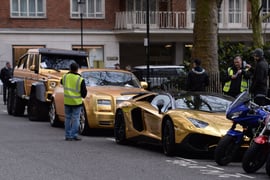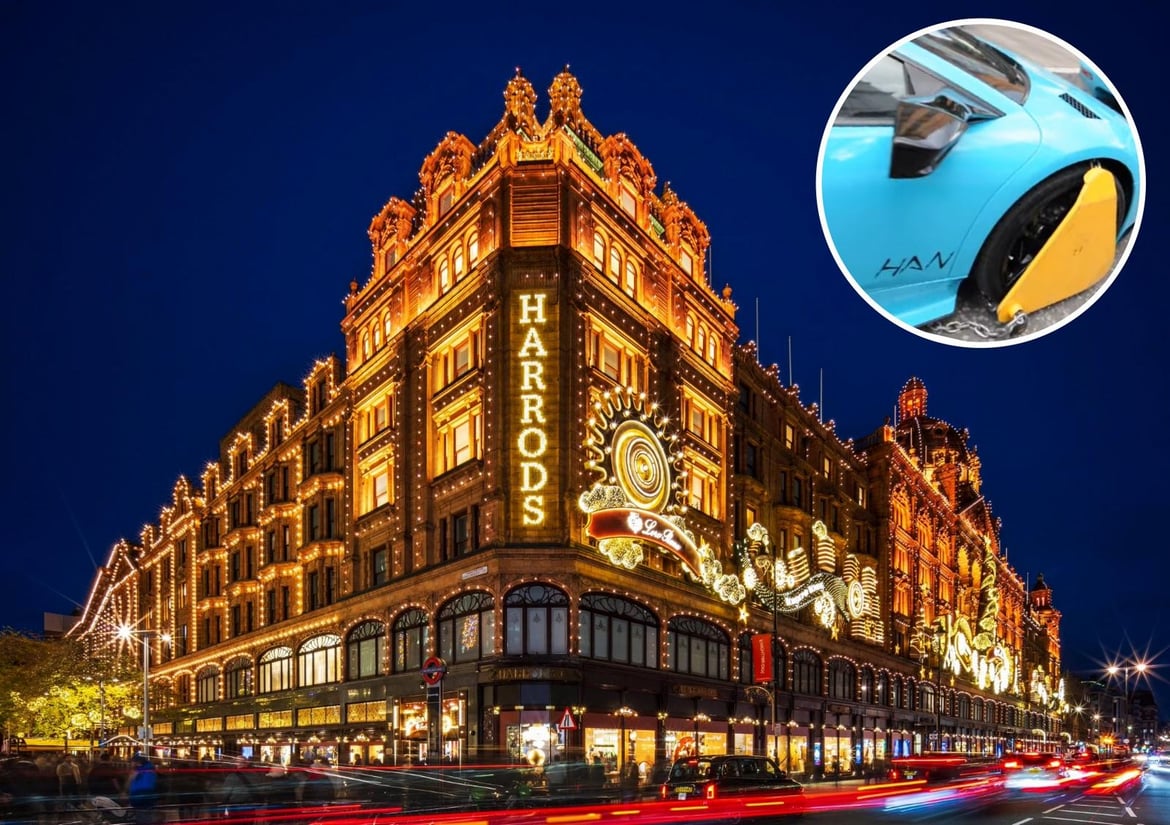
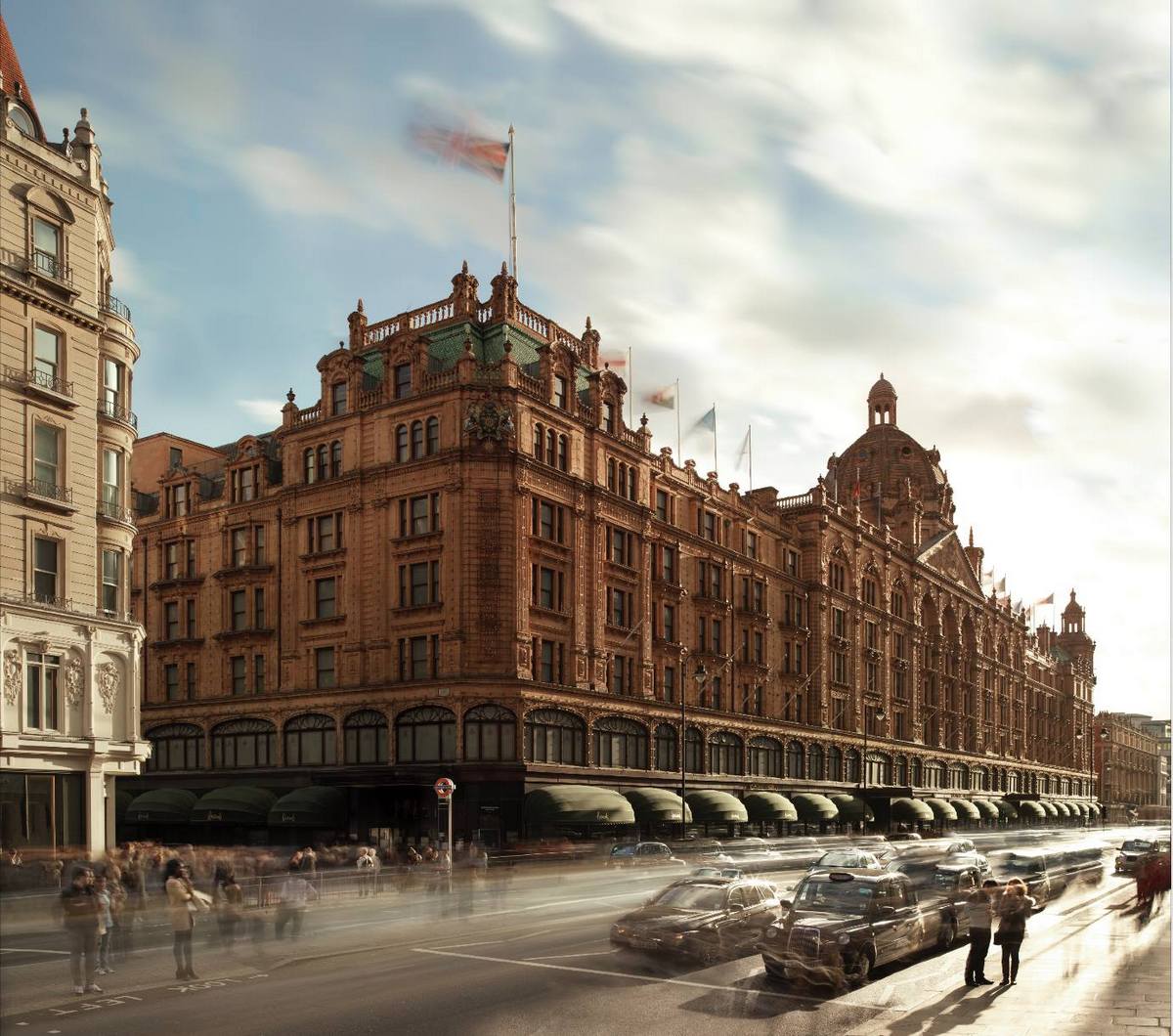
In late July 2010, a scene unfolded in Knightsbridge that captured the contrast between global wealth and local regulation with almost cinematic clarity. Two light blue supercars were wheel-clamped outside Harrods on Brompton Road, drawing crowds, photographs, and a flurry of press commentary. The timing made the moment more pointed. Only a few months earlier, Harrods had been acquired for about $2.3 billion by Qatar Holding under the rule of Sheikh Hamad bin Khalifa Al Thani, the Emir of Qatar from 1995 to 2013. The Al Thani family had just become the new custodians of one of London’s most recognizable department stores, yet here were two of their trademark baby blue cars immobilized directly in front of it.

According to The Telegraph, this incident took place on a weekday afternoon in the week of July 22, 2010, when enforcement officers from the Royal Borough of Kensington and Chelsea clamped the vehicles for being parked in contravention of local rules, as reported by The Guardian. The cars involved were a Koenigsegg CCXR valued at around $2 million at the time and a Lamborghini Murciélago LP670-4 SuperVeloce valued at about $500,000.

Both were painted in the pale blue shade that had become associated with the Al Thani family’s London fleet. The cars were parked nose-to-tail outside the store, which intensified the optics when the clamps were applied. The visual contrast of luxury engineering, rarity and glossy finish against the stark yellow clamps was impossible to ignore.

Harrods declined to confirm ownership of the vehicles. A spokesperson offered a simple line that gave no additional context: “Any matters relating to parking tickets and enforcement are strictly the domain of the Royal Borough of Kensington and Chelsea.” The council, for its part, was firm and unapologetic. A representative explained that Kensington and Chelsea have one of the greatest shortages of residential parking space in the country and that its priority is to ensure residents can use the bays allocated to them. The spokesperson noted, “To keep space available for them, we must deter visitors from taking up residents’ bays and our experience is that clamping is simply the most effective deterrent.”
Contemporary reporting suggested that the cost to release each clamp and settle the penalty came to a little over one hundred pounds per car, depending on how promptly the fines were paid. Some outlets cited the standard civil penalty levels around £70 (roughly $100 back in 2010) for early settlement. Observers pointed out that while the fines were negligible relative to the value of the cars, the real significance lay in the symbolism. One onlooker summed up the sentiment by saying, “Judging by their cars, I shouldn’t think the owners will worry too much about paying a couple of hundred quid to have the clamps taken off.”

The episode quickly became one of the most referenced moments of that year’s Knightsbridge “supercar season,” a period in summer when high-value cars from the Gulf states appear in large numbers across the district. These seasonal arrivals are often associated with display driving, street-side parking for visibility and crowds gathering to photograph rare machinery. The clamping demonstrated that enforcement would be applied equally, irrespective of wealth, profile or ownership of local landmarks. It served as a reminder that while the Al Thani family had purchased Harrods, they had not purchased the streets outside it.

Context deepens the contrast. In Qatar, traffic often clears to allow royal or diplomatic convoys to progress smoothly. Rolling blocks, escorted lanes and temporary halts are normal when senior figures move through the city. By contrast, London maintains flow through minimal disruption. Police escorts, when used, create only temporary rolling delays and general movement resumes almost immediately. The wheel clamp outside Harrods was a visible expression of that difference. In one city, roads open for them to pass. In the other, the cars are clamped if they stop where they should not.

The clamping became an enduring reference clip, used in later discussions about summer supercar culture in London, tourism-driven vehicle displays and the pressures of shared public space. It remains a clear example of how a simple parking rule can reveal the boundaries between private wealth and public order, even when the vehicles in question belong to one of the wealthiest families in the world and are parked outside their own store.