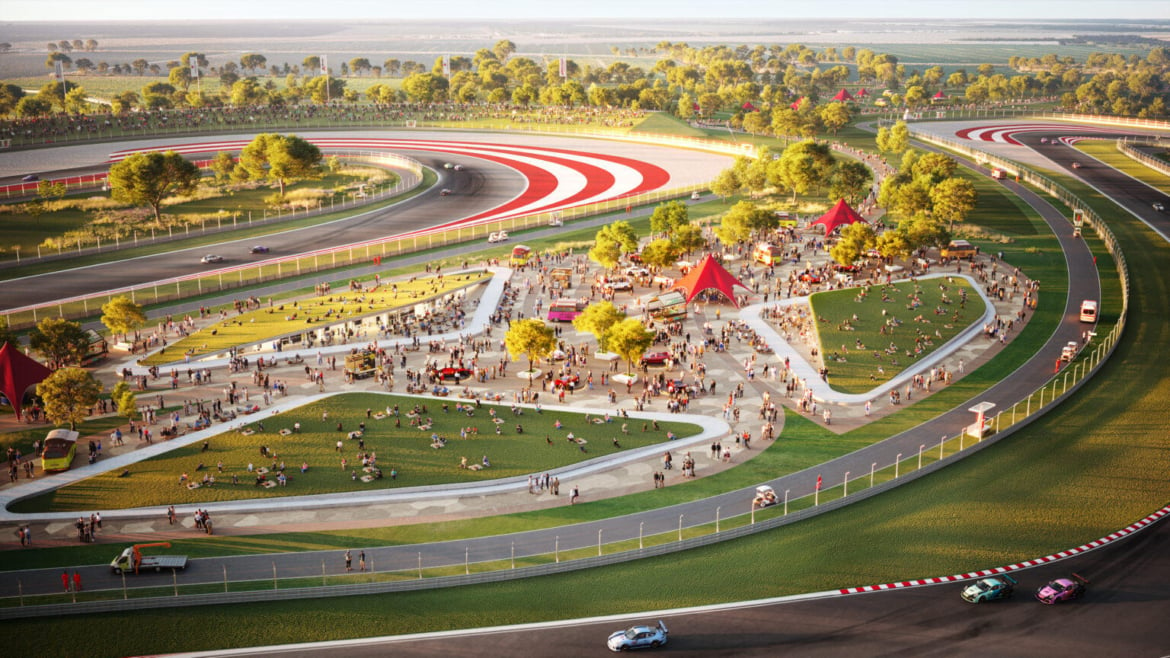
A family tied to the pharmaceutical empire behind Ozempic wants to build what could become the most ambitious motorsport project in Danish history. In the tiny border town of Padborg, home to barely 4,000 residents, plans are now taking shape for a gigantic racing complex that its backers hope can eventually attract Formula 1.

The proposed Circuit of Denmark carries a reported budget of DKK 3.8 billion, or roughly $560 million, and the scale borders on absurd by Scandinavian standards. The planned track would stretch 6.006 kilometers with 18 corners and capacity for up to 100,000 spectators, numbers that place it closer to modern Formula 1 destinations than traditional Nordic racing venues. The project is being developed out of the existing Padborg Park circuit in southern Jutland, transforming a regional motorsport facility into something designed to compete on the international stage.

Denmark’s tiny border town wants a place on the Formula 1 calendar
What makes the proposal fascinating is that this is not being sold as a racetrack alone. The people behind the project are pitching an entire motorsport campus with year-round commercial life attached to it. Plans include advanced driver training facilities, karting and motocross areas, a hotel, conference and exhibition spaces, tourism infrastructure, and public activity zones surrounding the circuit.

Even the visuals released for the project reveal a deliberate strategy. This is not a fantasy circuit dropped into an empty field somewhere in rural Denmark. The development expands directly out of the footprint of Padborg Park, which already hosts racing activity today. That gives the proposal a degree of authenticity missing from many billionaire vanity projects that begin with glossy renderings and little connection to existing motorsport culture.
The location itself is also part of the business logic. Padborg sits near the German border, which gives the future circuit access not only to Danish fans but also to northern Germany and broader European road traffic. It is one reason the branding matters so much. Calling it Circuit of Denmark instead of something more regional signals exactly what the developers want this place to become. They are attempting to create a national motorsport arena with international pull rather than a local racetrack hidden in southern Jutland.

The circuit layout is being designed by WurzDesign, the company led by former Formula 1 driver Alexander Wurz, whose modern track work has earned a strong reputation for combining safety with better racing flow and overtaking opportunities. That involvement instantly gives the project more credibility inside motorsport circles because Wurz has become one of the sport’s most respected circuit designers.

The Ozempic connection gives the project an entirely different aura
The names behind the proposal are Henrik Lyngbye Pedersen and his son Mathias Lyngbye Villadsen, both of whom are active in motorsport. Mathias is not simply a wealthy enthusiast writing checks from the sidelines. He progressed through the Danish DS3 Cup before moving into GT4 racing in Italy and later stepping into GT3 competition. In 2026 he is racing alongside Danish motorsport legend Jan Magnussen, a connection that adds genuine racing credibility to the project.

The family’s connection to Novo Nordisk is what makes the story into international headline material. Novo Nordisk, the pharmaceutical giant behind Ozempic, became one of Europe’s most valuable companies after the diabetes treatment exploded into a global weight-loss phenomenon. In financial terms, Novo became far more than a pharmaceutical company. It turned into one of the defining corporate success stories of modern Europe.

Whether Formula 1 ever races in Padborg remains uncertain because building a track is far easier than securing a place on the calendar. Modern Formula 1 requires political backing, tourism capacity, transport infrastructure, and enormous commercial guarantees. Still, the project already represents something Denmark has never truly had before, a serious attempt to build a permanent world-class home for motorsport in a country that has spent decades producing racing talent without possessing a top-tier international circuit of its own.