Most world leaders arrive at international summits hidden behind layers of diplomatic choreography, surrounded by aides, security teams, and military protocol that turns even a routine landing into a carefully managed spectacle. Hassanal Bolkiah has spent decades operating differently. When the Sultan of Brunei arrived in Cebu for the ASEAN Summit, attention immediately shifted away from the diplomatic agenda and toward the extraordinary sight of the monarch personally flying his own Boeing 747 into the Philippines.

According to the Inquirer, the aircraft that the sultan piloted himself to Cebu was widely identified by aviation and local coverage as Brunei’s Boeing 747-8 BBJ, registration V8-BKH. That distinction matters because public mythology around the Sultan’s aviation empire often collapses every aircraft into the same “flying palace” narrative built around his older Boeing 747-400. The Cebu arrival appears to have involved the newer Boeing 747-8, which changes the conversation entirely. This was not merely a lavish royal aircraft arriving in Southeast Asia. It was one of the most modern and technically capable VIP jumbos ever built, personally operated by the ruler who owned it.

The Sultan at the controls of one of aviation’s last true giants
According to Brunei’s Ministry of Defence, Hassanal Bolkiah is a qualified pilot of both airplanes and helicopters, a credential he has reinforced repeatedly over the years through official travel that placed him in the cockpit rather than the passenger cabin. Reuters reported in 2013 that he personally flew his own Boeing 747 to Washington for a White House meeting, prompting Barack Obama to joke that Bolkiah was “probably the only head of state who flies a 747 himself.” Indian coverage also documented him piloting his jumbo to New Delhi in 2012. Cebu was therefore not some theatrical one-off staged for cameras. It was another chapter in a remarkably consistent pattern of royal aviation.

The Boeing 747-8 itself makes the story even more extraordinary. Boeing’s VIP specifications describe an aircraft with nearly 5,000 square feet of cabin space, room for around 75 passengers, a range of approximately 8,500 nautical miles, and cruising speeds approaching Mach 0.86. The aircraft also incorporates newer-generation technology derived partly from the 787 program, including quieter operations, improved efficiency, advanced navigation systems, and a far more modern flight deck than the older 747-400 generation.
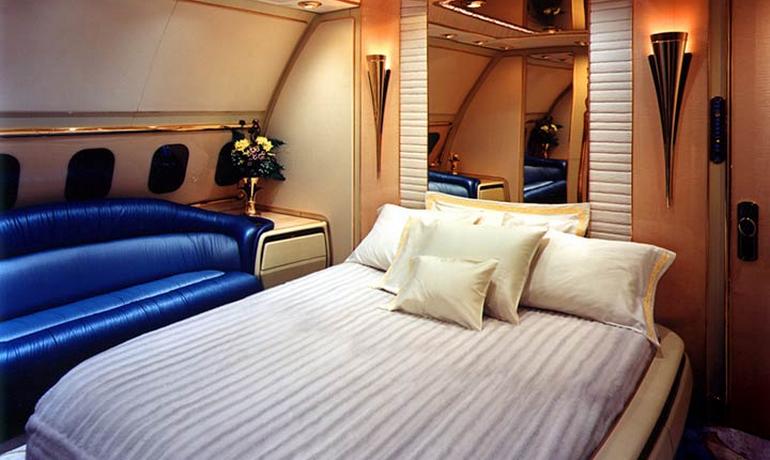
Inside, the aircraft would almost certainly reflect the extravagant standards long associated with the Brunei royal fleet. The Sultan’s older Boeing 747 became globally famous for its gold-covered interiors, ornate fixtures, crystal detailing, and “flying palace” reputation that blurred the line between state transport and airborne monarchy.

The newer 747-8 BBJ appears to represent a more modern evolution of that legend. The technological sophistication may have advanced dramatically, but few observers doubt the cabin remains an environment shaped by extraordinary luxury, royal protocol, and the unmistakable aesthetics of Gulf-and-Asian ultra-wealth.

A four-engine aircraft that still commands respect from pilots
What makes the Cebu arrival compelling is not simply that the Sultan can fly, but what he chose to fly. Even in modern aviation, the Boeing 747 remains a demanding machine. Aviation historians and pilot training experts have long described the aircraft’s size and systems complexity as so significant that the original 747-era helped reshape modern airline training standards and accelerated the development of sophisticated simulator programs. This is not an oversized private toy dressed in royal colors. It is an aircraft family that fundamentally changed professional aviation.
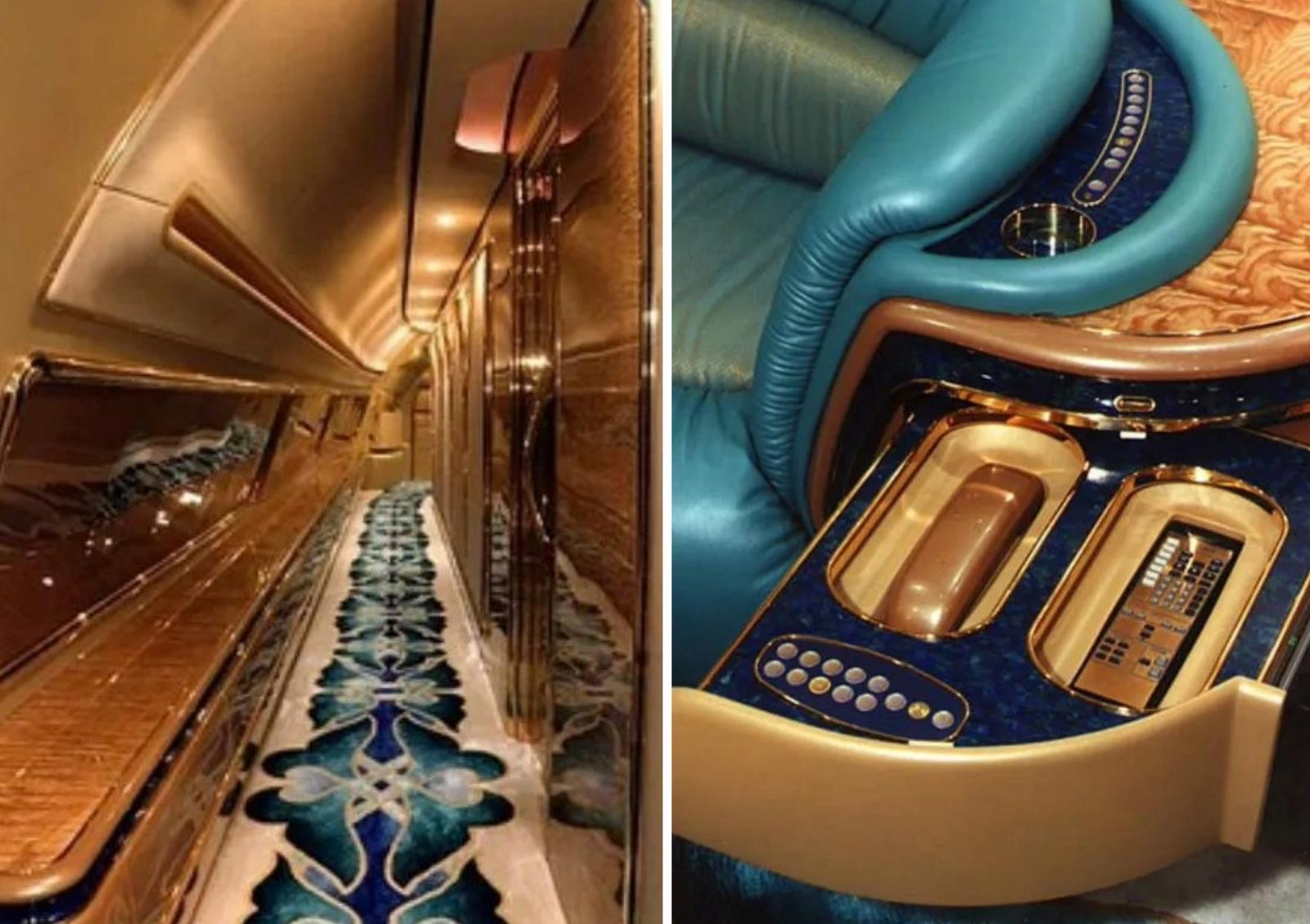
The 747-8 narrows the gap between classic jumbo jets and newer twin-engine airliners through advanced avionics, electronic checklists, moving-map systems, and updated flight management technology. Boeing test pilots have even noted that experienced 747-400 pilots could transition into the 747-8 with surprisingly limited additional training.

Yet none of that changes the reality that flying a four-engine jumbo remains a deeply serious undertaking. The scale, workload, and physical presence of a Boeing 747 still carry a level of command that modern aircraft increasingly hide behind automation.
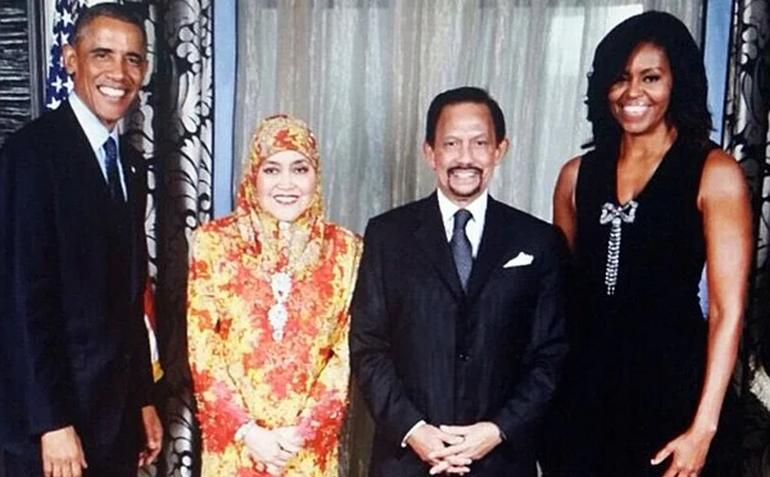
That is why the image from Cebu resonated so strongly. In an age when royalty often appears carefully insulated from technical skill or operational responsibility, the Sultan of Brunei arrived at a diplomatic summit seated at the controls of one of aviation’s last great icons, personally guiding a Boeing 747-8 across international skies instead of simply reclining behind them.