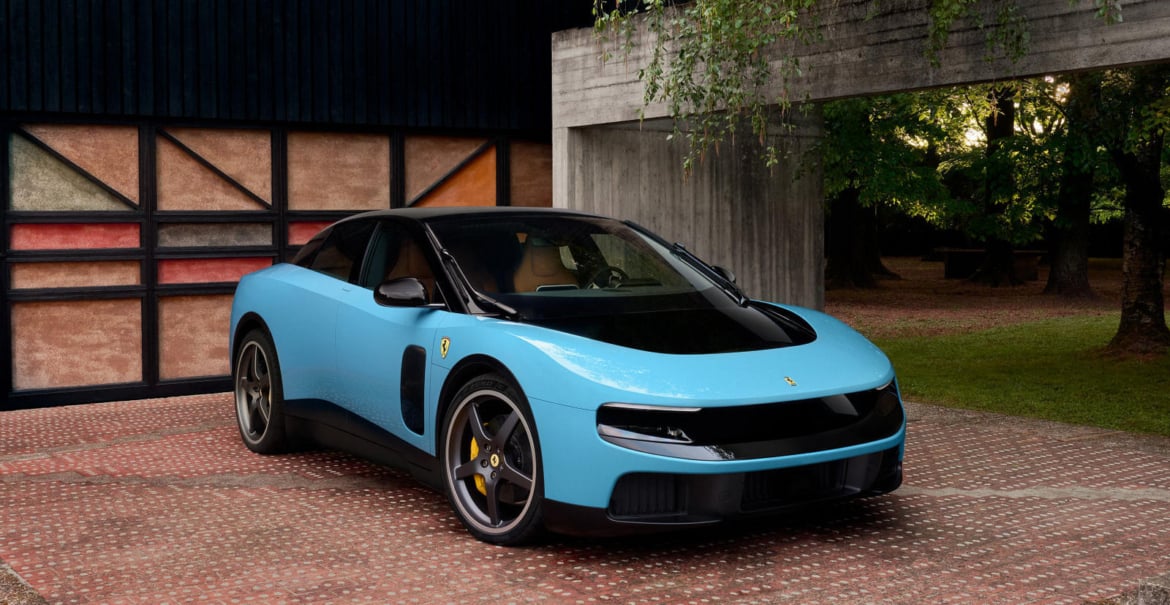
Ferrari has finally crossed the line it spent years pretending it could delay forever. The company from Maranello, whose mythology was built on screaming V12s, gated manuals, Formula One heritage, and the mechanical violence of combustion engines, has unveiled its first-ever all-electric production car. The Ferrari Luce is not simply another EV arriving in the luxury segment. It represents one of the biggest identity shifts in the company’s history, with orders opening immediately and prices reportedly starting at €550,000, or roughly $640,000 before customization.

The reaction has been deeply divided. Traditional enthusiasts are struggling with the idea of a silent Ferrari, while technology-focused luxury buyers see the Luce as a glimpse into the future of exotic cars. Yet beneath the controversy sits an enormously ambitious machine that blends Italian performance engineering with consumer electronics, artificial sound design, and Formula One-inspired technology. Ferrari clearly knows the stakes are enormous because the Luce is not just another launch. It is the company testing whether the Prancing Horse can survive the post-engine era without losing its soul. Here are the ten biggest things you should know about Ferrari’s first electric car.

10. Ferrari does not want to build a Tesla
Ferrari spent years studying how to avoid turning the Luce into a cold, software-dominated appliance. Instead of chasing minimalist interiors and giant tablet screens, the company focused heavily on tactile controls, premium materials, steering feel, and emotional engagement. Ferrari understands that its customers are not looking for efficient transportation. They are buying drama, exclusivity, and a sense of occasion. The Luce therefore aims to feel handcrafted and theatrical rather than clinical and futuristic in the typical Silicon Valley sense.

9. The name “Luce” carries a deeper message
The decision to abandon the temporary “Elettrica” name in favor of Luce, which means “light” in Italian, appears carefully calculated. Electric cars are often criticized for being heavy, isolated, and emotionally flat, so Ferrari seems eager to present its first EV as elegant and agile before customers even experience the car. The name also aligns with the vehicle’s design language, which reportedly emphasizes flowing surfaces, large glass sections, reflections, and visual lightness. Ferrari is essentially trying to rebrand the emotional image of an EV.
8. Jony Ive helped shape the design philosophy
Former Apple design chief Jony Ive and his LoveFrom studio reportedly played a role in developing parts of the Luce experience. That alone marks a dramatic shift for Ferrari, which historically guarded its design culture closely within Maranello. The influence can reportedly be seen in the clean cabin architecture, restrained use of physical clutter, layered glass elements, and the emphasis on materials rather than decorative excess. Ferrari appears to be combining Italian automotive sensuality with the polished industrial design language that once defined Apple’s most iconic products.

7. Samsung smartphone technology powers the cockpit
The Luce uses advanced Samsung OLED display technology similar to the panels found in flagship Galaxy smartphones. Ferrari’s layered display arrangement includes multiple OLED screens positioned throughout the cabin, including a stacked system designed to create floating graphics and pseudo-3D visual effects.

The technology allows information like torque delivery, navigation, and performance data to appear suspended within the dashboard. Ferrari clearly understands that luxury buyers increasingly judge interiors the same way they judge premium consumer electronics, where display quality and visual sophistication matter enormously.

6. Ferrari is engineering artificial emotion
One of Ferrari’s biggest challenges was solving the silence problem. The company’s entire identity has historically revolved around engine sound, vibration, gearshifts, and mechanical resonance. Reports suggest Ferrari developed synthetic acoustic systems and engineered vibration feedback to create a new kind of sensory experience inside the Luce. Instead of pretending silence alone is exciting, Ferrari appears determined to create what could best be described as digital mechanical theater. The company knows a Ferrari that feels emotionally numb would damage the brand far more than electrification itself.

5. It is far more practical than expected
Rather than launching its EV journey with a tiny two-seat hypercar, Ferrari reportedly developed the Luce as a four-door grand tourer with real passenger space and everyday usability. The strategy feels closer to the philosophy behind the Ferrari FF and GTC4Lusso than the company’s hardcore track-focused machines.

That decision reveals Ferrari’s target audience for the Luce, which likely includes wealthy families, urban luxury buyers, and technology-focused customers in markets like California, the Middle East, and China. Ferrari wants the car to become part of daily life rather than an occasional weekend toy.

4. The performance numbers still sound outrageous
Even while reinventing itself, Ferrari appears unwilling to compromise on headline performance. The Luce is equipped with proprietary e-motors that can produce a cumulative output of 1,035 horsepower, while accelerating from 0 to 62 mph in roughly 2.5 seconds and reaching a top speed of around 193 mph. The quad motors feature advanced torque vectoring systems capable of controlling power delivery individually at each wheel.

The motors are fed by a 122-kWh gross battery pack that doubles as a structural part of the chassis itself. Ferrari is said to have designed and manufactured both the battery and electric motors in-house, highlighting how seriously the company is taking the project. The Luce also features an 800-volt electrical architecture capable of charging at up to 350 kW. Ferrari estimates the range at around 330 miles under the European WLTP cycle, which would translate to roughly 280 miles under EPA testing standards. Ferrari understands that performance dominance remains central to its identity, so the Luce is being presented not as an eco-friendly luxury car but as an electric technological superweapon.

3. Formula One thinking shaped the engineering
Ferrari developed key EV components internally at its new Maranello e-building facility rather than relying entirely on outside suppliers. Much of the energy management philosophy and hybrid expertise appears connected to Ferrari’s Formula One experience, where the company has spent years refining electrified performance systems under extreme conditions. That connection matters because Ferrari is trying to preserve continuity between its racing heritage and its electric future. The Luce is therefore being framed less as a compromise and more as a natural evolution of Ferrari’s high-performance engineering culture.

2. Ferrari still believes combustion engines matter
Despite the attention surrounding the Luce, Ferrari has quietly reduced its long-term EV expectations. The company now expects a substantial portion of its future lineup to remain hybrid or fully combustion-powered well into the next decade. That decision reflects Ferrari’s understanding of its customer base, where wealthy enthusiasts still crave the sound, vibration, and emotional intensity of traditional engines. The Luce is therefore not intended to replace Ferrari’s V12 identity entirely. Instead, it expands the portfolio while allowing the brand to remain connected to its historic roots.

1. The Luce could become Ferrari’s defining modern car
The importance of the Luce goes far beyond sales figures or performance numbers. This is effectively Ferrari testing whether its mythology can survive the transition into the post-combustion era. If the project fails, Ferrari risks becoming a nostalgic heritage brand disconnected from younger luxury buyers and future markets. If it succeeds, the company could define what an emotional ultra-luxury EV looks and feels like before rivals fully understand the category themselves. That makes the Luce arguably Ferrari’s most strategically important road car since the F40.