
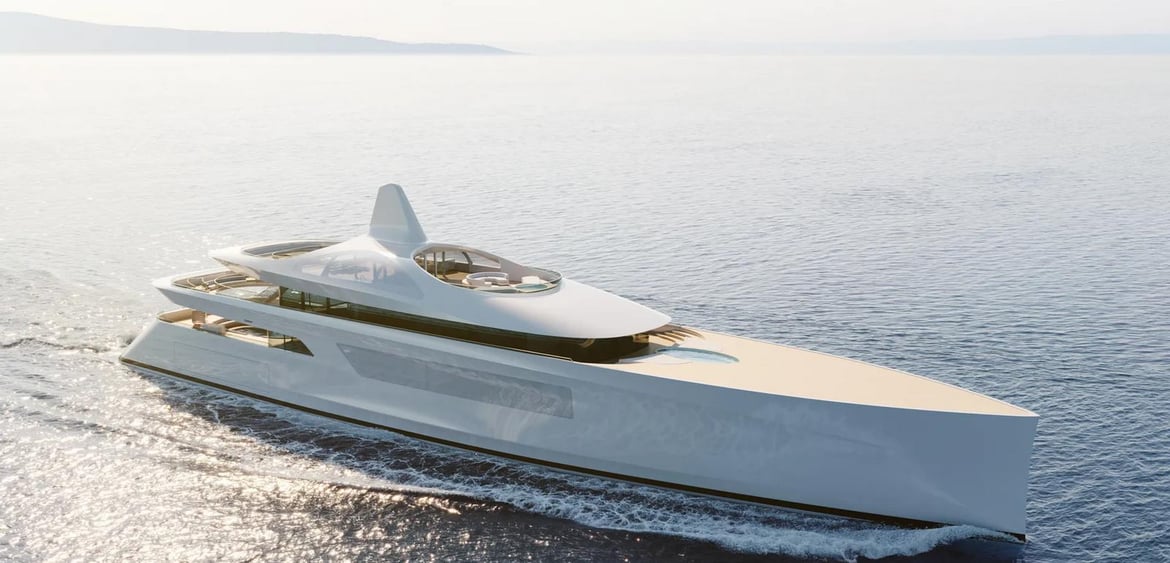
When Bill Gates’ hydrogen powered superyacht Breakthrough was announced, it marked one of the most ambitious attempts yet to redefine what a luxury vessel could be. Built by the Dutch shipyard Feadship, it showed the world that billionaires were not only commissioning floating palaces but were also willing to invest in pathbreaking clean propulsion technologies. Breakthrough, with its vast hydrogen tanks and fuel cell systems, proved that a superyacht could be both opulent and environmentally forward-looking, setting a new benchmark for the industry.

Now Feadship is taking its vision even further, entering a conversation that could reshape maritime mobility for decades to come. The shipyard has officially joined the Nuclear Energy Maritime Organization, or NEMO, a non-governmental group formed in 2024 to create global rules for floating nuclear power.

NEMO brings together shipyards, class societies, reactor firms, and insurers to develop the standards and safety frameworks needed if nuclear energy is ever to go to sea. Members include Lloyd’s Register, RINA, BWXT, Westinghouse, TerraPower, HD KSOE, VARD, and Onomichi Dockyard, alongside insurers like NorthStandard and Nuclear Risk Insurers. The group is already in talks with the International Maritime Organization and the International Atomic Energy Agency to stitch together a coherent global rulebook.

For Feadship, joining NEMO does not signal the imminent launch of a nuclear yacht. Rather, it is about shaping the landscape early, contributing its expertise to regulation and responsible innovation. “Nuclear power may not be tomorrow’s solution for superyachts, but it could be part of the long-term horizon,” says Giedo Loeff, the company’s Head of Innovation and Strategy. The yard frames this as long-horizon research and standards-shaping, positioning itself at the table where the future is being defined.

There are breadcrumbs that suggest Feadship has already studied nuclear ideas in some detail. Its historic concept work, such as the “Relativity” project, explored thorium molten-salt reactors at a paper level. Internally, the yard has assessed the technological, regulatory, and operational implications of such systems, even if practical adoption is decades away.
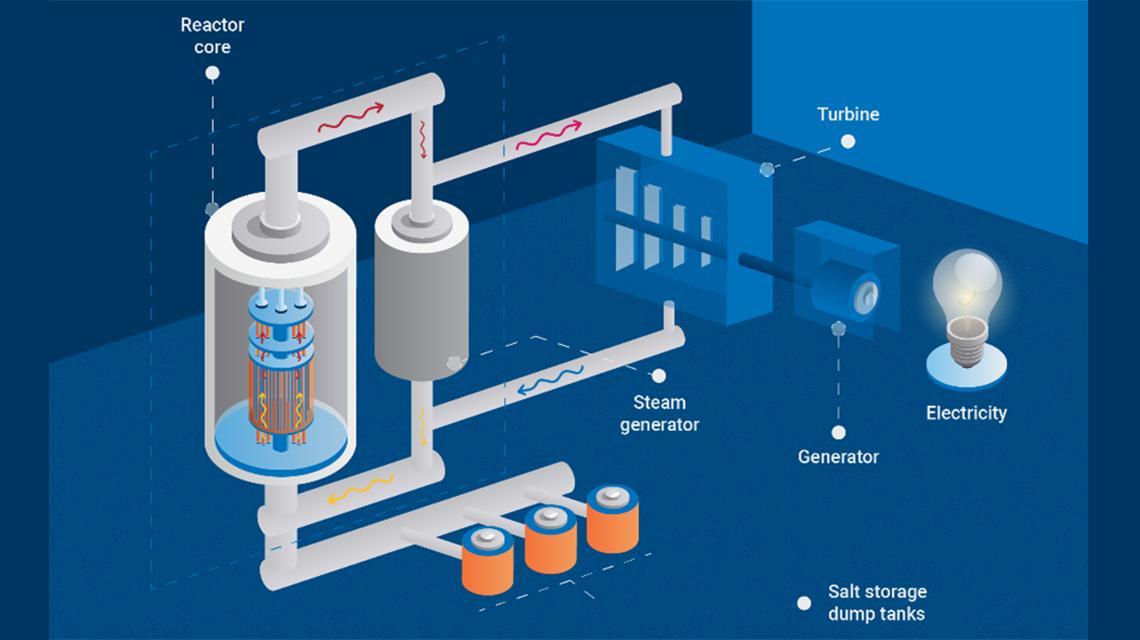
The types of reactors under discussion are not traditional naval systems but newer small modular pressurized water reactors and Generation IV molten-salt reactors, often thorium or HALEU based. These designs promise strong passive safety, operate at low pressure, and can potentially run for ten to fifteen years without refueling. In theory, they could deliver ten to over one hundred megawatts of electricity, enough to drive a yacht or even supply synthetic fuel plants offshore.

The allure is obvious. A nuclear powered superyacht would offer zero carbon operation, virtually unlimited range, and silent electric drive without the constant need for bunkering. Yet the challenges are equally large. Shielding, safety systems, and regulatory compliance consume enormous mass and volume, making them difficult to integrate into all but the largest hulls. Some concept studies suggest that the supporting infrastructure alone could weigh thousands of tons.
Still, Feadship’s move shows that the shipyard which pioneered hydrogen superyachts is unwilling to close the door on any transformative technology. For the billionaires of tomorrow, nuclear may not be today’s solution, but the groundwork for that future is quietly being laid.