The aircraft at the center of the recent Washington shuffle has quietly taken on a new identity. Now that Kristi Noem has been ousted from the role of the United States secretary of homeland security, the $70 million Boeing BBJ Max 8, once tied to her tenure, is expected to transition into a far more visible role, with officials indicating that Melania Trump will have access to the jet for travel. The shift comes at a moment when Donald Trump is still waiting on a much larger aircraft project to come online, leaving this narrowbody-derived jet to step into a surprisingly prominent position.
In practical terms, the development creates an unusual dynamic at the top of American aviation. While the president awaits the completion of a widebody conversion, the first lady is poised to operate from a platform that blends airline engineering with private aviation indulgence, as pointed out by the WSJ. The BBJ Max 8, derived from the Boeing 737 MAX, was never designed as a modest people mover in this configuration. It was conceived as a statement aircraft, and its interior tells that story in far greater detail than the headlines suggest.
A narrowbody jet configured like a private residence
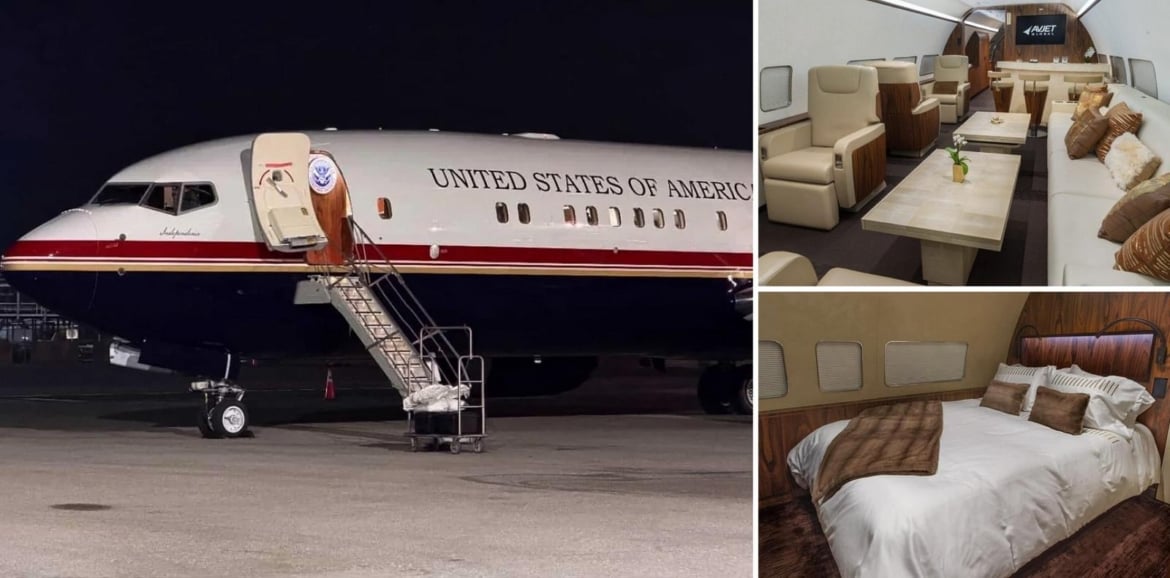
The easy shorthand has been to describe the aircraft as having a bedroom, a shower, and a bar, but the underlying specification reveals something far more deliberate. The jet was marketed as a five-zone VVIP layout designed for just 17 passengers, a number that immediately reframes its purpose. Where a standard 737 would carry well over 160 travelers, this aircraft trades density for space, turning a commercial platform into a multi-room residence in the sky.

At the heart of that transformation are two separate queen-bed suites. One is configured as a master suite, and the other as a guest suite, and both are equipped with dedicated monitors, storage, and direct access to full stand-up showers. That detail is unusually telling.

Dual shower suites on a narrowbody aircraft are rare, and their inclusion signals a level of planning that pushes the jet beyond executive transport and into something closer to a flying apartment.

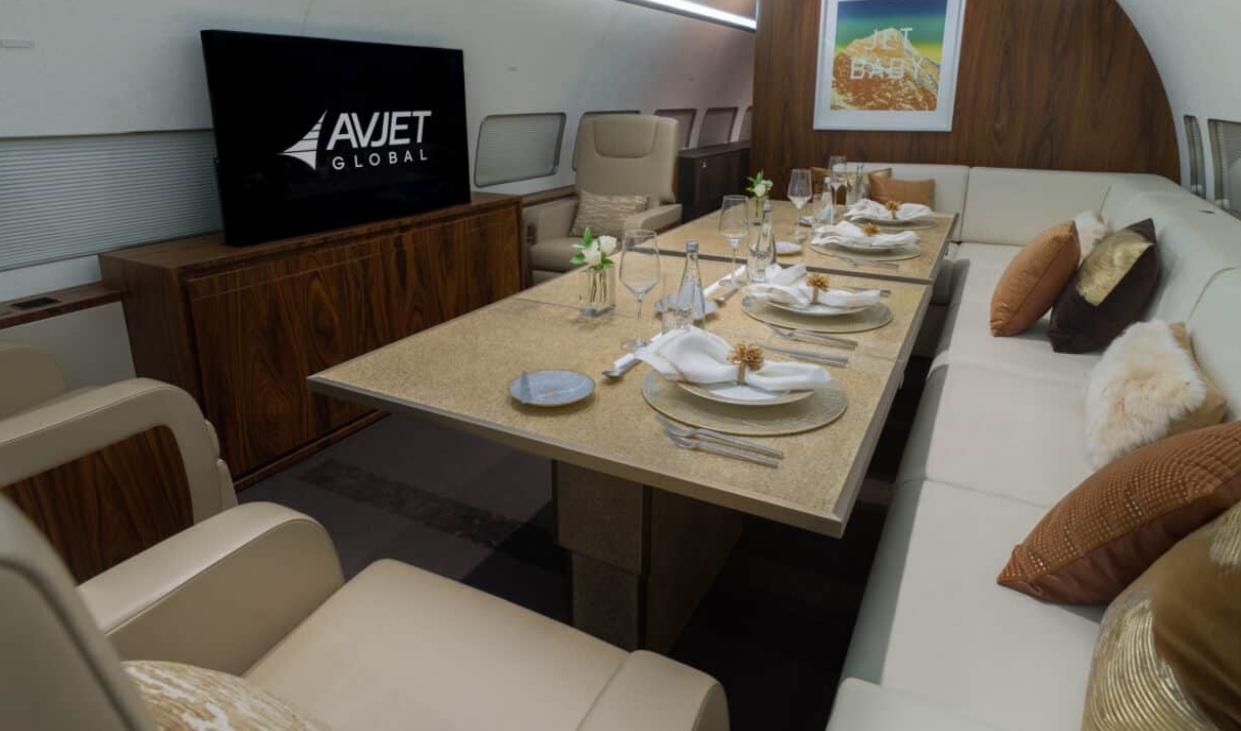
The galley reinforces that shift in tone. Rather than the compact, efficiency-driven layout typical of airline service, this one leans toward a residential kitchen. It includes dual refrigerators, two convection ovens, a microwave, double sinks, and carefully planned storage for china, silverware, and stemware. A buffet bar anchors the space, while a separate wet bar in the forward lounge adds a social dimension, complete with its own refrigeration and wine storage. The message is clear. This aircraft was built not just for transit, but for hosting.

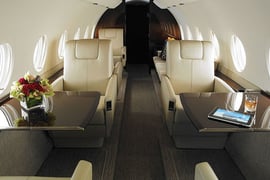
That emphasis continues through the cabin’s multiple lounge areas. Instead of a single VIP section, the interior is divided into distinct social zones, each designed for conversation and extended use.

Divans, club seating, adjustable tables, and large UHD displays create an environment where meetings can unfold organically rather than formally. It is a layout that favors privacy and flexibility, allowing passengers to move between work, relaxation, and interaction without ever feeling confined to a single space.

The finer details are where the aircraft begins to separate itself from even other high-end government jets. Enhanced soundproofing reduces cabin noise to a near-muted background. A cabin humidification system and lower effective cabin altitude improve comfort on long-haul missions. Ka-band connectivity ensures uninterrupted communication, while an external camera system adds situational awareness. Even the lavatories feature electronic bidets, a detail that underscores how obsessively specified the aircraft is. This is not simply an expensive jet. It is one that has been engineered to feel effortless in use.

A smaller jet stepping into a larger spotlight
The contrast between the aircraft’s capabilities and its capacity remains one of its most striking characteristics. A platform designed to carry hundreds has been reimagined for fewer than twenty occupants, and that imbalance is precisely what gives the jet its presence. It occupies a space somewhere between utility and indulgence, offering intercontinental range and airline-grade reliability while presenting itself as a highly curated private environment.

Visually, the aircraft adds another layer to its identity. Aviation observers have noted that its livery echoes a red, white, and blue scheme once envisioned for future presidential aircraft. The fuselage carries “United States of America” titles, and the name “Independence” appears beneath the cockpit, giving the jet a symbolic weight that extends beyond its size. For an aircraft that began life as a departmental asset, it now carries the visual language of something far more central.

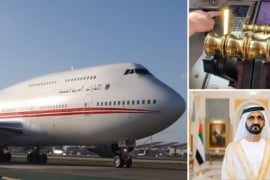
That positioning becomes even more interesting when viewed alongside the larger project still in progress. The administration is currently overseeing the conversion of a Boeing 747 gifted by Qatar, a widebody aircraft that is being modified in Texas to serve as a temporary presidential transport. The jet is expected to emerge with a new livery, aligning it more closely with the presidential fleet’s evolving visual identity.
Until that aircraft is ready, the BBJ Max 8 occupies a unique role. It is smaller, more agile, and arguably more intimate, yet it delivers a level of comfort and specification that places it firmly in the upper tier of government aviation. In that sense, its reassignment is less about filling a gap and more about redefining what a narrowbody aircraft can represent when it is freed from the constraints of commercial use.