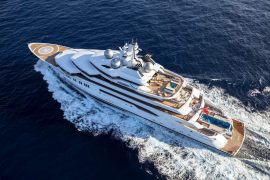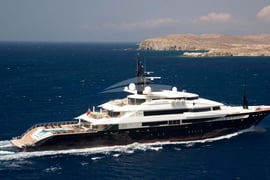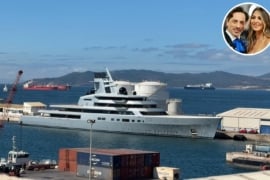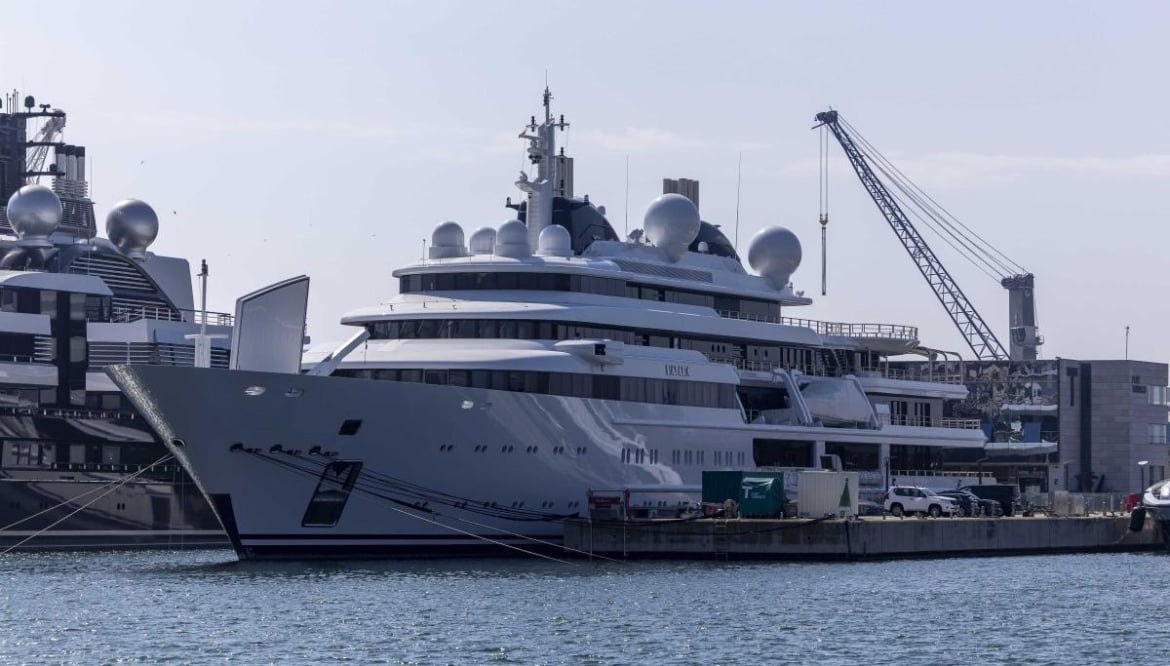
The Port of Tarragona in Spain has seen its share of visiting superyachts, but few linger quite like the $400 millon Katara. The 124-meter (about 408 feet) flagship of former Emir of Qatar, Hamad bin Khalifa Al Thani, arrived on March 2, and nearly a month later, it remains firmly planted against the quay with no departure date in sight. In the slow theater of Mediterranean yachting, where arrivals are fleeting and departures often discreet, Katara’s extended stay feels deliberate, almost territorial, as if the port has become a temporary extension of its owner’s domain.

What appears from a distance as a serene floating palace is, in reality, a machine that never truly powers down. Even at rest, Katara hums with the quiet intensity of a small industrial complex, drawing energy not in bursts, but in a steady, relentless stream that reveals the true cost of sustaining luxury at this scale.

A floating palace that never sleeps
A yacht like Katara does not sit idle. It breathes, circulates, cools, cleans, and entertains, all at once. With an estimated average hotel load hovering between 250 and 500 kilowatts and often surging higher, a working figure of 750 kilowatts over its current stay paints a more revealing picture. Over 23 days in Tarragona, that translates to roughly 414,000 kilowatt-hours of electricity consumed, a figure that edges into the realm of small-town infrastructure rather than private leisure.

Put into perspective, that amount of energy could power close to 480 average American homes for an entire month. Financially, the figure lands somewhere around €120,000 (almost $140,000) for electricity alone, and that is before factoring in fuel, crew wages, maintenance, and the quiet churn of systems that keep the yacht in a constant state of readiness. Katara may not be moving, but it is far from still.

The reason lies in what the yacht actually is. Beneath its sculpted exterior, Katara operates as a fully integrated environment. Air conditioning runs across guest suites and crew quarters to maintain perfect interior climates regardless of the Mediterranean sun. Galleys function like those of a high-end hotel, supported by refrigeration and cold storage that never switch off. Laundry systems cycle continuously, water pumps regulate onboard reserves, and pool and spa systems maintain pristine conditions around the clock.
Lighting spans multiple decks, elevators glide between levels, and a cinema, communications arrays, and bridge systems remain active. Add to that a beauty salon, gym, and expansive hospitality areas, and the energy demand begins to resemble that of a luxury resort rather than a vessel tied to a dock.

Built for distance, designed for excess
Katara itself is a product of the uppermost tier of yacht building. Delivered in 2010 by Lürssen, with exterior lines by Espen Øino and interiors attributed to Alberto Pinto, it was conceived as both a technical achievement and a statement of intent. Its steel hull and aluminum superstructure stretch to 124.4 meters, with a beam of around 19 meters, giving it the volume and presence expected of a yacht in this echelon.

Performance is equally substantial. A top speed of 20 knots and a cruising speed of around 15 knots are paired with a transoceanic range of roughly 5,000 nautical miles, allowing it to move between continents without hesitation. It can host around 34 guests while accommodating up to 95 crew, effectively functioning as a private floating institution.
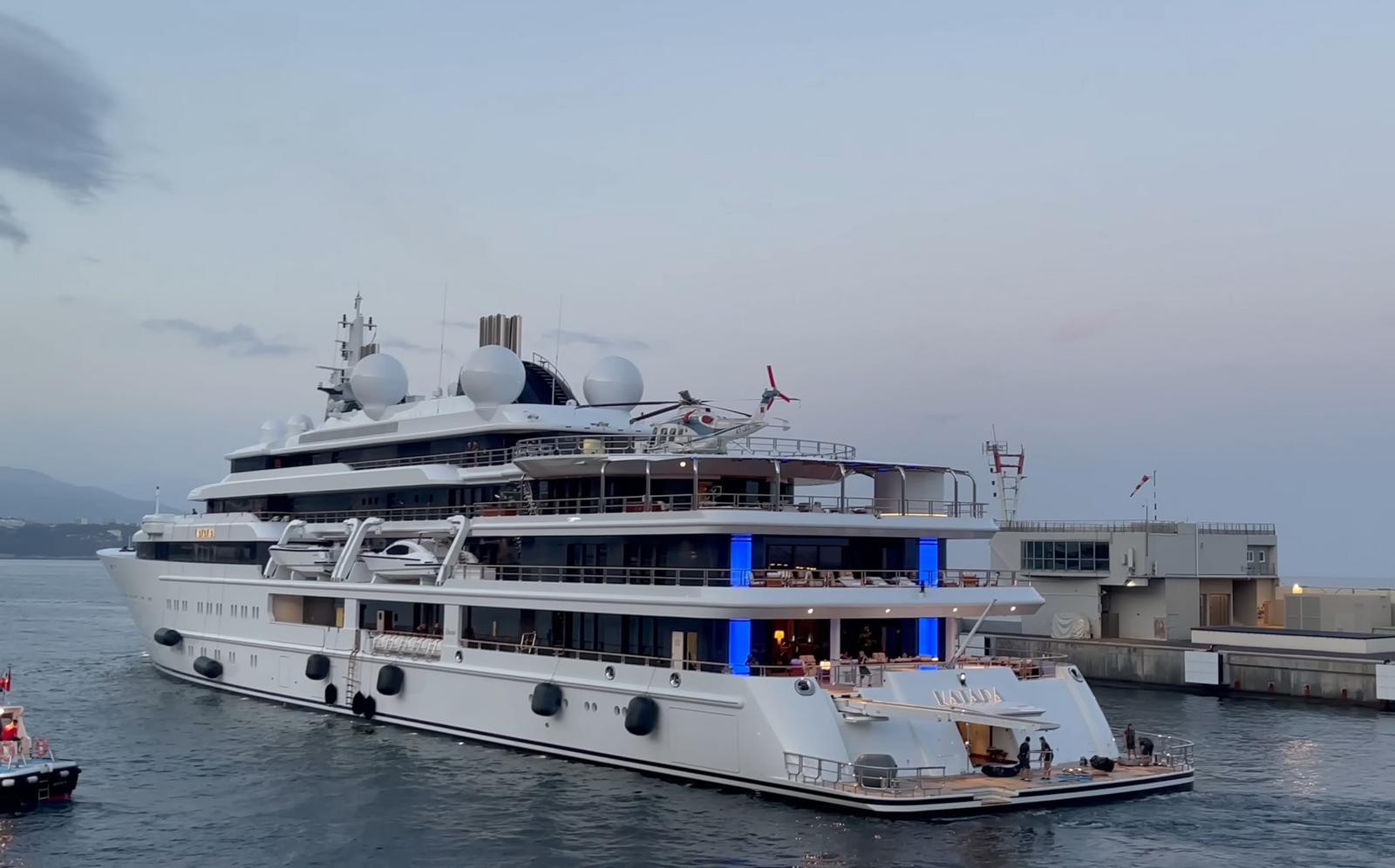
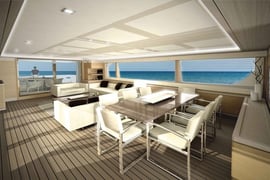
Onboard, the experience is layered across multiple decks and anchored by features that reinforce its scale. Several swimming pools, a beach club, spa, gym, beauty salon, and a large cinema are integrated into the layout, alongside expansive lounges and an upper-deck Jacuzzi. The yacht also underwent a significant upgrade in Germany last year, a reminder that vessels of this caliber are continuously evolving machines rather than finished products.

This brings us to the Qatari royal who commissioned it. Hamad bin Khalifa Al Thani is widely credited with reshaping Qatar into a modern economic force, leveraging vast natural gas reserves to elevate the country’s global standing. Katara, in many ways, mirrors that transformation. It is not merely a yacht, but a projection of power, permanence, and the kind of wealth that does not announce itself loudly, yet quietly redraws the scale of what is possible.