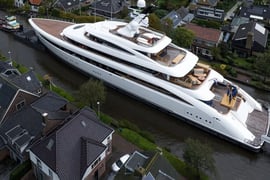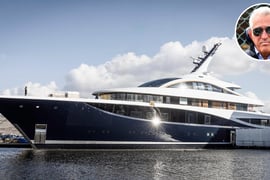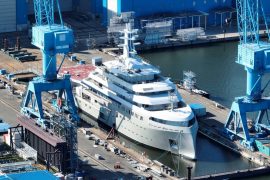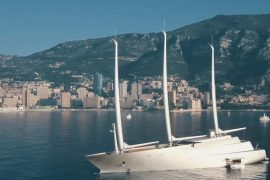
Mark Zuckerberg’s new superyacht was supposed to signal a quieter, more private phase of his life, a floating bubble built to drift far from Silicon Valley. Instead, its first full year at sea has produced an unexpected headline. Launchpad, the 387-foot Feadship vessel that cost roughly $300 million, emitted close to 1,600 tons of CO₂ in 2025.

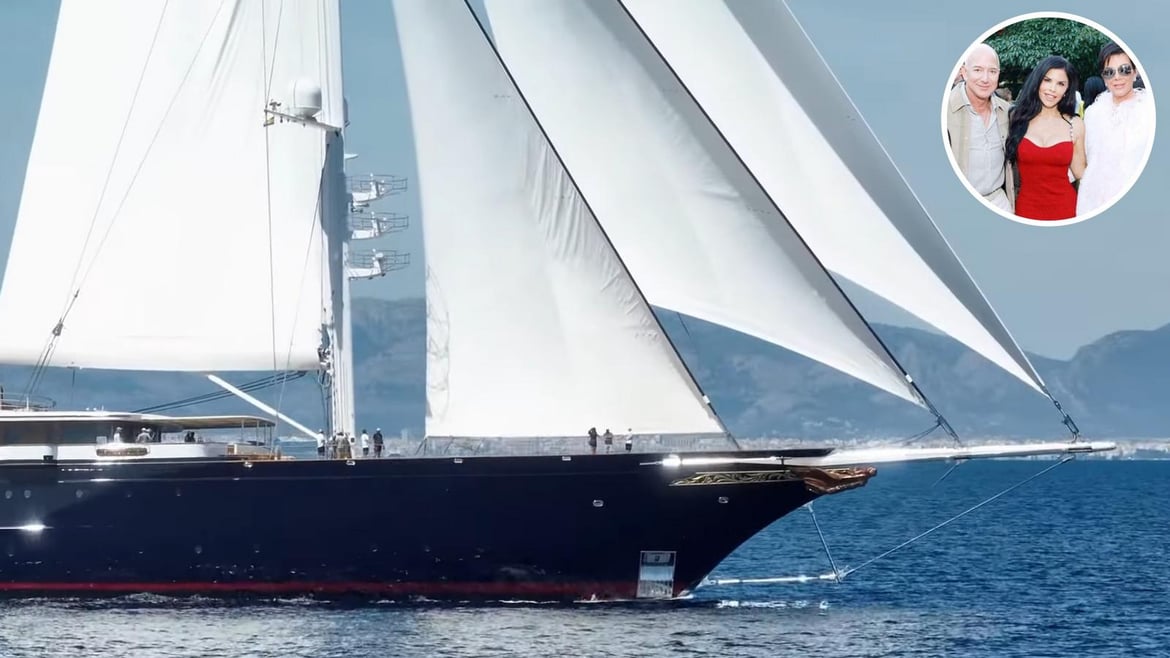
But interestingly, that is about 600 tons more than Jeff Bezos’ larger sailing superyacht, Koru. It is an upside-down comparison. Koru is physically bigger, spans oceans under a full rig of Big Ben-sized sails, and still ended up with a far lower footprint than the smaller vessel Zuckerberg uses to cruise the world.

Launchpad’s high emissions are partly tied to the distance covered. The yacht logged about 13,700 nautical miles in 2025, bouncing between Scotland, the Caribbean, the Greek islands, and the Western Med before heading into La Ciotat for maintenance. Environmental groups such as Yacht CO₂ Tracker have long pushed for greater transparency around superyacht emissions, as reported by Huffington Post.

Luxurylaunches did some number crunching, and by our own calculations, for Launchpad’s first 8,500 nautical miles, she has already emitted nearly 1,600 tons of CO₂. The longer season only widened the margin. Koru, which also sailed roughly 8,500 nautical miles before heading to La Ciotat, came in at about 1,000 tons for the year.
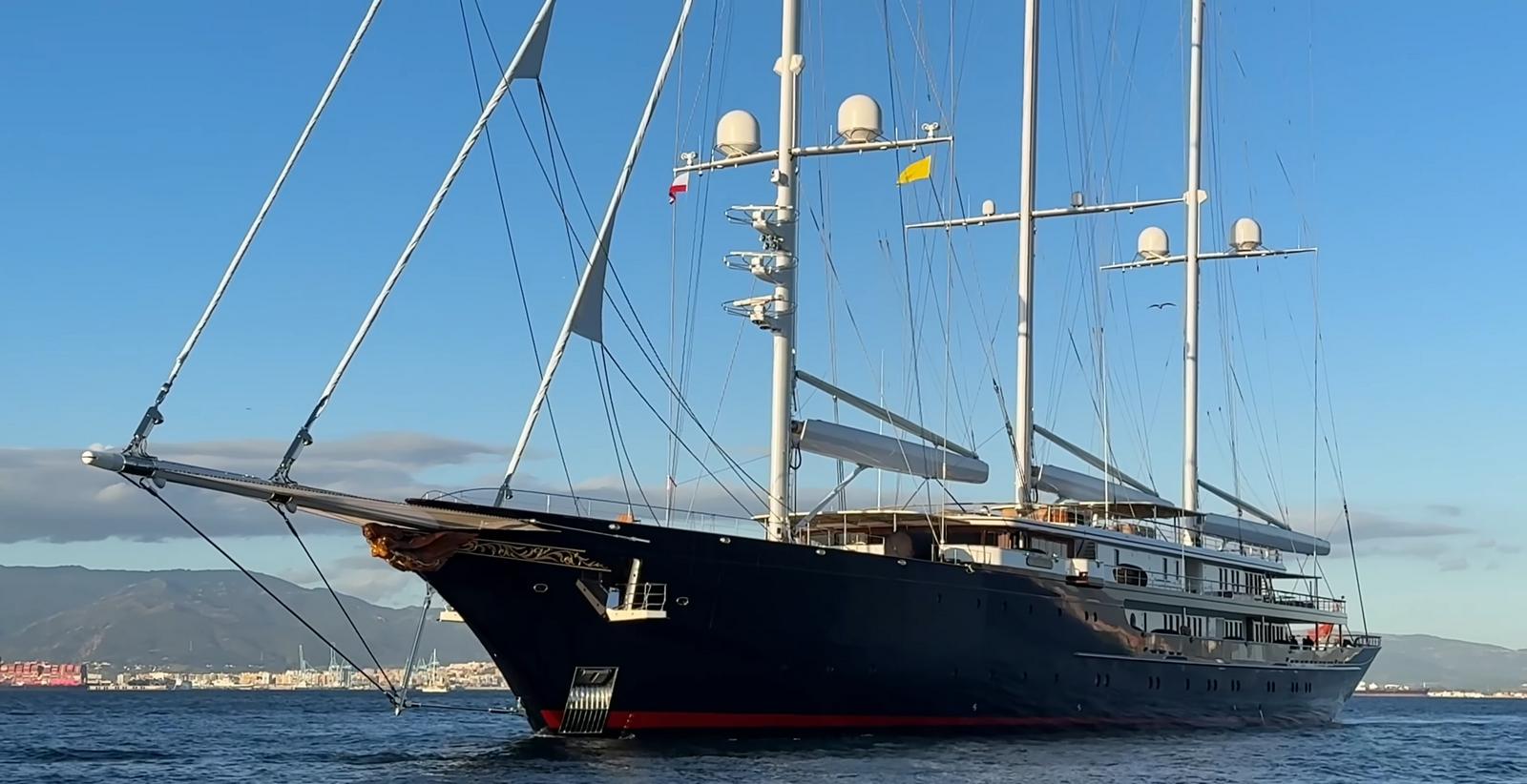
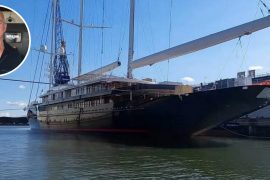
The fundamental reason for the gap is design. Koru is built with efficiency in mind. Oceanco gave the 417-foot yacht three enormous masts and a sail plan powerful enough to move her at real cruising speeds with minimal help from the engines. Every hour under meaningful wind power is an hour of reduced fuel burn. Over thousands of miles, this has a dramatic cumulative effect. Koru’s hybrid sail and diesel profile means that a significant portion of her miles can be completed at low propulsion loads, something no pure motor yacht can replicate.

Launchpad sits on the opposite end of the efficiency spectrum. Feadship outfitted her with four large MTUs in a diesel electric configuration that likely produces north of 20,000 hp. That kind of power is perfect for 24 knot dashes and for running the enormous hotel load required by a 5,500 GT vessel, but it is brutal on fuel economy. Even at moderate speeds, the burn rate is high, and the operational pattern of rapid repositioning only amplifies that. A season spent doing fast multi-stop hops is one of the least efficient ways to run a yacht of this size.

In contrast, Koru’s operating style leans into what her architecture offers. The yacht is used more like a slow, grand cruiser. The engines provide background support, but the sail plan does meaningful work whenever conditions allow. As a result, the gallons-per-mile drop, the running hours stretch gently across the season, and the overall footprint stays lower. Bezos can tell a more climate-friendly story not because of marketing, but because the yacht genuinely consumes less fuel to move the same distance.

Converted into everyday terms, the contrast becomes clearer. Koru’s roughly 1,000 tons of CO₂ is equivalent to about one million kilograms of emissions. Using the Toyota Prius for comparison, that maps to about 5.84 million road miles, or roughly 235 laps around Earth. Launchpad’s 1,600 tons equal about 1.6 million kilograms of CO₂, or approximately 9.35 million Prius miles, which is about 375 trips around the planet. Both yachts reshape the world in their wake, but one does so far more aggressively than the other.

And that is the paradox at the heart of this. Zuckerberg owns the smaller yacht yet ends up with the bigger carbon footprint. Length alone does not determine environmental impact. Propulsion architecture, design philosophy, and operating style all matter. In a year when both yachts crisscrossed oceans before checking into La Ciotat for winter work, the numbers make one thing clear. Wind still counts, horsepower still costs, and efficiency is not a function of size but of how you choose to move across the sea.