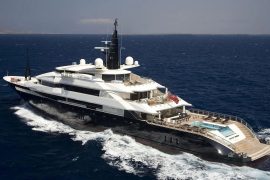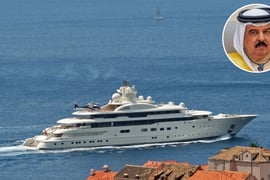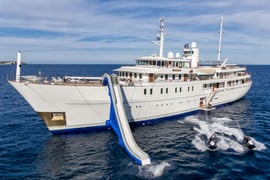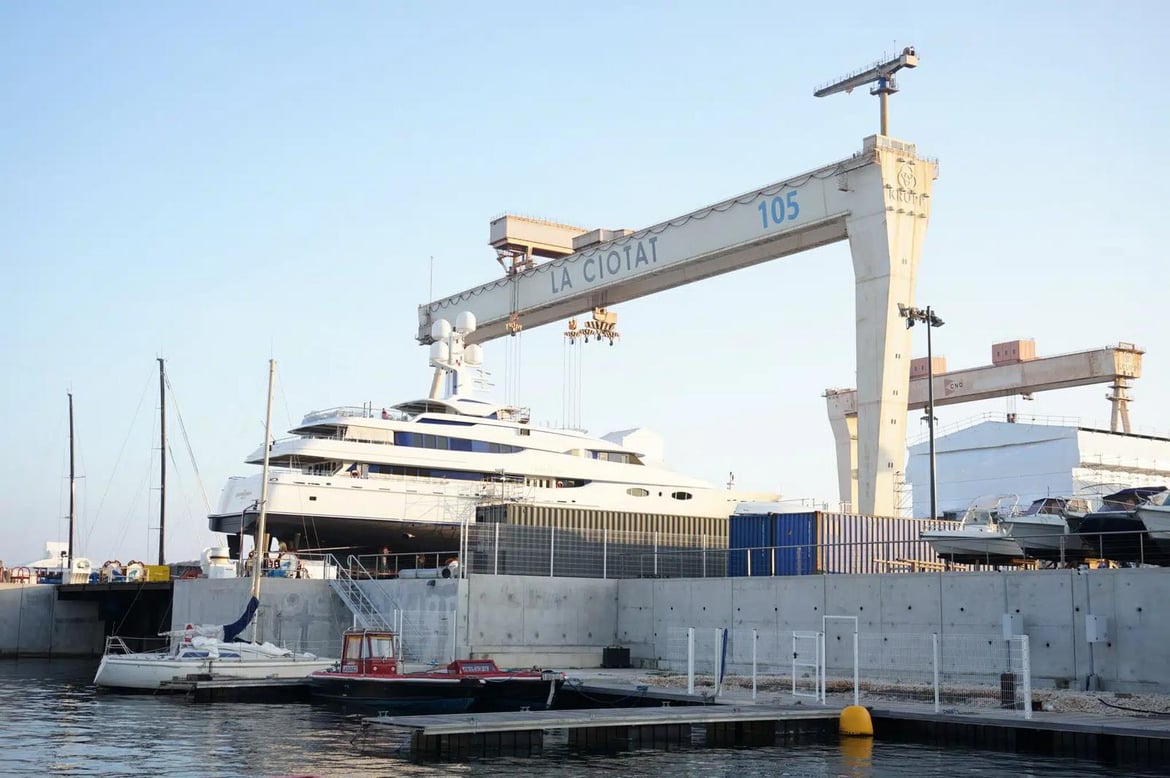
La Ciotat has been called the superyacht spa of the Mediterranean, but when you learn about their efficiency, facilities, and services, they could very well be redefined as the superhero spa for the world’s most important superyachts. La Ciotat, spread across 44 hectares, or nearly 100 acres, about the size of 75 football fields, is less a marina and more an industrial resort for the world’s largest yachts. In 2025 alone, the site welcomed 170 yachts and megayachts.

They have come a long way from being one of France’s major commercial shipbuilding hubs in the 19th and 20th centuries to quietly hosting the arrival of $500 million megayachts. But it wasn’t a smooth sail. After decades of decline, La Ciotat pivoted aggressively in the early 2000s toward refit and maintenance for superyachts. They catered only to big billionaires and their even bigger boats, and now capture around 10 percent of the global refit and repair market for large yachts, handling roughly 100 superyachts over 164 feet a year, plus dozens of smaller units.

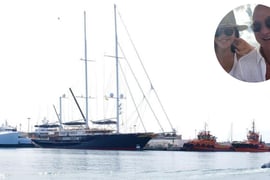
The most famous of all these floating mansions is undoubtedly Amazon founder Jeff Bezos’s half-billion-dollar sailing yacht Koru. It is one of the largest in the world and feels right at home every year at La Ciotat after a memorable summer where the tech tycoon has thoroughly put her through her paces. Even her shadow vessel Abeona finds refuge in the yard, which is equipped with a hardstanding area for boats up to around 40 meters and lift equipment for smaller superyachts and large sailing yachts.

Nearly every tech tycoon with a fancy yacht, from Sergey Brin’s Dragonfly, Mark Zuckerberg’s Launchpad, and Eric Schmidt’s Whisper to billionaires like Michael Lee-Chin’s AHPO and Steven Spielberg’s Seven Seas, the debut yacht for the Atlas 4,300-ton platform, has had a taste of the good life and the great treatment at the French shipyard. At La Ciotat, their multimillion-dollar megayachts are catered to with top-of-the-line equipment like the flagship 4,300-ton Atlas shiplift and the 40,000 m² hardstanding built specifically for megayachts in the 80–115 meter bracket.

In one go, the Atlas platform can house six large yachts simultaneously, plus others in the dry dock and the older 2,000-ton system. Heavy machine work, paint jobs, and steel work are carried out in the “Grande Forme” dry dock, a 200-meter historic basin that can take the largest yachts afloat today. The giant industrial hall, the $13 million Nef B, operates as the backbone of high-tech operations, with 5,000 m² of new usable surface divided into eight production workshops, two large storage zones, offices, and social spaces.Despite an army of around 1,500 employees on site, the successful yard is still looking to improve by offering roughly 100 more jobs, reported Francebleu. They also have plans in the pipeline to acquire a new 400-ton boat transporter to simplify moving yachts around the site.

A green yard for the giants of the sea-
La Ciotat’s superyachts may have a large carbon footprint, but the yard does not. Despite a large workforce and massive megayachts coming in and out every day, La Ciotat has worked to be entirely powered from shore electricity. It is commendable that electric power runs the yard’s cranes and workshops. As a compensation measure for dredging and rock-cutting done during Atlas’s construction, La Ciotat has even installed a system of artificial fish nurseries along the new waiting quay, quietly helping marine life while the world’s most extravagant yachts are pampered above.