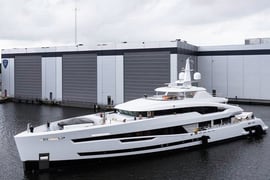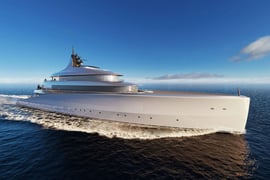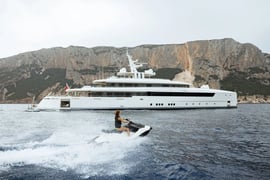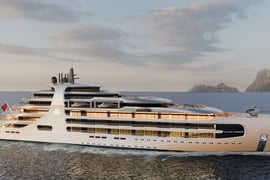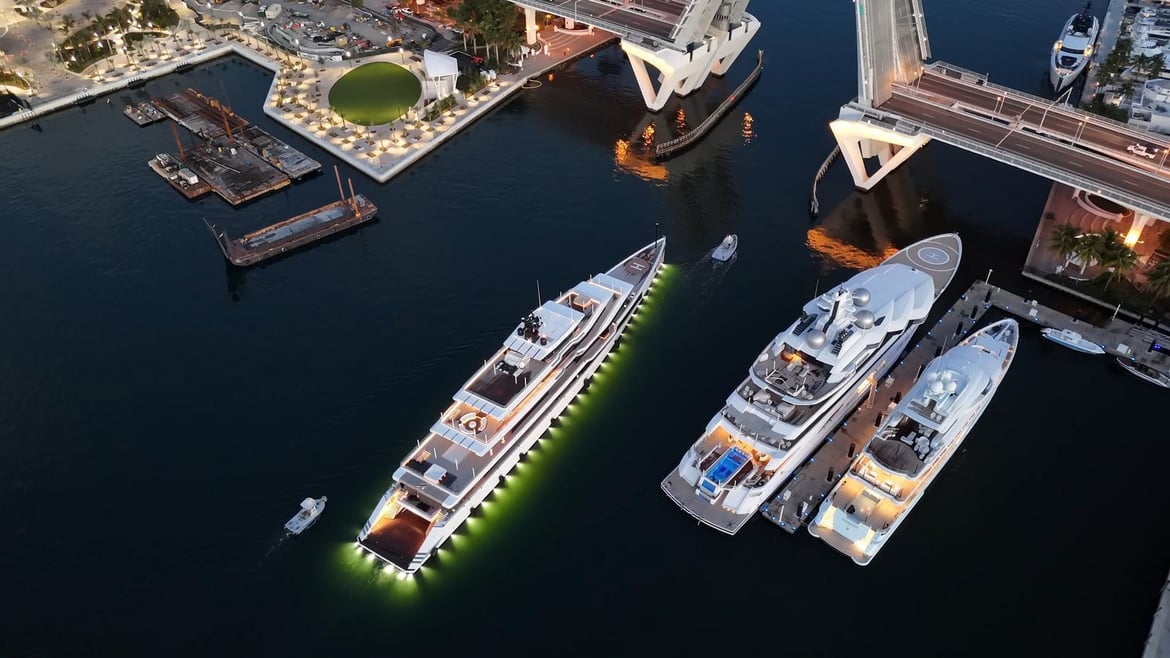
Fort Lauderdale in Florida is used to big yachts, but in early December 2025, it got something different: a vessel so large it turned a routine bridge opening into a precision test. Feadship’s Ulysses, measuring about 103 meters (roughly 337 feet), arrived in town and transited the SE 17th Street Causeway Bridge en route to the 17th Street Yacht Basin at the Hilton Marina. Local and yachting outlets described it as the largest yacht ever to pass beneath that bridge, setting a new benchmark for the city’s inner harbor.
The footage looks calm, but that’s the trick. It’s controlled tension. The yacht moves slowly, deliberately, with the captain and pilot treating the transit like “millimeter work,” as described by Nautique. Once a yacht crosses the 100-meter mark, there’s no casual steering. You are correcting for wind, current, and momentum constantly, because there isn’t space to recover if something goes wrong.

And on this bridge, things do go wrong. The SE 17th Street Causeway Bridge, officially the Clay E. Shaw Memorial Bridge, is a double-leaf bascule bridge linking Fort Lauderdale with Port Everglades across the Intracoastal. Rebuilt in the early 2000s, it has about 55 feet of vertical clearance when closed. The navigable channel was widened from roughly 100 feet on the old bridge to around 125 feet. The steel superstructure is around 950–960 tons, the full structure is close to 1,900 feet long, and the project cost a bit over $70 million, including the temporary bridge.

On paper, those numbers sound generous. On the water, they feel tight. Even when the leaves are fully raised, you’re dealing with a finite, fendered opening. Some boating references cite practical horizontal clearance closer to 100 feet in the center span. That’s the number that matters when you’re guiding a 14-plus-meter-beam yacht through a narrow corridor with crosswinds.

It’s also the only 55-foot clear span on the Intracoastal in Fort Lauderdale, which makes it a choke point. If you’re trying to reach Port Everglades or the marinas tucked inside the city, you don’t get a second option. You get this bridge. The problem isn’t just geometry. The approach sits in a busy, slightly dog-legged section of the waterway, with commercial traffic, smaller boats everywhere, shifting currents, and winds rolling in off the port entrance. This is why crews call it “infamous.” Not because it’s small, but because it’s unforgiving.

The bridge also has recent baggage. It’s the same crossing where former UFC owner Frank Fertitta III’s $250 million yacht, Viva, got stuck in 2024, pinned during a maneuver, and forcing crew to scramble with fenders to limit damage. And Viva wasn’t an outlier. That stretch has produced multiple viral near-misses and docking mishaps, with locals and captains blaming everything from mechanical glitches to strong currents around Port Everglades.

That context is what makes the Ulysses transit more than a slow cruise under raised steel. It’s a high-skill operation performed in public. When a 100-plus-meter yacht commits to the gap, the crew isn’t hoping. They’re executing. Thrusters, rudder angles, timing, boat positioning, tiny corrections that add up to one clean pass.

The owner of Ulysses, Graeme Richard Hart, fits the tone of the moment. Born in Auckland in 1955, he’s a self-made billionaire and for years New Zealand’s richest man. He built Rank Group through leveraged buyouts, buying underperforming but cash-rich industrial and consumer businesses and improving them, particularly in global packaging. Hart is famously private, often described as an “undercover billionaire,” but his yacht history isn’t quiet.

He has owned several superyachts named Ulysses over the years, including large explorer-style vessels built for distance and endurance. This Feadship version is a shift to a more polished luxury palace than a rugged expedition tool, but the naming continuity signals the same obsession: scale, capability, and presence.

In Fort Lauderdale, 60- to 70-meter yachts are common sights under the SE 17th Street bridge. Ulysses is on a different tier. It’s not just bigger. It changes how the waterway behaves around it. The fact that a yacht this long can be guided through one of the most stressful chokepoints in American yachting with laser precision and make it look easy is simply awe-inspiring.