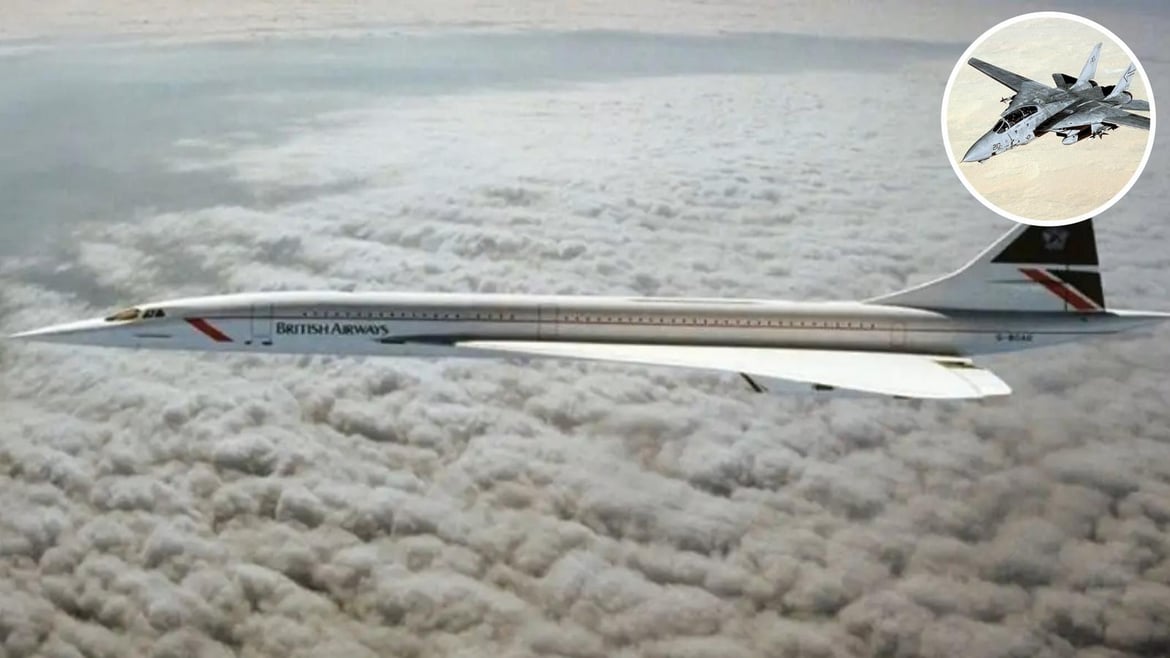
There are few aircraft more iconic than the F-14 Tomcat. There are even fewer that captured the world’s imagination as strongly as the Concorde. One was a naval interceptor built for the Cold War, the other a commercial jet built for the luxury of time itself. Their paths were never meant to cross in any dramatic fashion. Yet, during the tensions of Operation Desert Shield, high above the Red Sea, they briefly did. And in that moment, a United States Navy aircrew, primed for a threat, instead found themselves quietly struck by the beauty of the most elegant airliner ever built.

The intercept did not happen in isolation. In the years leading up to 1990, a story hovered in the minds of every carrier aircrew flying over the Red Sea. The Iraqi Air Force had secretly modified a Dassault Falcon 50 business jet into a strike platform. Code-named Suzanna, this aircraft was fitted with the radar of a Mirage F1 and guidance integration for Exocet anti-ship missiles. The association with the 1987 attack on the USS Stark gave it a symbolic weight far beyond its modest size. It represented a threat that could appear innocent until it was not.

Because of Suzanna, the carrier battle group kept round-the-clock Tomcat Combat Air Patrols overhead. At least one USAF KC-135 tanker remained on orbit at all hours to keep those fighters fueled. The posture was constant vigilance, and the rules reflected the tension of a region standing at the edge of war.

When controllers used the phrase “warning red, weapons tight,” it meant that an attack was considered possible at any second, yet crews were to fire only if a target was confirmed as hostile. The atmosphere was alert but tightly controlled.
The high-speed contact
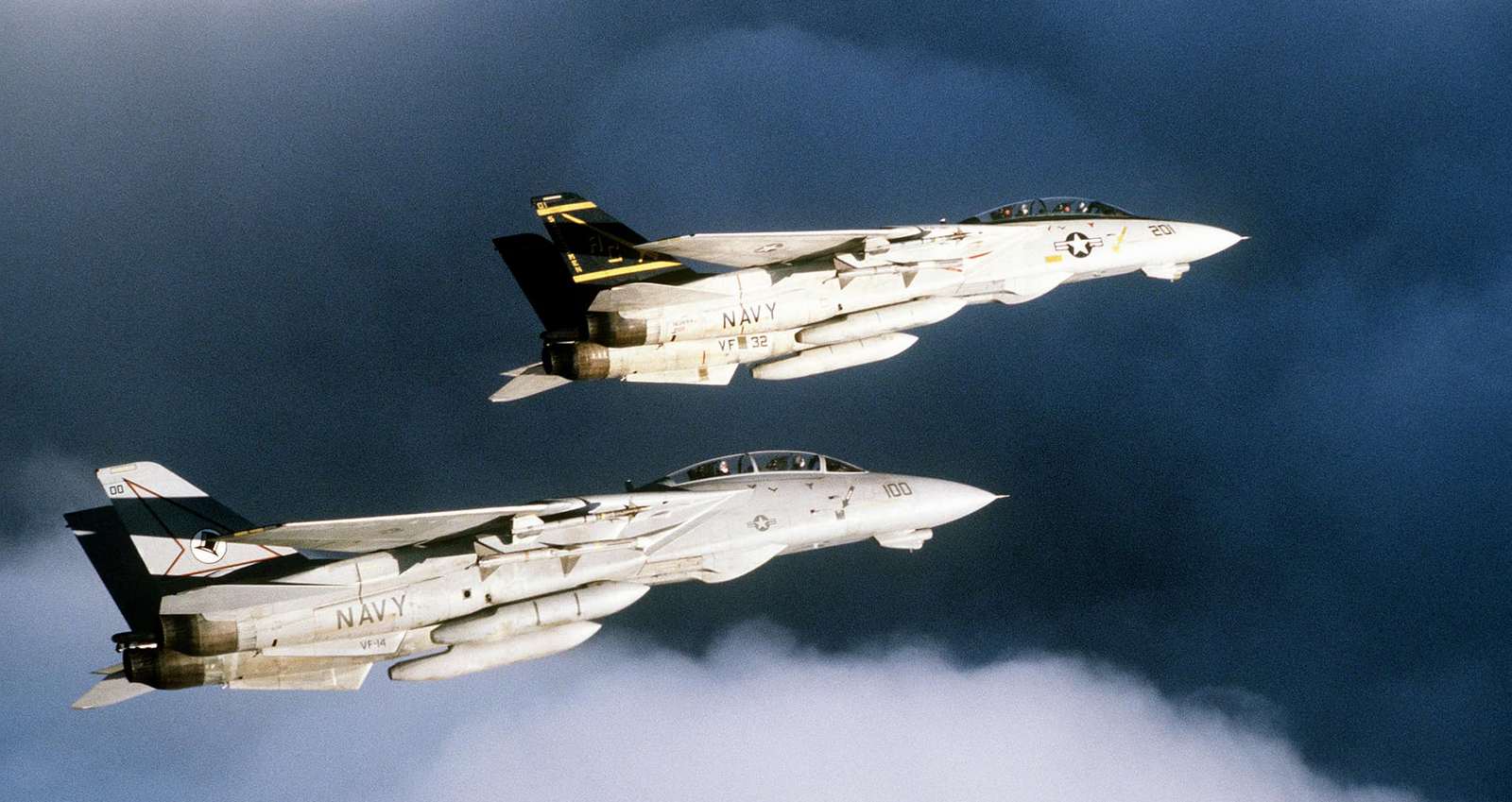
In August 1990, two VF-32 Tomcats were returning from a training sortie over Saudi Arabia when they heard the call. A cruiser in the northern Red Sea had detected a fast, high-flying aircraft coming from the north. An alert launch was already airborne. The VF-32 crew, positioned northeast of the formation, checked in and were given the vector to intercept.

“As we swung our nose in the direction of the vector we got, I got an immediate lock on an extremely fast and high-flying aircraft,” recalled David “Hey Joe” Parsons, the Radar Intercept Officer in the rear seat. The AWG-9 radar displayed a large lead cue, something you only see when the target is moving extraordinarily fast at altitude. The Tomcat began to climb.

The Television Camera System should have provided a magnified visual, but the angle and altitude difference made the picture blur into haze. Parsons reached down into his flight bag and pulled out his personal 300 mm camera lens. He spotted a thin white contrail far above them. He steadied the lens, focused, and the shape came into clarity. “As I twisted the lens, the beautiful silhouette of the Concorde came into focus.” There was no threat. Only grace.

The Concorde’s quiet passage
The precise flight details remain unconfirmed, but the routing makes sense. A southbound Concorde near the Red Sea would likely have been on a charter or special operation flight, cruising at roughly 55,000 to 60,000 feet. The Tomcats, lower in altitude, could not simply climb to join formation. The identification had to occur at a distance, using optics, geometry, and the Tomcat’s ability to close in swiftly during a crossing intercept.

Contrary to popular imagination, the Tomcat did not chase the Concorde speed-for-speed. An F-14 does not drag race a Mach 2 airliner. Instead, it turns toward the point the radar predicts the target will be, accelerates, climbs, and allows closure rate to do the work. For a moment, two icons of aviation existed in the same piece of sky, one built to defend, the other built to outrun time.

A moment of admiration
Once positively identified, the Tomcats were cleared to stand down. The Concorde continued its silent flight, likely unaware that a fully armed fighter crew had just been studying its silhouette with awe instead of suspicion.
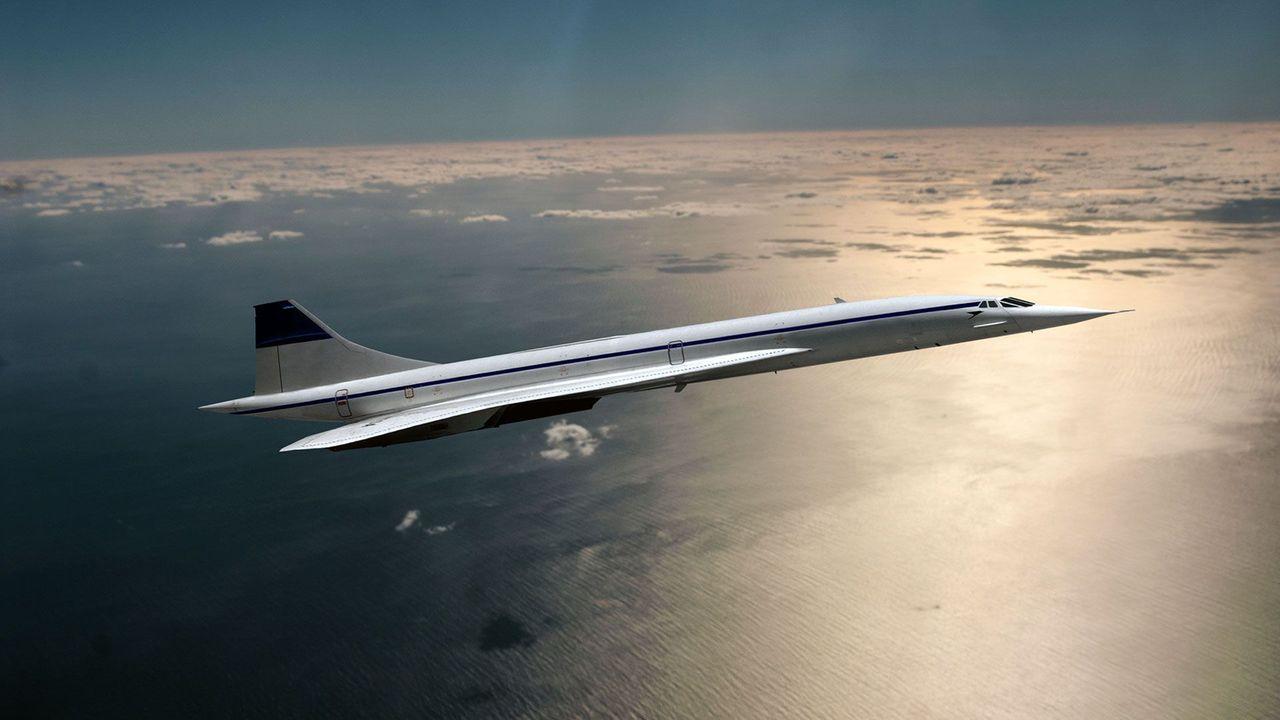
What remains of the story is not tension, but something almost poetic. In a region marked by vigilance and risk, the crew of a combat air patrol paused to admire beauty at Mach speed. The Tomcat crew flew back to their carrier, ready for the next call, but carrying the memory of a supersonic white arrow gliding high above the world, untouched by the noise below.