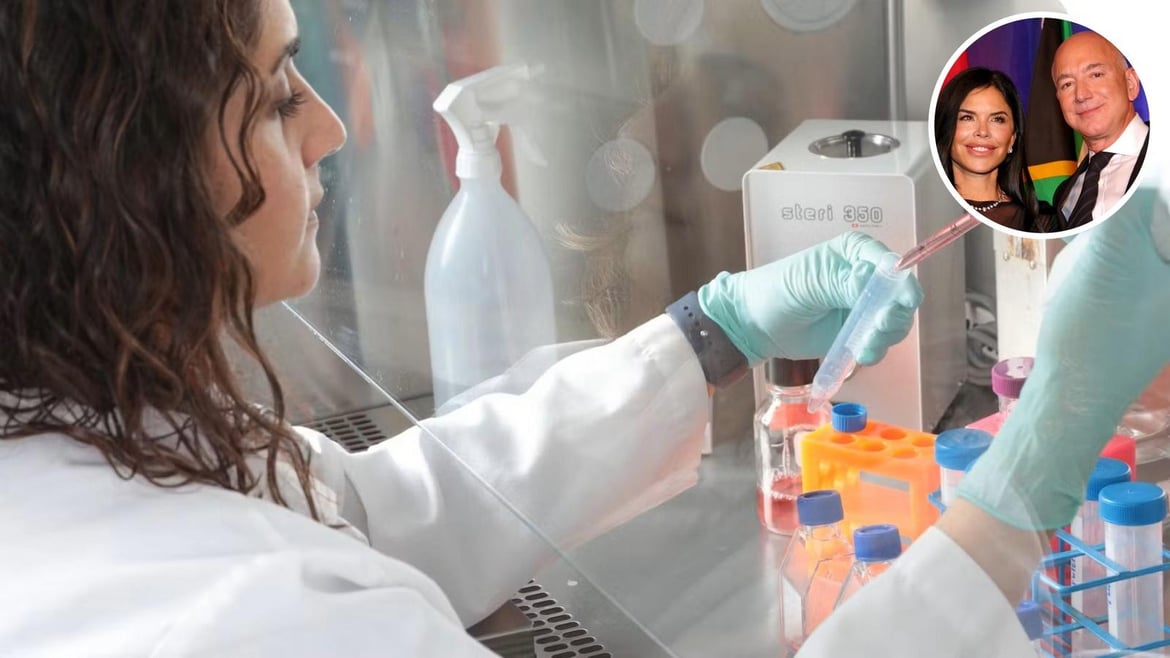
Amazon founder Jeff Bezos is winning the space race on one hand, and on the other he’s doing his absolute best to save planet Earth too. Just weeks after donating $37.5 million to protect 835,000 square miles of Pacific waters, an expanse five times the size of California, his charity the Bezos Earth Fund announced $30 million in new investments. This time the gift is directed towards harnessing artificial intelligence for the planet, tapping into everything from deciphering the songs of endangered birds to automating plant-species identification. The fund has awarded 15 teams grants of up to $2 million each, along with in-kind support like cloud computing and mentorship from big tech companies including Google, Microsoft and Amazon.

The Phase II awardees of the AI for Climate and Nature Grand Challenge will scale up and implement real-world AI solutions to tackle pressing issues like climate change and food insecurity. Phase I in May funded 24 concept-stage projects at $50,000 each. The programme is part of a multi-year $100 million AI initiative. It marks a noteworthy milestone as Phase II moves money and computation into multi-year deployments across five continents over the next several years. “AI can be a powerful ally to help make the world a better place,” said Lauren Sánchez Bezos, Vice Chair of the Bezos Earth Fund. “These innovators using AI are showing us new possibilities by re-imagining how we grow food, protect wildlife and power our planet to make a true impact.”

Among these innovators are researchers from the New York Botanical Garden, who are using computer vision to automate plant species identification; the University of Leeds, which is converting food waste into microbial protein; the University of the Witwatersrand, developing localized AI forecasts for African farmers; and The Nature Conservancy, deploying edge-AI tools to curb illegal fishing and protect marine life. Together, these projects embody Bezos’ belief that the same technology propelling Blue Origin’s progress in space, when applied with purpose, can also help restore the planet we call home.