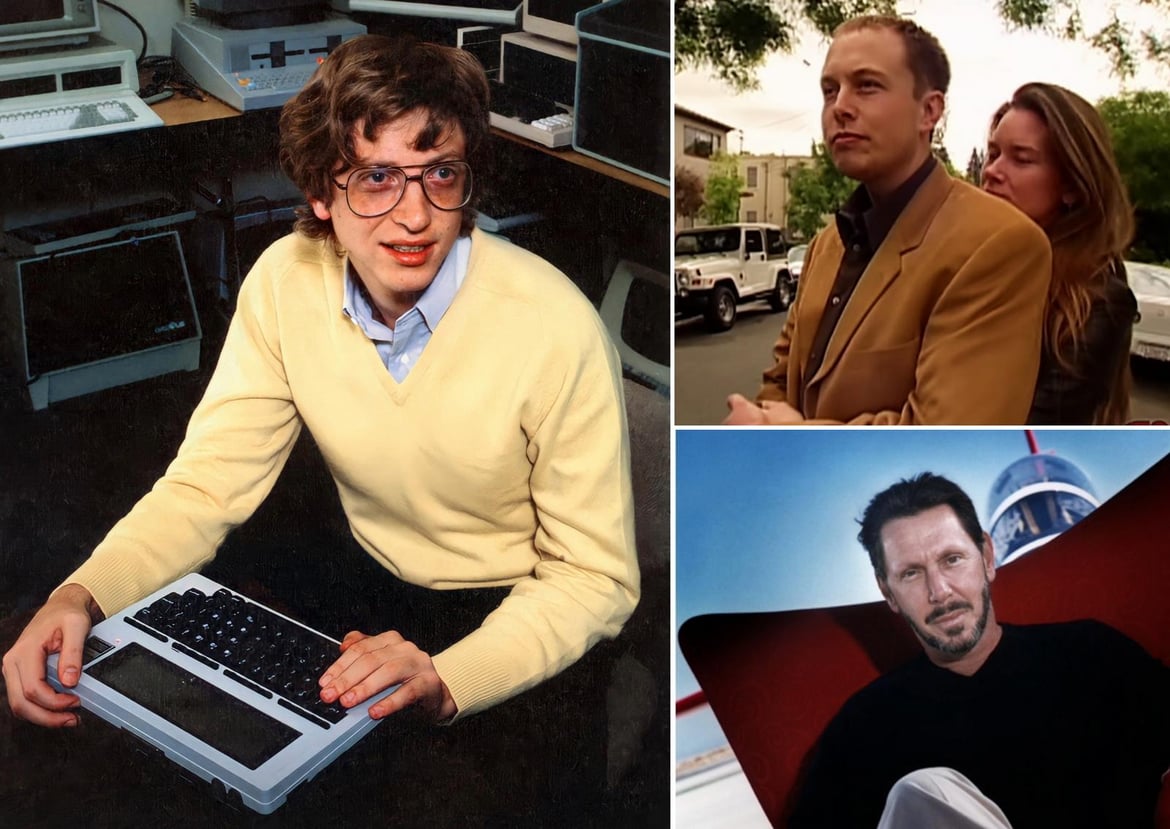
There are many reasons why America’s roads have not seen some of the world’s most exotic machines. Regulatory red tape, emissions hurdles, and safety laws have long kept coveted vehicles out of the US garages. But if Elon Musk could daily-drive a McLaren F1 in the early 2000s, or if Jay Leno could proudly display one in his Burbank garage, it’s largely because of one man’s persistence. That man is Bill Gates.

The Microsoft founder’s obsession with Porsche, and particularly the elusive Porsche 959, triggered a loophole in American law that would eventually become known as the “Show or Display” exemption. And in doing so, Gates unintentionally cleared the path for billionaires and collectors across the country to legally import some of the rarest and most valuable cars on the planet.

The obsession with the Porsche 959
In the late 1980s, the Porsche 959 was not just a sports car; it was a technological marvel. Designed with twin turbos, a revolutionary all-wheel-drive system, and futuristic electronics, the 959 was the fastest production car in the world when it launched. Porsche built only 337 examples. Gates, always an enthusiast with an eye for engineering brilliance, imported one privately.

But the United States had other plans. Due to stringent Department of Transportation regulations and a lack of crash testing data, the Porsche 959 was flatly denied entry onto American roads. No exemptions, no appeals. Customs impounded Gates’ prized car at the Port of Seattle, where it sat unused for over a decade.

Not willing to part with the car or give up the battle, Gates, along with Microsoft co-founder Paul Allen and a handful of other wealthy car fanatics, formed a lobbying group. Their mission was simple: convince the US government that certain historically significant cars should be allowed into the country, even if they didn’t comply with all federal motor vehicle safety standards. These were not meant for daily use, but for private display and occasional use. And so began the long campaign.

Thirteen years and twenty-eight dollars a day
From the time Gates first tried to import the Porsche 959 in 1987 to the time it was finally cleared for use, thirteen years passed. During that stretch, Gates continued paying a daily storage fee of $28 to keep his car housed in a government facility. The math is sobering. Over $130,000 just to keep the dream alive.

His dedication eventually paid off. In 1999, the National Highway Traffic Safety Administration created a new regulation known as the “Show or Display” rule. It allowed for the import and use of certain rare, collectible cars that were never officially sold in the US, provided they were driven no more than 2,500 miles per year and had historical or technological significance. The Porsche 959 was one of the first cars to be approved.

The rule that changed the game
The “Show or Display” rule became an elegant solution for collectors who had previously been unable to bring their dream cars stateside. It wasn’t a free-for-all; each car still had to be approved individually by the NHTSA. But it cracked the door open just enough.
Soon, a wave of exotic imports followed. The McLaren F1, a car never certified for US roads due to its center-seat configuration and lack of airbags, quickly became one of the most famous beneficiaries of the rule. With its BMW V12 engine, central driving position, and a top speed over 240 mph, the F1 was as much a spaceship as it was a supercar.
And once it was allowed through the same legal backdoor that Gates had opened, some of the most influential car lovers in America seized the opportunity.

Enter Elon Musk, Jay Leno, and Larry Ellison
In the early 2000s, well before he became a household name, Elon Musk acquired McLaren F1 chassis #047. He didn’t just store it away as an asset. Musk famously drove the car daily, reportedly without insurance, and even crashed it during a joyride with Peter Thiel. He later sold it in 2007, just as Tesla was gaining traction.

Jay Leno, known for his encyclopedic collection of rare vehicles, also took advantage of the rule. His McLaren F1, chassis #015, has been part of his Burbank garage for years. Leno has always admired engineering innovation, and the F1’s purity and performance made it one of his crown jewels.

Even Oracle founder Larry Ellison joined the list of elite beneficiaries. In 1997, Ellison took delivery of a Magnesium Silver McLaren F1, one of just seven that were officially brought into the US under the new regulatory framework. For over a decade, Ellison drove the car sparingly, clocking under 2,600 miles before parting ways with it. Today, that very car is expected to fetch over $23 million at auction, thanks to its pristine condition and Ellison’s name attached to it.

A collector’s golden ticket
The “Show or Display” rule has since become a collector’s golden ticket. Besides the Porsche 959 and McLaren F1, other legends have passed through its doors. Vehicles like the Jaguar XJ220, Nissan R34 GT-R V-Spec II Nür, and even obscure homologation specials like the Lancia Delta S4 have all been approved under this unique classification. The rule also applies to unique, or limited-production vehicles, such as the Pagani Zonda, many of which could have been purchased by billionaires in secret.

While many of these cars are now over 25 years old and thus exempt from US import restrictions under the general “25-Year Rule,” the “Show or Display” exemption was the only path for years. Without it, American enthusiasts would have had to wait decades or resort to keeping their dream machines hidden away in private collections, undriven and unloved.

From bureaucracy to billionaire flex
What began as a bureaucratic blockade turned into a billionaire flex, a way for the ultra-wealthy to not only buy rare vehicles but to change laws in the process. Bill Gates didn’t set out to rewrite car import regulations. He just wanted to drive his Porsche. But his persistence, resources, and patience opened a door for others to follow.

Today, many of the cars brought in under the “Show or Display” exemption are among the most valuable in the world. As of 2025, some McLaren F1s have crossed the $30 million mark in private sales. Porsche 959s regularly fetch over $2 million. And the stories behind their importation are often as compelling as the cars themselves.

The legacy of the Porsche 959
Gates finally drove his Porsche 959 on American roads legally at the turn of the millennium. It wasn’t just a personal victory, but a symbol of what happens when technological innovation meets unrelenting passion. The car itself still looks like something out of a sci-fi film, with its layered curves and turbocharged complexity. But more than that, it is a quiet monument to a time when one man’s fight for a piece of automotive history changed the rules for everyone else.
So the next time you see a McLaren F1 cruising through Pebble Beach or a Porsche 959 tucked away in a Montana garage, remember the billionaire who started it all. Not because he wanted attention, but because he just wanted to drive.