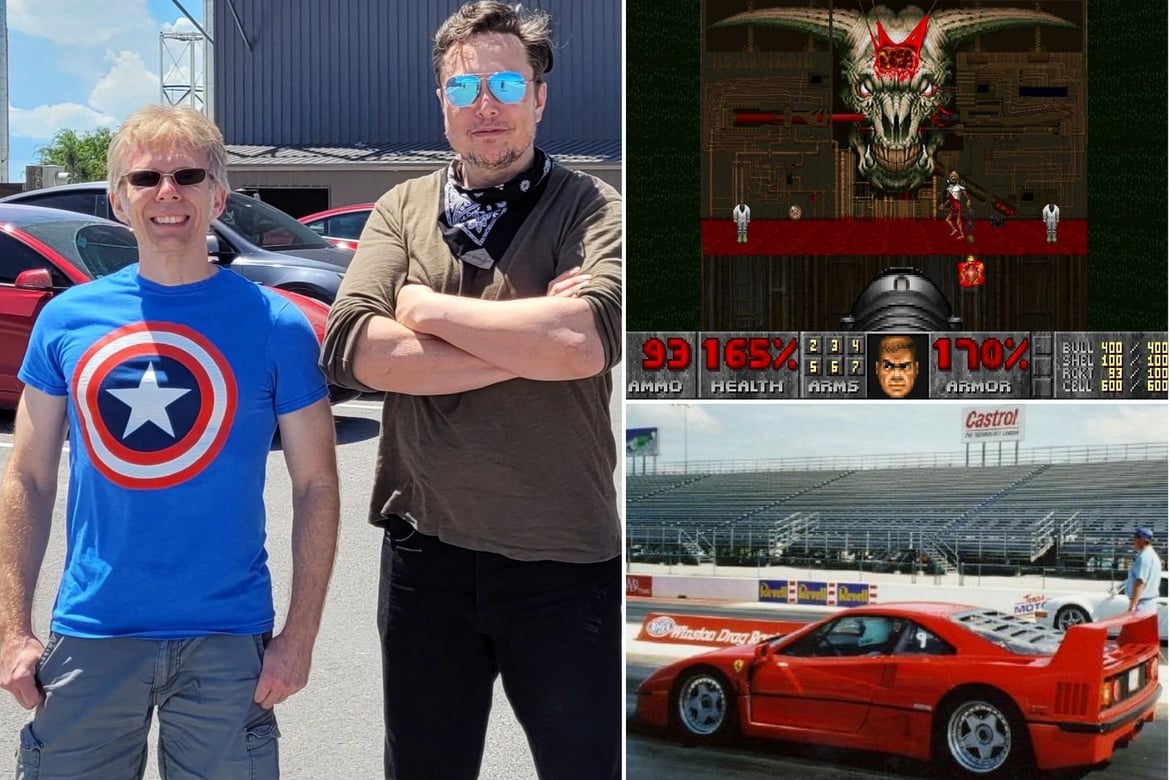
The man who helped turn video games into a speed religion eventually pointed that same mindset at Ferrari and treated Maranello like a final boss that needed to be beaten, not worshipped. John Carmack did not collect Ferraris to be seen in them. He collected them to see where they broke. The result was a short, chaotic, deeply entertaining era that ended with him quietly blacklisted by the most powerful brand in supercars.

John Carmack, in one breath, is the engineer who helped make Doom and Quake feel fast, physical, and inevitable, then carried that optimize-everything mentality into VR at Oculus and even rocketry with Armadillo Aerospace. He is famous for treating expensive machines like prototypes and cultural institutions like optional suggestions. He is also, by most estimates, worth around $50 million and based in Dallas, Texas, which helps explain how this story even got off the ground.

For Carmack, the idea of a “final boss” came straight from the games he built. In shooters like Doom and Quake, you do not admire the boss at the end of the level. You study it, exploit its weaknesses, break its rules, and win on your own terms. Ferrari, with its rigid culture, sacred factory specs, and intolerance for tinkering, became exactly that. Not a dream brand, but the last system that refused to be optimized.

Ferrari as a dare, not a dream
Carmack’s Ferrari era started casually and immediately went off the rails. As he later recalled on X, his first Ferrari was a 1987 328 GTS spotted sitting in the back of a Dallas dealership. He walked in young, casually dressed, and bought it. What stuck with him was the salesman’s pitch. If a Corvette revs next to you, just act like you have a thousand horsepower. Carmack hated that idea. If the car looked fast, it should be fast.

So, he did what a programmer does. He patched it. He found Bob Norwood of Norwood Autocraft, one of the few people willing to aggressively modify Ferraris, and turbocharged the 328. Power jumped from roughly 270 hp to around 500 hp. Carmack later joked on X (formerly Twitter) about having two Ferraris parked outside a low-end apartment, which tells you everything about how little he cared for appearances.

That same 328 would later become a piece of esports history. Carmack put it up as the grand prize at Red Annihilation, a Quake tournament that crowned Dennis “Thresh” Fong and accidentally helped invent professional gaming. Carmack would later note on X that it may have been the first Ferrari ever awarded as an esports trophy.
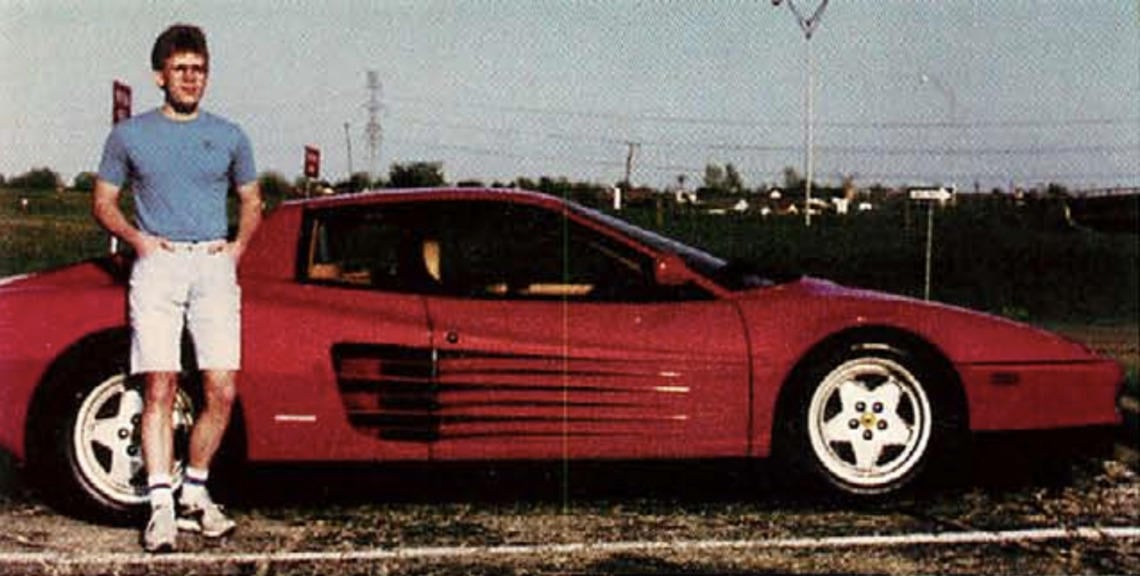
Then came the science project. The Ferrari Testarossa. Twin turbos, nitrous, suspension and tire changes, and a dyno sheet Carmack has repeatedly referenced online showing about 1,009 horsepower at the rear wheels. His bragging rights were not 0 to 60. They were 50 to 150 mph. He has written about using the straightaway near id Software’s office as a personal drag strip late at night, loud enough that employees knew when he was coming or going. It also broke constantly. Input shafts snapped. The car lived on jack stands. Carmack loved it anyway.
The F40 was the exception. He mostly left it alone, save for boost-related tweaks. He respected it as raw and race-bred, miserable if you drove it lazily. That restraint would not last.

The blacklist and the workaround
When Carmack went to buy the F50, the next logical level, the Ferrari people were done. As he later explained on X, the same dealer refused to even put him on the waiting list. He was not welcome. The turbocharging and the implied criticism that Ferraris were not as fast as they looked had crossed a line.

So Carmack did what he always did. He worked around the problem. He bought an F50 privately when a US lease ended, making good on the later joke that he owned four Ferraris total, as reported by Motor Car Tid Bits. The 328, the Testarossa, the F40, and the F50. And then he sent the F50 to Norwood for twin turbos. Depending on the retelling, the car made about 602 hp at the rear wheels or roughly 900 metric horsepower. Carmack himself leaned into the feud years later, posting that he had effectively beaten Ferrari four times.

There was also a strange side quest that experts still love. A carbon-bodied 288 GTO project with a billet 5.0-liter V12, twin turbos, dual fuel systems, and photos showing 24 injectors around the intake. The car was never finished under Carmack. It lingered, like abandoned source code.

Eventually, he quit. As he has said on X, he gave up the turbo Ferrari habit, moved to electric, owned Tesla Roadster number 30, and later drove a Model S P100D, which he called the best car he had ever owned by far. There is something poetic about that ending. Carmack did not lose to Ferrari. He just moved on to a faster, cleaner patch.