
The US Air Force is quietly signaling where its real priority lies, and it is not the interim aircraft gifted from Qatar. Budget documents and reporting around the FY2027 request show a clear push to increase funding for the delayed Boeing VC-25B program, with a total figure that reaches roughly $732 million when all elements are accounted for. That number sits noticeably above the publicly traceable line items, indicating that additional funding is being directed toward protecting the schedule of one of the most complex aviation programs currently underway.

What stands out, as reported by Aviation Week, is not just the size of the request, but the absence of any comparable push for the Qatar-donated aircraft that is being prepared as a temporary solution. The Air Force appears to be drawing a clear distinction between a stopgap measure and the long-term platform that will carry the full weight of presidential operations. The message embedded in the funding request is straightforward, as the service is willing to spend more now to prevent further delays from cascading into a program that has already absorbed years of disruption.
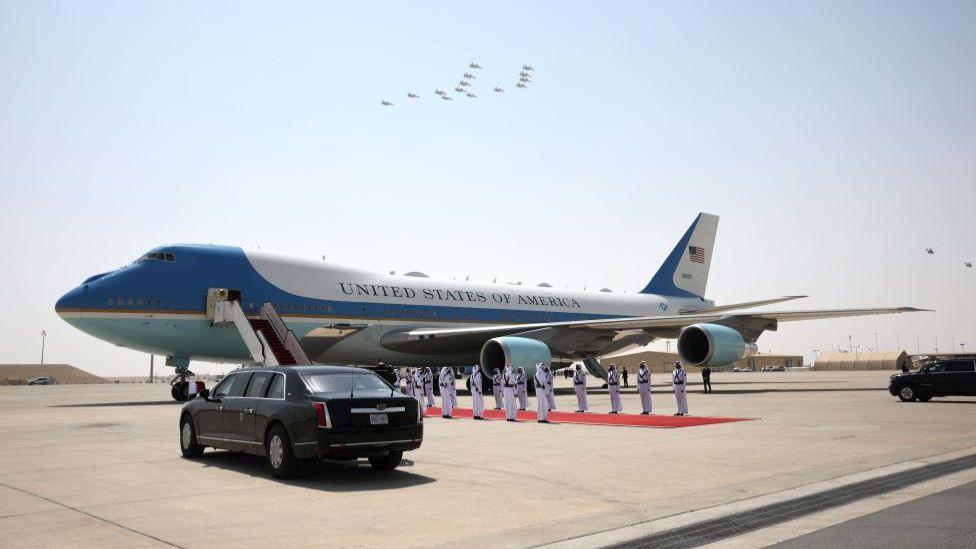
Paying to protect the timeline
The increase in funding of around $150 million reflects a program that has reached a point where time has become more expensive than money. The VC-25B is not a conventional aircraft procurement effort, and the cost of delay extends beyond budgets into operational readiness and long-term sustainment planning. By allocating additional resources, the Air Force is effectively attempting to stabilize progress across design, integration, and testing, all of which have struggled to align in recent years.

The discrepancy between publicly visible funding lines and the larger reported total also points to the layered nature of the program. Some costs sit in areas that are not fully broken out in standard budget documents, particularly those tied to specialized systems and integration work. What matters is the direction of travel, which is toward increased investment to ensure that the aircraft moves closer to delivery rather than drifting further into uncertainty.

Why the VC-25B keeps slipping
The delays facing the VC-25B are rooted in the sheer complexity of what the aircraft is expected to become. Based on the Boeing 747-8, it is being transformed into a flying command center that must support secure communications, crisis management, and continuous presidential operations under any conditions.

That level of capability demands big structural changes, extensive wiring, and the integration of systems that were never meant to coexist inside a commercial airframe. Problems in one area quickly ripple across others, which is why issues such as wiring delays and environmental system challenges have had an outsized impact on the schedule.

Compounding that technical difficulty are program-level disruptions that have proven difficult to absorb. The failure of a key interior supplier forced Boeing to reorganize critical workstreams, while a shortage of security-cleared mechanics has slowed progress at a fundamental level.

Certification and testing have also been pushed back as incomplete designs and evolving requirements make it harder to lock the aircraft into a stable configuration. Taken together, these factors create a program that cannot simply accelerate on demand, even with additional funding, because each step depends on resolving multiple constraints at once.

The Qatar-donated Boeing 747-8 sits in sharp contrast to this effort. It is being converted into a temporary Air Force One to bridge the gap until the VC-25B is ready, but it does not carry the same level of modification or long-term expectation. Its role is pragmatic rather than transformative, providing continuity rather than capability expansion. The absence of new funding requests for this aircraft underscores its limited scope within the broader strategy.

What emerges from the Air Force’s approach is a clear hierarchy of priorities. The interim jet will keep operations moving, but the VC-25B remains the centerpiece, and ensuring its delivery has become important enough to justify additional spending. The program’s challenges are well understood, yet the decision to increase funding signals confidence that they can be managed if resources are applied at the right points. In that sense, the budget request is not just about money, but about buying time, reducing risk, and keeping a complex program on a path that has proven difficult to maintain.