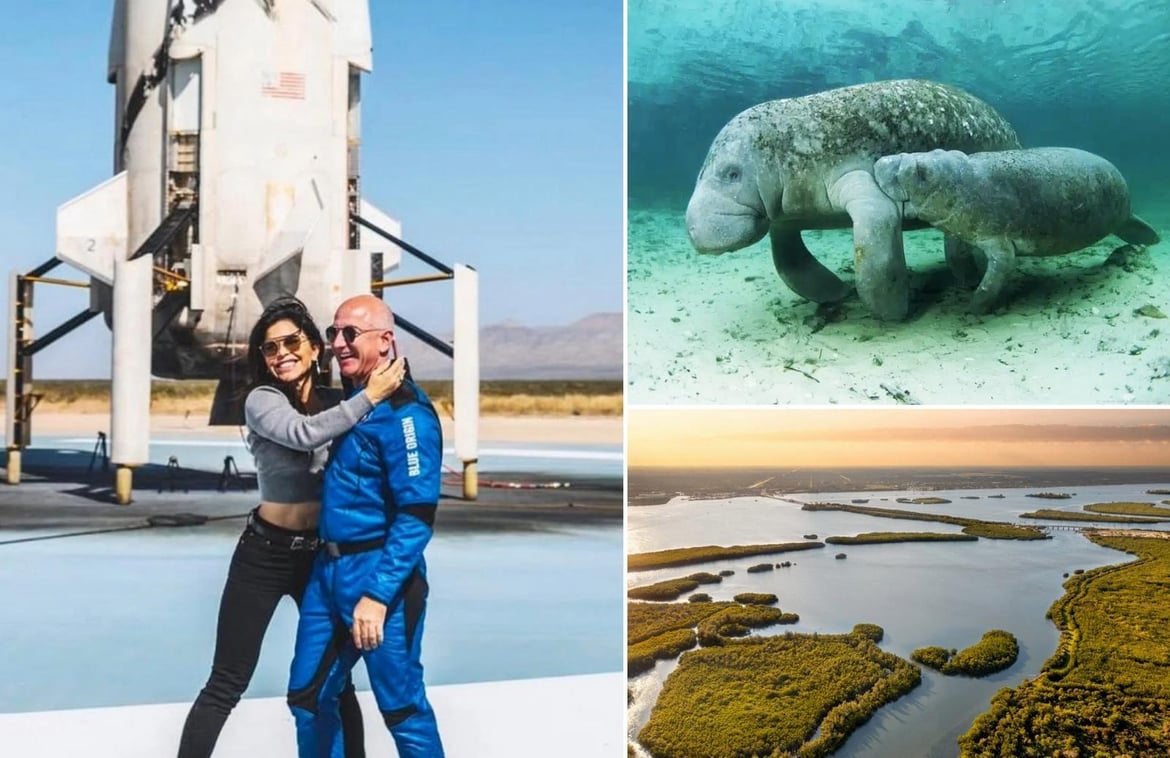
A growing environmental dispute is unfolding along Florida’s Space Coast, where public opposition is building against Jeff Bezos’ space company, Blue Origin, over plans to continue discharging industrial wastewater into the Indian River Lagoon. What began as a routine permit renewal has turned into a flashpoint for residents who say the proposal threatens a fragile ecosystem they have spent years trying to restore. A petition opposing the discharge has now drawn tens of thousands of signatures, reflecting rising concern that the lagoon could once again pay the price for industrial activity tied to the region’s booming space economy.

Blue Origin has pushed back on the framing. In a response to Fox35Orlando, the company said: “This is a renewal of an existing agreement that has been in place for more than five years. We are committed to maintaining responsible and compliant operations.” That explanation has not slowed the backlash. At the time of writing, almost 41,000 people have signed the petition calling on Florida regulators to stop the discharge and rethink how industrial wastewater is handled near one of the state’s most fragile ecosystems.

The dispute centers on a draft permit prepared by the Florida Department of Environmental Protection. The permit would allow Blue Origin to continue operating an industrial wastewater treatment facility connected to its OLS Manufacturing Complex on Merritt Island. Under the draft, the company could discharge up to 0.49 million gallons per day of wastewater.

According to the permit description, that flow is split into two main streams. Up to 0.467 million gallons per day is classified as process wastewater tied to manufacturing and testing activities. Another 0.015 million gallons per day is labeled non process wastewater, the smaller but more controversial slice that can vary more from day to day. Both streams are routed into a large onsite stormwater retention pond covering about 9.25 acres. From there, overflow moves through a drainage and ditch system along Ransom Road that ultimately reaches the Indian River Lagoon.

DEP and Blue Origin both stress that the discharge is not direct. The agency has told local media that the facility uses drinking water for routine industrial needs like pressure testing and cooling towers, that the wastewater does not come into contact with fuel or hazardous materials, and that the retention pond provides buffering before anything reaches the lagoon. On paper, it reads like a tightly managed industrial system rather than a pipe dumping waste straight into open water.

Why critics are still worried
For opponents, the details in the paperwork are exactly why alarm bells are ringing. While the story is often reduced to “rocket waste,” the permit language describes something closer to a conventional industrial plant. Process wastewater includes reject water from reverse osmosis, tank proofing and rinsing water, and other fluids diverted from the sanitary sewer into the stormwater system. The non-process stream, though smaller, is less predictable.

Even when most of the water is treated, critics argue it can still carry nutrients, cleaning residues, trace metals, oil and grease, and corrosion inhibitors or biocides used in cooling systems. In a lagoon already managed for nutrient reduction, the fear is not one dramatic spill but a constant background load that chips away at water quality.

That concern is amplified by where this is happening. The Indian River Lagoon is widely described as one of the most biodiverse estuaries in the United States. It has also been fighting for years against nutrient pollution, harmful algae blooms, seagrass collapse, and wastewater impacts. Brevard County residents routinely point to tax-funded restoration programs and cleanup efforts that have already cost hundreds of millions of dollars. Against that backdrop, even a legally permitted discharge feels like a step backward.

When locals talk about wildlife, they usually mean systems that fail together. Seagrass meadows depend on clear, balanced water. Add nutrients, fuel algae, and light disappears. Manatees follow, because seagrass loss has been central to recent starvation events. Oyster reefs and other filter feeders suffer when salinity shifts or water quality drops, reducing their ability to keep the lagoon clear. Juvenile fish and invertebrates lose nursery habitat. Dolphins and sea turtles become downstream indicators when prey declines or bloom-related toxins rise.

There is also frustration over timing and transparency. Some residents and even officials have said they were surprised to learn that discharges have already been happening under an existing permit. The renewal made the details public in a way that felt abrupt, especially to a community already sensitive about “one more source” of pollution.

The number that keeps coming up is 0.49 million gallons per day. Critics note it sits just under 0.5 million, a threshold that can trigger stricter oversight in some regulatory frameworks. Whether intentional or not, that detail fuels suspicion. So does the argument that routing wastewater through a retention pond does not eliminate risk, especially during heavy rain events when pulse flows can move contaminants quickly and reduce settling time.
The public comment window on the draft permit is limited, with mid-December cited as a likely closing date unless a public meeting extends it. Brevard County commissioners have voted to request such a hearing, but DEP is not obligated to grant one.

For Blue Origin, the position remains steady. This is a renewal, not a new discharge, and operations are compliant. For thousands of residents, that answer misses the point. Their argument is not only about legality, but optics and priorities. Why are taxpayers paying to restore a lagoon while a well-funded private operator adds risk, however controlled it may be. That question, more than any technical parameter, is what has turned a permit renewal into a flashpoint.