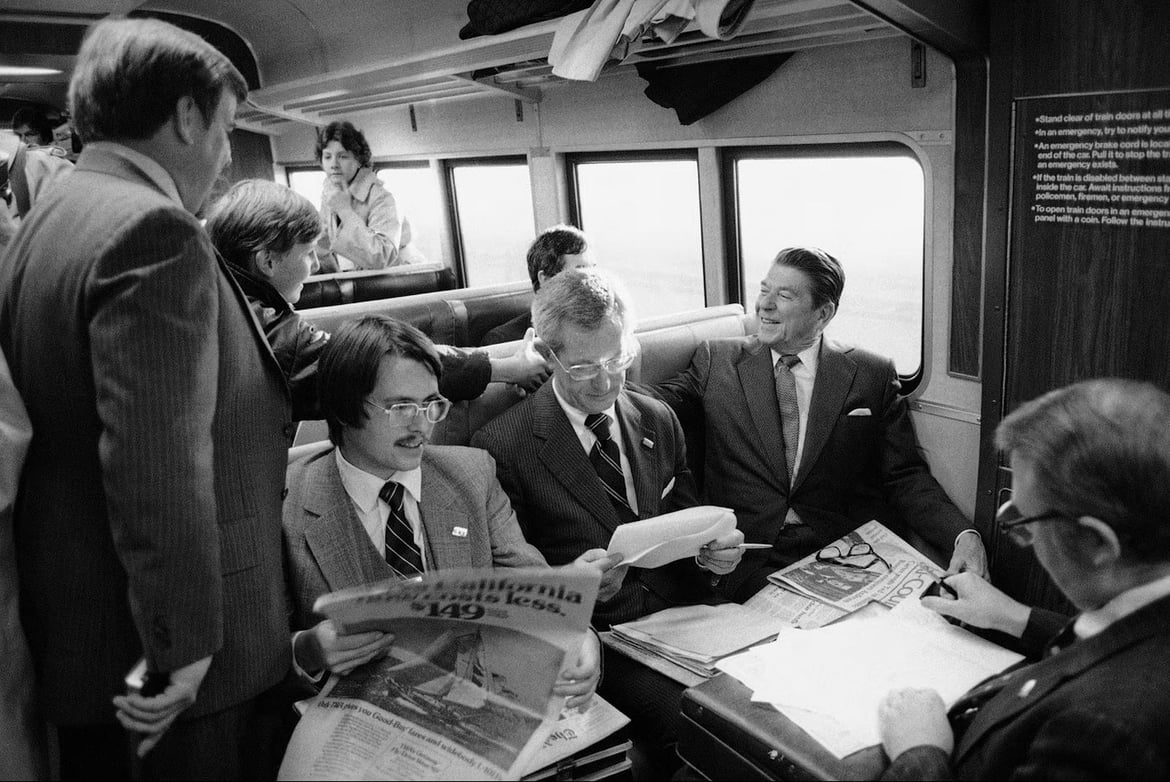
Way before the comfortable myth of Air Force One, presidents moved the old-fashioned way, by rail, with steel wheels singing under them and towns turning into audiences the moment a whistle sounded. America’s executive power didn’t always fly. For a critical stretch of the twentieth century, it rolled. And it rolled inside a machine so overbuilt and so paranoid that it still feels like a wartime fever dream in polished wood and armor plate. It was called U.S. Car No. 1. And for four presidents, it was the White House on rails.

A White House on wheels built for war and paranoia
The story begins in luxury. Pullman built the car in 1928 as Ferdinand Magellan, one of six explorer-themed private railcars designed for elite travel. Then World War II changed everything. Secret Service concerns over Franklin D. Roosevelt’s vulnerability triggered a complete rebuild in 1942, transforming a plush private car into a rolling fortress designed to keep the president safe while still letting him remain visible.

On December 18, 1942, it was presented to Roosevelt and redesignated U.S. Car No. 1. The name Ferdinand Magellan was physically removed from its sides to reduce attention, and it operated under the blunt wartime code name POTUS. The symbolism was unmistakable. This was the presidency in motion, hardened for an anxious age.

From the outside, it looked like a railcar. Up close, it felt like a secured residence. Roughly 84 feet long, 10 feet wide, and 15 feet tall, it carried about ten rooms within a footprint that forced clever design, as pointed out by the White House Historical Association. Pullman reconfigured the interior from six small bedrooms into four larger ones so it felt more like an apartment than a sleeper coach.
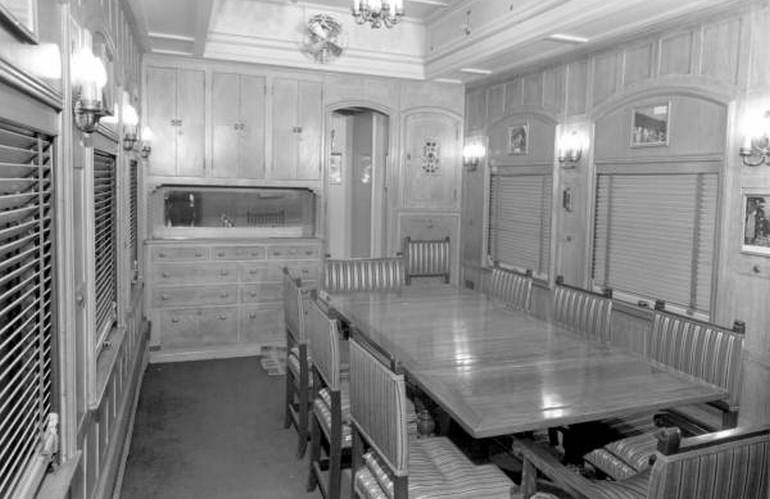
Roosevelt had a private bedroom. The First Lady had hers. Between them sat a full bathroom with a bathtub, an oddly domestic detail for a wartime bunker. Two guest rooms handled aides and VIPs. A combined dining and conference room centered on a solid mahogany table seating eight, where meals and war councils could happen in the same space.

Compare that to modern Air Force One, essentially a flying government complex with multiple zones, a full presidential suite, dedicated staff areas, medical capabilities, and communications suites built for a 747-sized footprint. U.S. Car No. 1 did the same job with far less space and more intimacy. Air Force One feels like a secure executive office with hotel polish. The railcar felt like a home that happened to be armored.

The back platform that turned steel into political theater
The rear lounge was the heart of the car. It looked more like a mid-century living room than a military asset, with deep sofas, upholstered chairs, and curtains instead of chrome severity. That lounge opened onto the famous rear platform, fitted with microphones and loudspeakers. In practice, it became a rolling balcony, a stage where presidents could address thousands at whistle stops while remaining protected.

Forward sections kept the operation seamless by including pantry, galley, storage, and crew bunks. Staff stayed close, service stayed polished, and the president could eat properly while traveling. Comfort was engineered around security. The sealed windows made natural ventilation impossible, so the car received an improvised air-conditioning system that circulated air over pipes cooled by melting ice. Telephones in almost every room could plug into trackside hookups, keeping Washington within reach even when the president was deep inland.

But U.S. Car No. 1’s defining feature was weight. Armor plating of roughly five-eighths of an inch of nickel steel, plus thick bullet-resistant glass, pushed the car to around 285,000 pounds. It became the heaviest passenger railcar ever used in the United States, so heavy that it pushed the limits of American rail bridges. Engineers had to keep it just under maximum ratings on many lines, meaning every extra fixture had to earn its place against armor and glass.

Roosevelt’s fears also shaped the engineering. Claustrophobic and terrified of fire, with polio limiting his ability to escape, he demanded hidden escape hatches, including one in the observation lounge and another in the presidential bathroom. He also received a narrow-framed wheelchair designed for the corridors, and a custom elevator that lifted him up to the rear platform, a quietly essential feature later removed after his death.

The car outlived its original mission and served four presidents in total: Roosevelt, Truman, Eisenhower, and Reagan. Truman turned the rear platform into a campaign theater, including the famous “Dewey Defeats Truman” moment. Eisenhower used it sparingly as air travel rose. Reagan revived it for whistle-stop speeches in 1984, deliberately echoing Truman’s old playbook. It remains the only passenger railcar ever designated a National Historic Landmark.

U.S. Car No. 1 was the Air Force One before Air Force One. Part armored vehicle, part apartment, part mobile Oval Office, it showed how America balanced fear with display. In wartime, the president could not vanish. So, the country built him a home that moved, spoke, and survived.