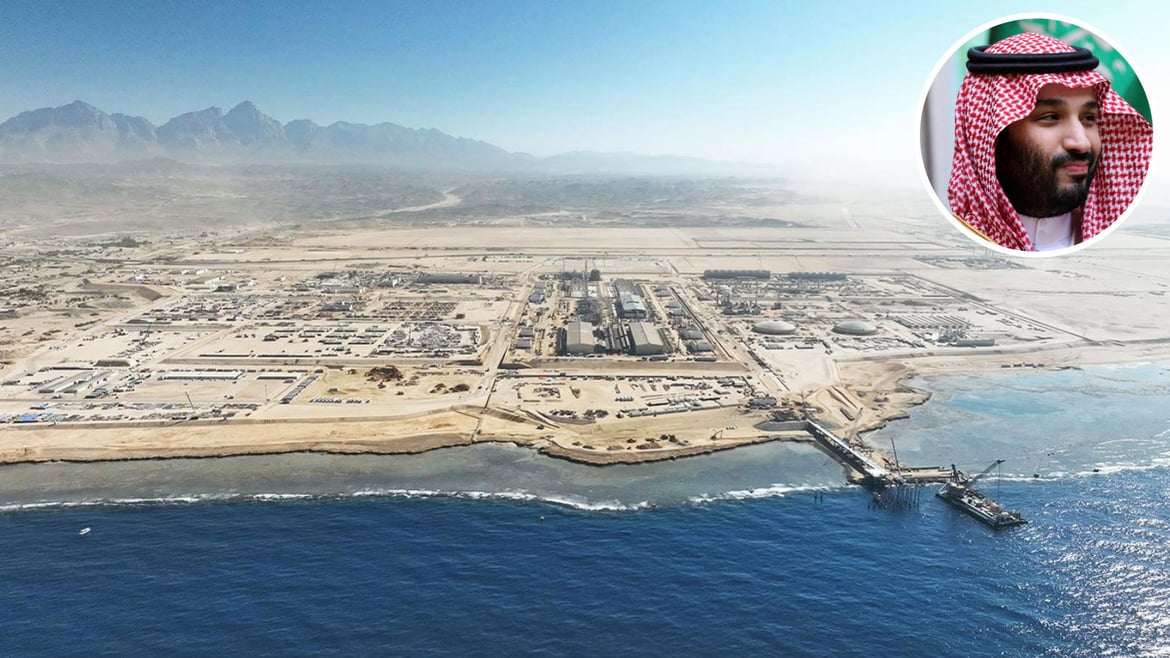
Saudi Arabia, a nation long defined by its oil wealth, is closing in on one of the most transformative energy projects the world has ever seen. In the remote northwestern desert, at the heart of the massive NEOM mega-project in the floating city of Oxagon, the Kingdom is building a green hydrogen plant the size of Chicago. Spearheaded by Crown Prince Mohammed bin Salman, this project is more than a marvel of engineering. It is a declaration that Saudi Arabia intends to be a leader not only in oil but also in the next generation of clean energy. Construction of the facility is now 80% complete, with full operations expected by 2026 and exports set to begin in 2027.

The Neom Green Hydrogen Company, or NGHC, is leading the charge. This equal partnership between Saudi Arabia’s ACWA Power, US-based Air Products, and NEOM is building the world’s largest green hydrogen plant. Spread over an area of over 300 square kilometers (roughly 116 square miles), the numbers are astonishing: up to 600 tons of carbon-free hydrogen will be produced per day.

That hydrogen will be converted into up to 1.2 million tons of green ammonia annually and shipped across the globe as a clean alternative to fossil fuels. At the core of this process lies a massive electrolysis system, with over 2.2 gigawatts of capacity dedicated to splitting water into hydrogen and oxygen using renewable energy. Solar and wind farms generating 4 gigawatts of power will provide the electricity needed for this enormous undertaking.
One of the plant’s key logistical features is a dedicated jetty built specifically for the direct loading of green ammonia onto tanker ships. This ensures fast, efficient global distribution straight from the source. The port infrastructure is designed to support continuous export, making NEOM a future hub for hydrogen logistics and green fuel trade. With all the green ammonia secured under a 30-year off-take agreement with Air Products, this project combines technological ambition with commercial certainty.

The green hydrogen facility is a centerpiece of Crown Prince Mohammed bin Salman’s Vision 2030, the long-term strategy to diversify the Saudi economy and reduce its dependence on oil. The project aligns with his plan to position Saudi Arabia at the forefront of renewable energy innovation. The $8.4 billion venture has already achieved financial close, backed by $6.1 billion in non-recourse loans from 23 regional and global financial institutions. Alongside the physical infrastructure, NGHC is building human capital by recruiting top global experts and launching partnerships with Saudi universities to prepare young professionals for roles in clean energy, engineering, and hydrogen logistics.

This facility is not just an experiment or a pilot program. It is an industrial-scale production site designed from the outset for global export and economic impact. It represents one of the few real-world examples of green hydrogen being developed at a commercial scale. With its vast scale, long-term buyers, and renewable energy foundation, it is poised to play a critical role in the world’s energy transition. The electrolyzers, turbines, hydrogen tanks, and cold storage systems being installed are not theoretical. They are already arriving and being put into place, signaling a project that is well on track and moving with serious momentum.

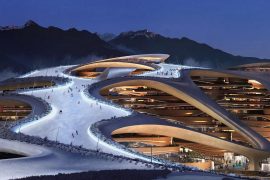
While much of Neom has drawn headlines for its ambitious concepts from desert ski resorts to a city built in a line, the hydrogen plant is the most grounded and achievable element of the project. If successful, it could change how Saudi Arabia is viewed on the world stage, not only as a petroleum powerhouse but also as a clean energy leader shaping the future of global fuel markets.

The floating city of Oxagon
The green hydrogen plant is located in Oxagon, Neom’s futuristic industrial and maritime hub. Oxagon is the largest floating industrial structure ever attempted and sits strategically on the Red Sea, near one of the world’s busiest trade routes. Shaped like an octagon, the city is designed to minimize environmental impact while maximizing coastal efficiency. It includes a smart port, research centers, and advanced factories focused on clean energy and marine innovation. At its core, Oxagon embraces circular economy principles and is powered entirely by renewable energy, creating a model for how cities of the future can balance industry, livability, and sustainability.