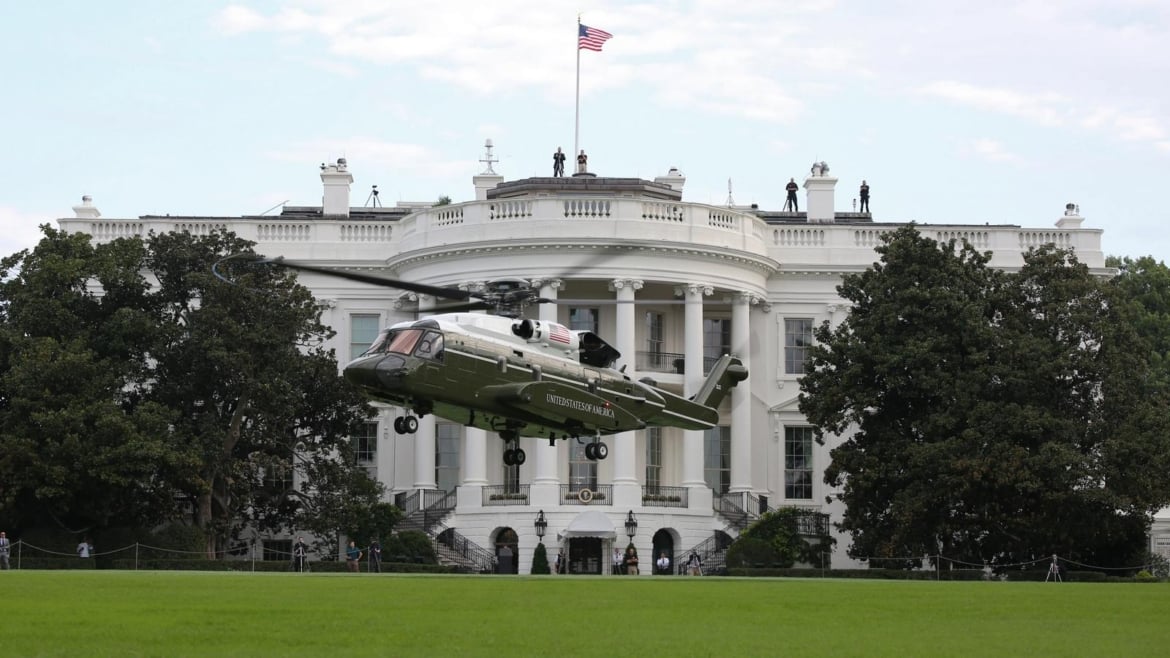
The United States spent roughly $5 billion developing a new generation of presidential helicopters packed with secure communications, defensive systems, and enough technology to keep the commander in chief connected while airborne. Yet the VH-92A Patriot arrived with an unexpectedly terrestrial problem. It is simply too powerful to keep landing directly on the White House South Lawn without damaging it. Its immense rotor wash and downward-directed exhaust can scorch grass and tear sections of turf from the ground, making a permanent landing surface necessary.
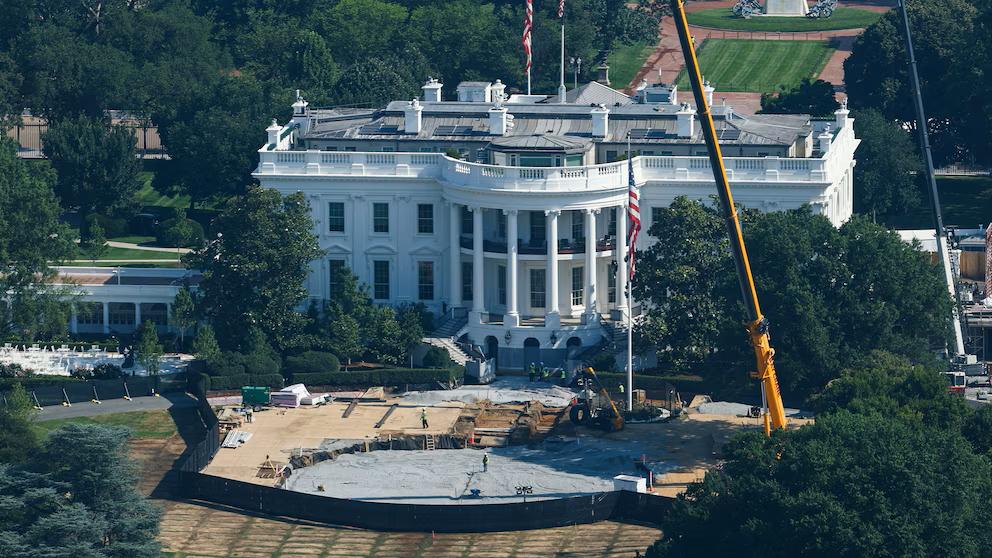
Construction is now underway on an estimated $5 million granite helipad designed to accommodate the powerful new aircraft. According to The Wall Street Journal, Lockheed Martin, whose Sikorsky division manufactures the VH-92A, donated roughly $5 million toward the project through an organization supporting the National Park Service. The company described the contribution as part of its long history of supporting projects in Washington, D.C., and elsewhere in the country. The helipad forms part of a larger contract covering additional work around the White House grounds.
A $5 billion helicopter that is too powerful for grass
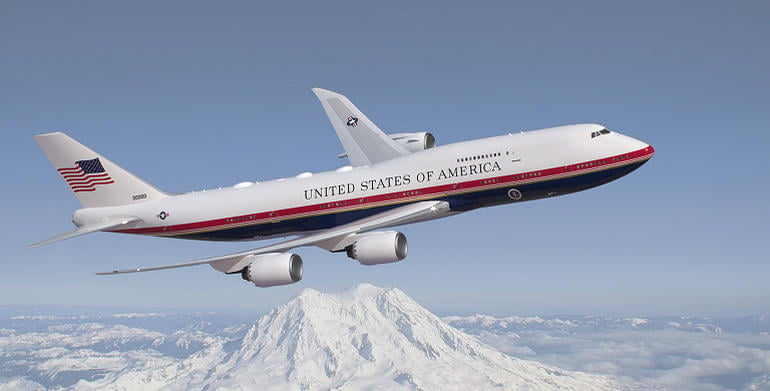
Unlike the new Air Force One, which remains bogged down by delays at Boeing and has missed several deadlines, the VH-92A helicopters were delivered two years ago. Yet they cannot be put to full use, and the reason has been known for years. Government testing identified concerns as early as 2018, shortly after the first aircraft were transferred for evaluation, while a 2020 Government Accountability Office report publicly documented the issue. The helicopter’s rear exhaust outlets direct intense heat toward the ground, where it combines with rotor downwash, engine exhaust, auxiliary power unit exhaust, and other aircraft discharges. Pentagon testing found that the combined effect could damage grass during landing operations.
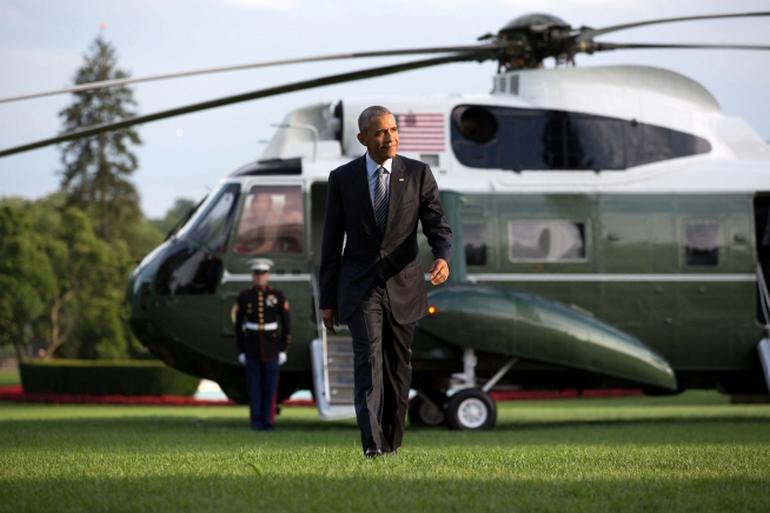
The Patriot reportedly generates roughly two and a half times as much rotor wash as the VH-3D Sea King it is replacing. That makes the decades-old tradition of presidential helicopters touching down directly on the South Lawn increasingly difficult to maintain. Temporary measures have included placing small circular protective pads on the grass, while the older VH-3D has traditionally landed with portable boards positioned beneath its landing gear.
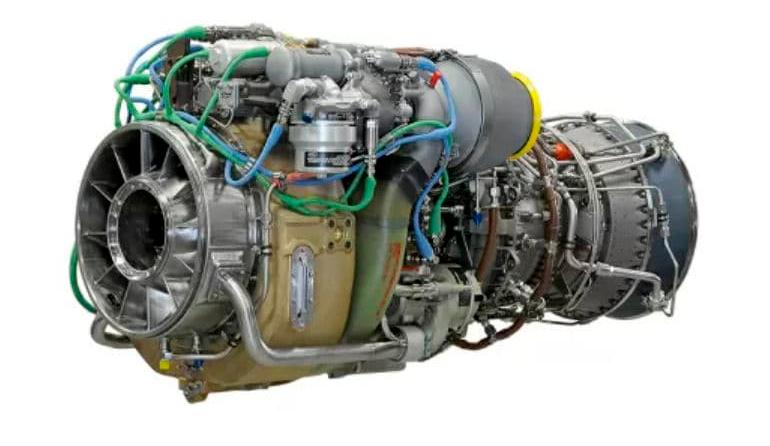
The difference becomes easier to understand when the two helicopters are compared. The VH-92A is powered by two General Electric CT7-8A turboshaft engines producing approximately 2,520 shaft horsepower each, giving the aircraft more than 5,000 horsepower in total. The VH-3D uses two older General Electric T58 engines producing around 1,500 shaft horsepower apiece. The Patriot therefore has nearly 70% more installed engine power, although its exhaust arrangement, rotor design, weight, and operating characteristics also contribute to the effect at ground level.
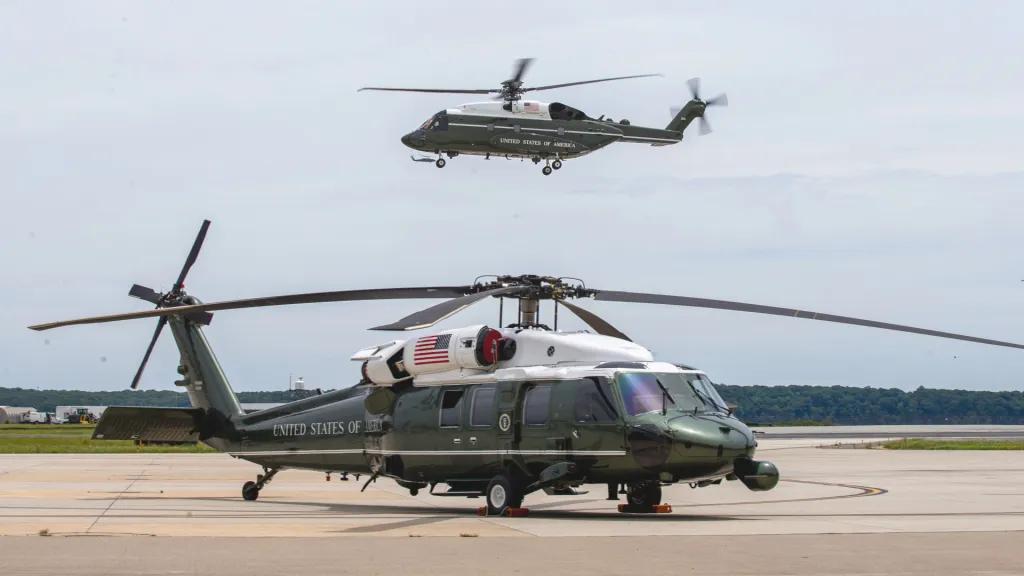
It is a substantially larger aircraft as well. The VH-92A has a maximum takeoff weight of approximately 12,565 kilograms (about 27700 pounds) and can reach around 165 knots, or 190 mph. The VH-3D weighs considerably less, with a maximum takeoff weight near 9,750 kilograms, and has a top speed of roughly 140 knots. The newer helicopter is heavier, faster, and capable of pushing far more air toward the ground.
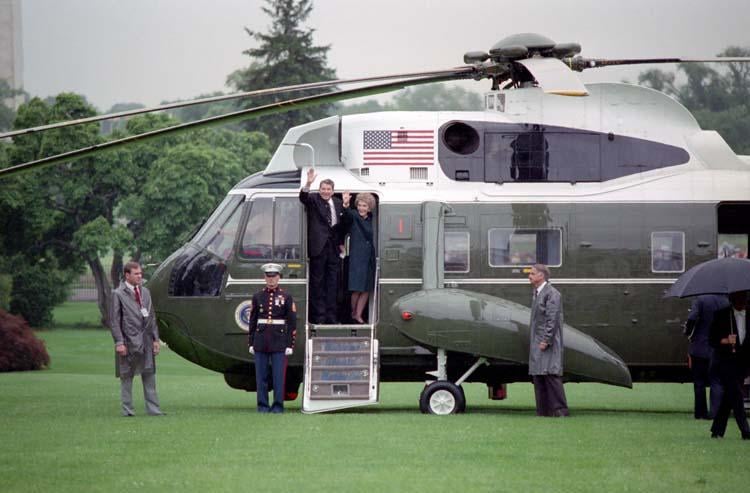
The problem created an expensive operational dilemma. Without a permanent landing surface, the military faced the possibility of continuing to use aging VH-3Ds for White House arrivals while operating the VH-92A elsewhere. Maintaining two fleets for different portions of the same mission would add logistical complexity and require continued support for helicopters that have already served far beyond their original life expectations.
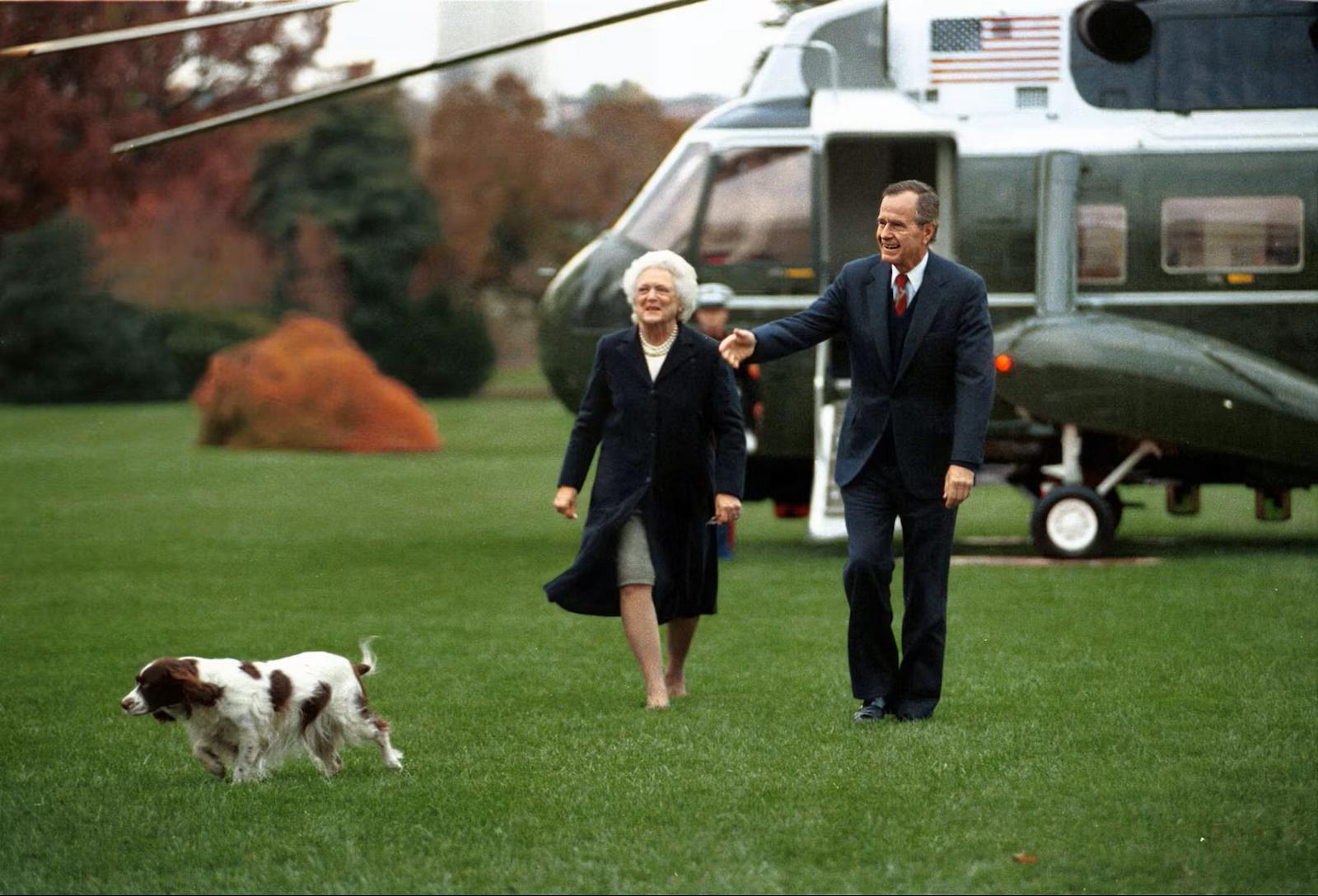
The VH-3D entered presidential service in 1974 and traces its design lineage to the Sikorsky S-61, which first flew in 1959. Some presidential airframes are around four decades old. The smaller VH-60N White Hawk, introduced in 1989, has also exceeded its original expected service life. An earlier attempt to replace the aging helicopters, the VH-71 Kestrel program, was cancelled in 2009 after projected costs climbed beyond $11 billion.

Although the VH-92A reached initial operational capability in December 2021, its path to carrying the president was slowed by several issues, including challenges involving encrypted communications and its effect on the South Lawn. The new helipad could finally remove one of the most visible obstacles to fully retiring the VH-3D fleet, while VH-60Ns are expected to remain available longer for specialized missions, including operations at demanding high-altitude locations.

A flying command center finally gets a permanent landing spot
The VH-92A is far more than a larger replacement for the Sea King. Derived from the commercially certified Sikorsky S-92, it incorporates extensive military and presidential modifications. Its Mission Communications System supports simultaneous secure and non-secure voice and data connections, allowing the president to remain linked to the national command structure while airborne.

The aircraft also features electromagnetic-pulse-hardened electronics, defensive countermeasures including chaff and flares, redundant flight controls, and three independent electrical power systems. Its executive cabin can accommodate up to 14 passengers, while the helicopter is designed to fit inside a C-17 transport aircraft so it can be deployed around the world ahead of presidential visits.
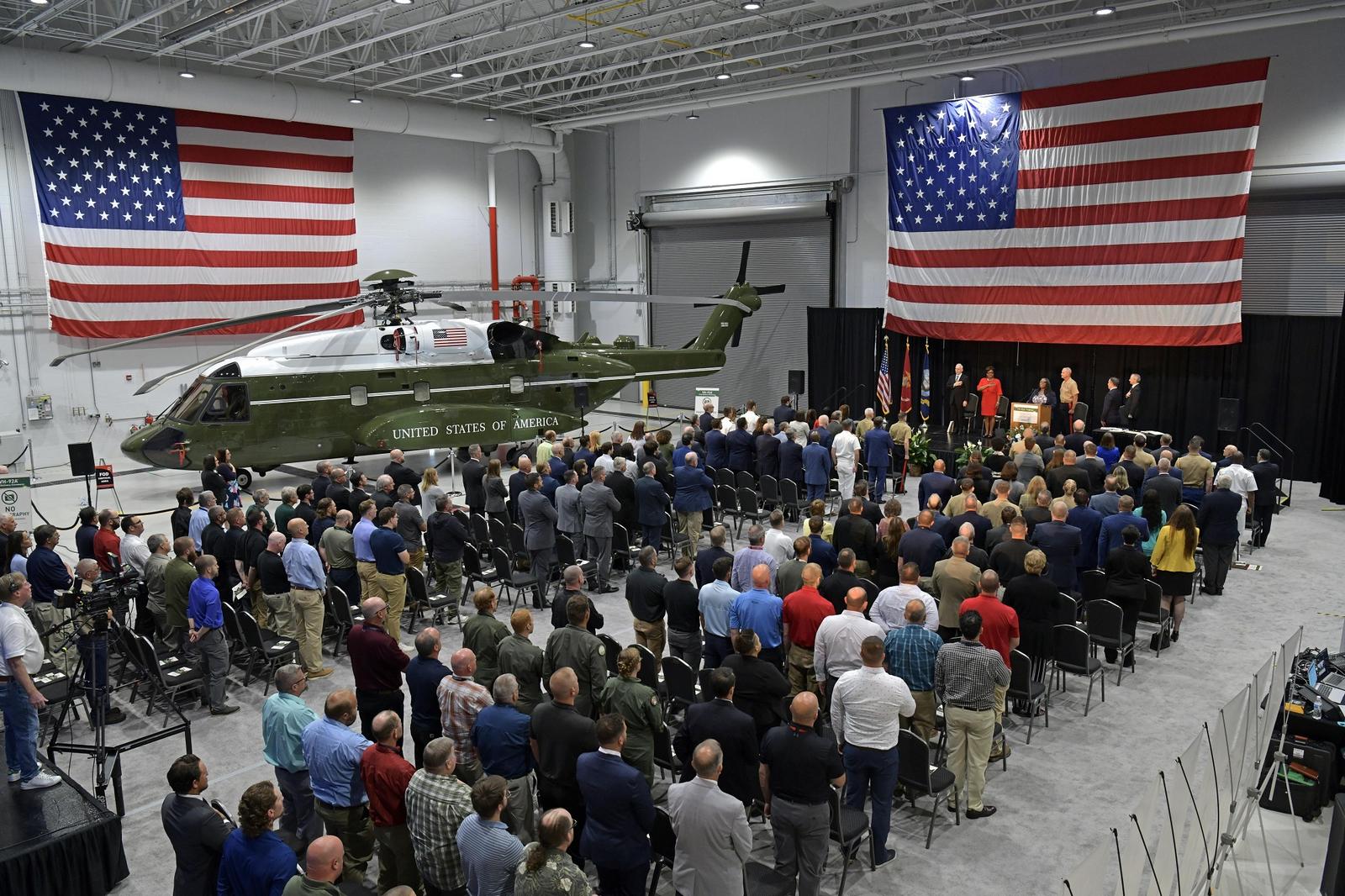
The 23-aircraft VH-92A program has cost approximately $5 billion. Dividing the overall program cost across the fleet produces an average of roughly $217 million per helicopter, although that figure includes development, testing, specialized equipment, support, and other expenses rather than representing the manufacturing price of an individual aircraft.
Its new landing area is intended to be more elaborate than a conventional concrete pad. Plans call for a permanent granite surface incorporating the White House seal and an eagle, allowing the structure to become a formal architectural feature of the South Lawn rather than a purely utilitarian piece of aviation infrastructure. The space could potentially support public events and press gatherings when it is not being used for helicopter operations.

For decades, the familiar, white-topped Sea King has landed on grass using little more than portable protective boards. Its successor carries hardened electronics, advanced defenses, secure command systems, and nearly 70% more installed power. After years of temporary solutions, the world’s most advanced presidential helicopter is finally getting something far simpler: a landing surface strong enough to withstand it.