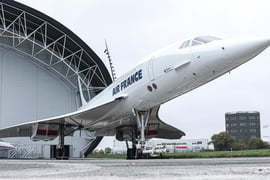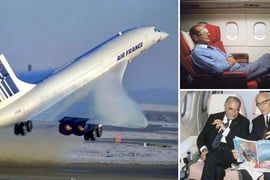
There are aircraft that get bought with spreadsheets and caution. And then there are aircraft that get chosen with ego, ambition, and a hunger to look unstoppable. Concorde belonged in that second category. It was never just a jet. It was a declaration, a thin white dart that turned speed into status and made the future feel like something you could actually purchase.

In the early 1970s, most of the world admired Concorde and then stepped back. Airlines ran the numbers, worried about fuel burn, noise limits, and the narrow set of routes where Mach 2 could even make sense. Iran didn’t hesitate. As reported by the The New York Times, under the Shah, Iran became the standout non-European Concorde customer, the rare outsider that didn’t merely cheer from the sidelines but moved from options toward a planned fleet of three aircraft, at a time when almost every major Western airline had walked away.

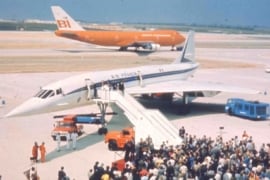
The obsession didn’t start with paperwork. It started with spectacle. In June 1972, prototype Concorde 002 set off on a widely described 40,000 to 45,000-mile sales promotion tour, hopping across regions to win over governments and airlines with the simplest argument possible. Don’t explain supersonic travel. Demonstrate it.

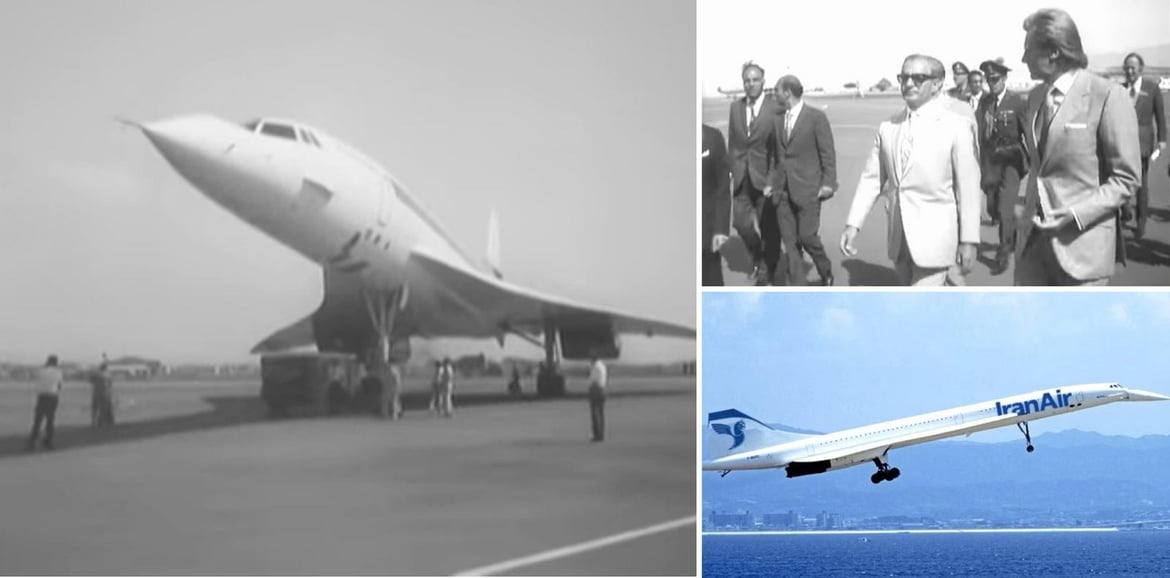
Tehran was one of the key stops. On 9 June 1972, newsreel agencies filmed a demonstration flight out of Tehran Airport, footage usually titled “Concorde in Tehran.” The Shah of Iran, himself a trained pilot, was on board. And in the kind of moment that only Concorde could deliver, he didn’t remain a ceremonial passenger. Concorde history material notes that on the first of two supersonic demonstration flights from Tehran, the aircraft was “honoured by the presence of the Shah of Iran, who occupied the left-hand pilot’s seat.” That is the captain’s seat, not a jump seat behind the crew.

What that meant in practice was less risky than it sounds and far more powerful as an image. Concorde would have been on autopilot for most of the cruise. With the test pilot in the right-hand seat, the Shah could handle the controls under supervision, feeling the aircraft’s response without ever being the pilot in command. The archives make it clear this was part public relations, part genuine fascination, and entirely effective.

After the flight, he publicly praised how calm and comfortable Mach 2 felt. The compliment mattered because Concorde’s magic was not just speed. It was how effortlessly it delivered it. This was the promise being sold to Iran, and the Shah bought into it completely.

Soon the interest hardened into intent. Concorde histories explicitly link his positive remarks after the Tehran flight to Iran Air’s announcement that it intended to order two aircraft plus an option on a third. On 8 October 1972, Iran Air signed a more concrete agreement with the British side for two aircraft, with a third as an option. Delivery timing was penciled in like a confident schedule from a confident era. Late 1976 for the first, early 1977 for the second, and around 1978 for the optional third.

Two production frames, known internally as A/C 214 and A/C 216, were earmarked for Iran. They were initially built as an Iran Air variant before being converted later when the deal collapsed. This was never just about aviation. Iran’s Concorde order was intimately tied to a much larger Franco-Iranian industrial package, the kind of agreement that made a supersonic jet feel like a ceremonial seal on top of something heavier. Nuclear reactors, metro projects, and a billion-dollar Iranian deposit with the Bank of France back in the day. In that context, Concorde was as much diplomacy and symbolism as it was an airline asset. It was proof that Iran wasn’t only buying infrastructure. It was buying a seat at the modern world’s most exclusive table.

By the time Concorde entered service, the headline unit price was about £23 million per aircraft in 1977, roughly $45-50 million at the time, or around $250 million in today’s money. Few airlines could justify that. Iran didn’t need to justify it. It needed it to mean something.

Then history intervened. The 1979 revolution killed the project. Iran Air became the last foreign airline to cancel Concorde orders. The two aircraft built for Iran were quietly handed over to British Airways instead, ultimately flying as G-BOAG and G-BOAF. The Shah’s supersonic dream didn’t vanish in smoke. It simply changed ownership, leaving behind one of Concorde’s most surreal footnotes. A moment in Tehran when the world’s fastest airliner lifted off, and a king briefly sat in the captain’s seat as if speed itself had become a throne.