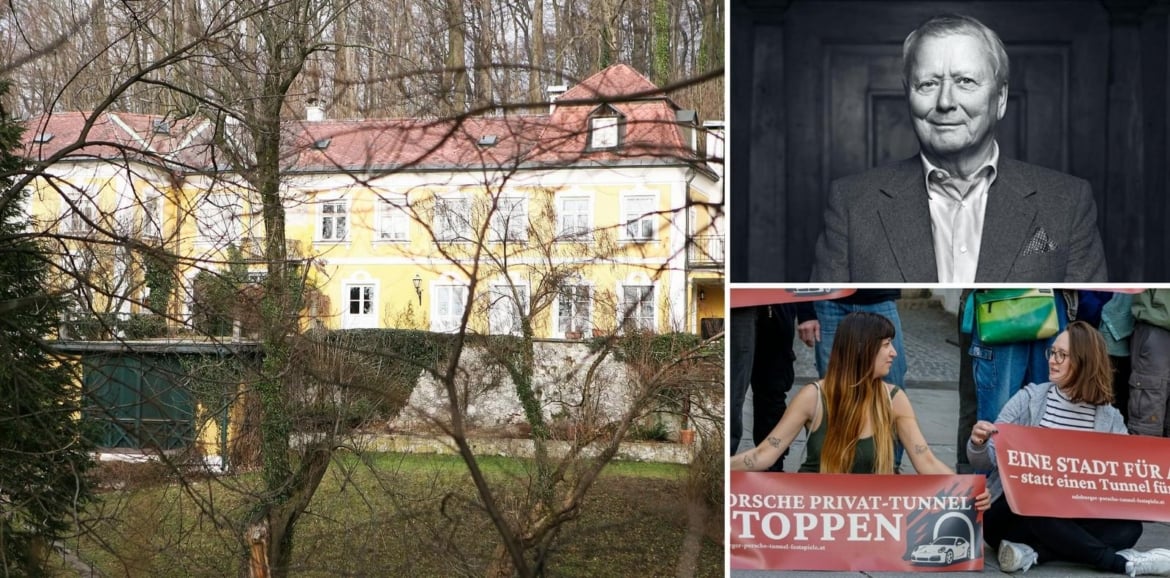
For most luxury homeowners, a private garage is one of the most desirable features. For Wolfgang Porsche, it became the center of one of Austria’s most talked-about property controversies. The Porsche heir has now put his historic Salzburg villa on the market after months of public backlash over plans to build a private tunnel through a hillside, bringing an extraordinary chapter involving heritage, wealth, and urban planning to an unexpected conclusion.

The 17th-century estate, known as the Paschinger Schlössl, is now listed for €12.7 million (about $14.5 million), as pointed out by The Guardian. While the asking price is significantly higher than the €8.4 million (roughly $9.6 million) Porsche paid for in 2020, the sale shows that one of the most powerful business magnates in Europe had to bow down to the protests.

One feature that’s highlighted above all others in the listing is an approved project for a private 500-meter tunnel leading to an underground garage beneath the villa. Ironically, the very proposal that turned the property into an international talking point has become one of its biggest selling points, with the approval remaining valid until the end of 2028.

A historic villa meets a very modern luxury ambition
Perched above Salzburg on the wooded slopes of Kapuzinerberg, the 12-room villa is far more than a prestigious address. It was once home to celebrated Austrian writer Stefan Zweig, who lived there until he fled the country in 1934 as fascism tightened its grip. Zweig famously described the residence as “romantic and impractical,” celebrating one of its defining qualities. It was inaccessible by car and could only be reached by climbing more than 100 steps.
That history made Wolfgang Porsche’s vision particularly contentious. The 83-year-old businessman, a member of the family behind Porsche’s automotive empire, secured city approval last year for an equivalent of $11.5 million tunnel that would connect a municipal parking garage in central Salzburg directly to a subterranean garage beside the villa, accommodating up to eight vehicles.
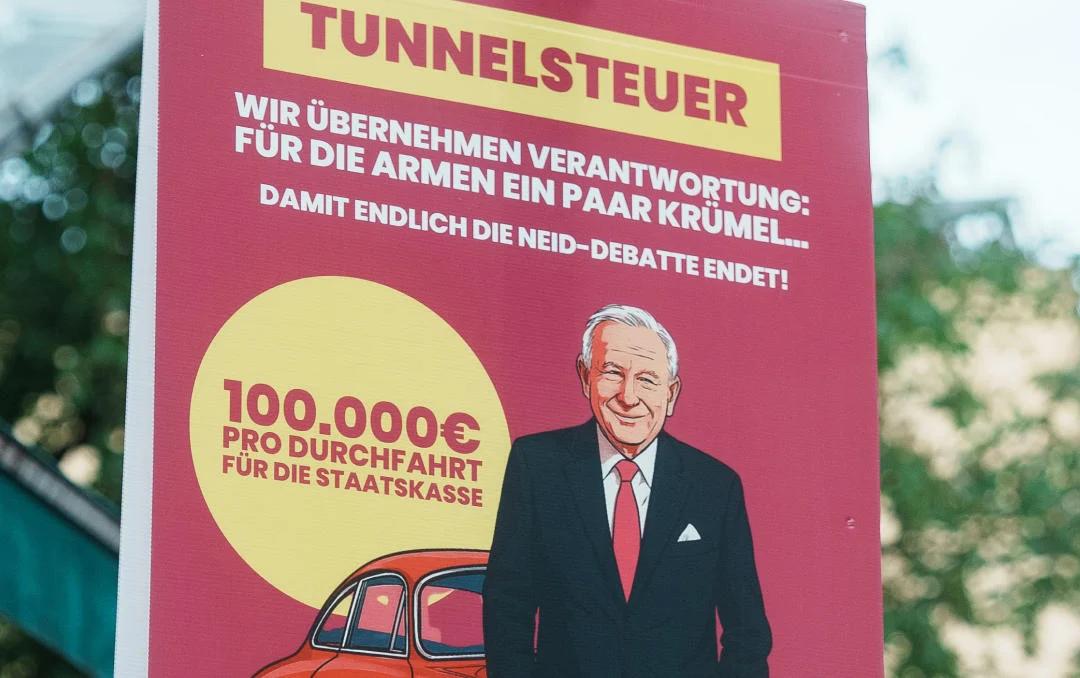
For Porsche, the project promised discreet and convenient access to the hillside property. For many Salzburg residents, however, it represented something very different. Critics argued that public land was being reshaped to serve the convenience of one of Europe’s wealthiest families, turning a planning dispute into a broader debate about privilege and inequality in a city already grappling with soaring housing costs and limited affordability.
Thousands rallied against the “tunnel for one”
Opposition quickly grew beyond local planning objections. Activists launched a petition that gathered more than 16,000 verified signatures in roughly three weeks before being handed to Salzburg Mayor Bernhard Auinger in May 2025. While street demonstrations themselves were relatively modest, the petition illustrated the depth of public sentiment.
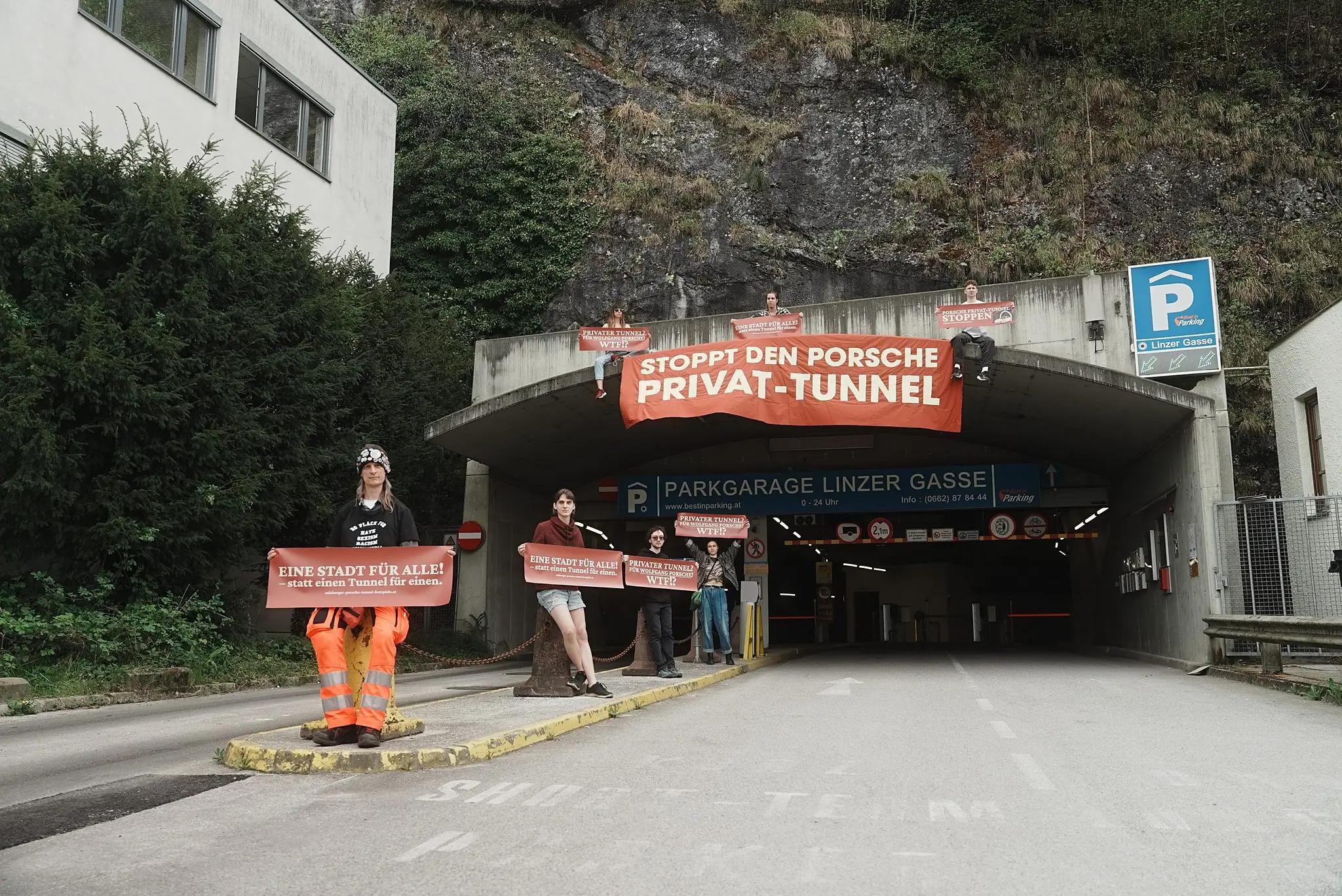
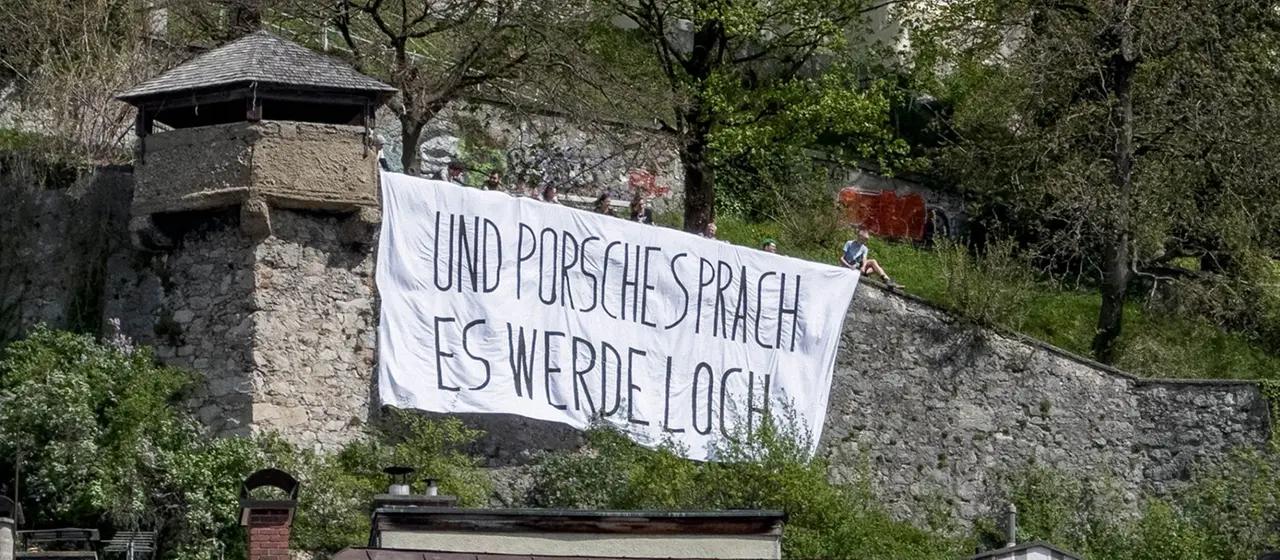
The campaign also became unusually theatrical. Protesters branded their movement the “Salzburger Porsche-Tunnel-Festspiele,” borrowing from the city’s famous cultural festival, while staging performances, public discussions, and satirical demonstrations. Banners reading “Stoppt den Porsche-Privat-Tunnel” appeared across the city, while one slogan in particular captured international attention: “A city for everyone instead of a tunnel for one.” Another, “Und Porsche sprach, es werde Loch,” humorously reworked a biblical phrase to mock the proposed excavation.

The irony at the heart of the controversy only strengthened public interest. A property admired for generations for resisting automobile access had become the focus of an ambitious engineering project designed to eliminate precisely that characteristic. What had once been viewed as part of the villa’s enduring charm was now being challenged in the name of modern convenience.

Although Porsche has not publicly explained why he decided to sell, local reports have linked the decision to the prolonged backlash surrounding the tunnel proposal. His representatives have dismissed the criticism as an “envy-driven debate,” while declining to elaborate further.
The approved tunnel remains attached to the property, meaning its next owner could still pursue the project before planning permission expires in 2028. Whether that happens or not, the Paschinger Schlössl has already secured an unlikely place in Salzburg’s recent history, becoming a rare example of a luxury home whose greatest controversy now forms part of its sales pitch.