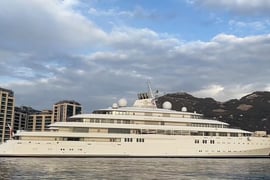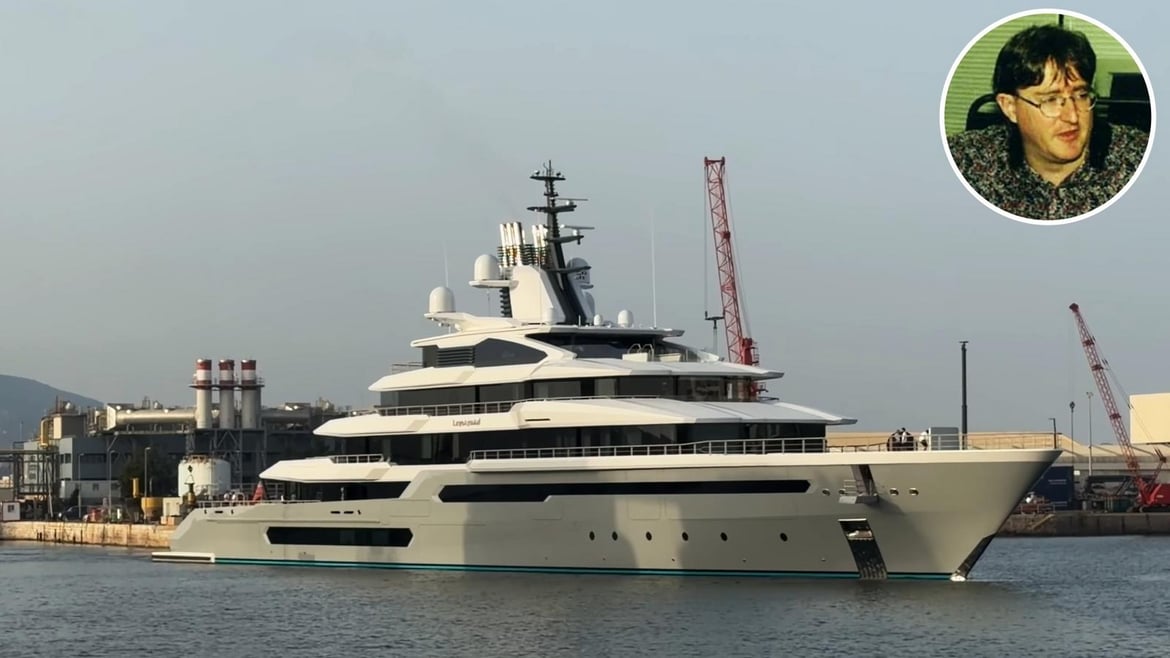
Long before he became a billionaire whose superyacht can burn through a fortune in fuel, Gabe Newell was a young delivery boy making his rounds with newspapers and telegrams, earning money one doorstep at a time. Today, the billionaire Valve co-founder owns at least six superyachts and research vessels, including Leviathan, a 364-foot (111-meter) superyacht whose estimated $1.2 million refueling bill offers a glimpse into the extraordinary scale of his wealth. The contrast between those early jobs and his present-day life is difficult to ignore, particularly given that his fortune grew from a company he helped build after leaving a promising career at Microsoft. Yet Leviathan is more than a symbol of financial success, as the vessel also reflects Newell’s growing interest in ocean exploration and scientific research.


Newell recalled his early jobs in a 2022 video in which he personally delivered some of the first Steam Deck handheld consoles to customers around Seattle. “The next job I had was delivering telegrams for Western Union,” he said, describing the work that followed his newspaper route. The moment was almost comical because one recipient reportedly treated him like an ordinary deliveryman, asking whether he needed a signature without initially recognizing the man standing at the door. Newell, who had helped build Valve into a gaming powerhouse, was back delivering something himself, only this time it was a console bearing the name of his own company.

His route to extraordinary wealth began with a substantial personal gamble rather than an effortless leap into success. After leaving Microsoft, where he had worked for more than a decade, Newell founded Valve with Mike Harrington, and the pair needed significant funding to develop their first game, Half-Life. Newell reportedly borrowed against his Microsoft shares to finance his contribution, choosing not to sell the stock outright as the young company took shape.

Developed with the help of a roughly $1 million advance from publisher Sierra, Half-Life became a major success upon its release in 1998 and helped establish Valve as a serious force in PC gaming. The company later expanded its reach through Steam, the digital distribution platform that became central to the modern PC gaming market.


Delivered by Dutch shipbuilder Oceanco in 2025, Leviathan represents a different side of Newell’s interests. Measuring 111 meters, the diesel-electric superyacht was developed with scientific exploration in mind and supports Inkfish, the ocean research organization he backs. Rather than serving solely as a floating retreat, it incorporates a scientific laboratory, a dedicated diving center and a medical facility, allowing researchers to undertake demanding expeditions far from conventional shore-based infrastructure. Its design was developed with input from Newell, naval architects, designers and the crew, with practical considerations and operational efficiency playing an important role. The vessel can reportedly cruise at 13 knots and reach a maximum speed of 17.6 knots, giving it the range and capability needed for extended operations at sea.


The estimated $1.2 million cost of filling Leviathan’s fuel tanks illustrates the expense associated with operating a vessel of this size. Newell’s journey from delivering newspapers to building one of the most influential businesses in gaming is extraordinary enough on its own. That his superyacht is also equipped to support scientific work across the oceans adds another dimension to a fortune that now funds ambitions far removed from the jobs with which he began.