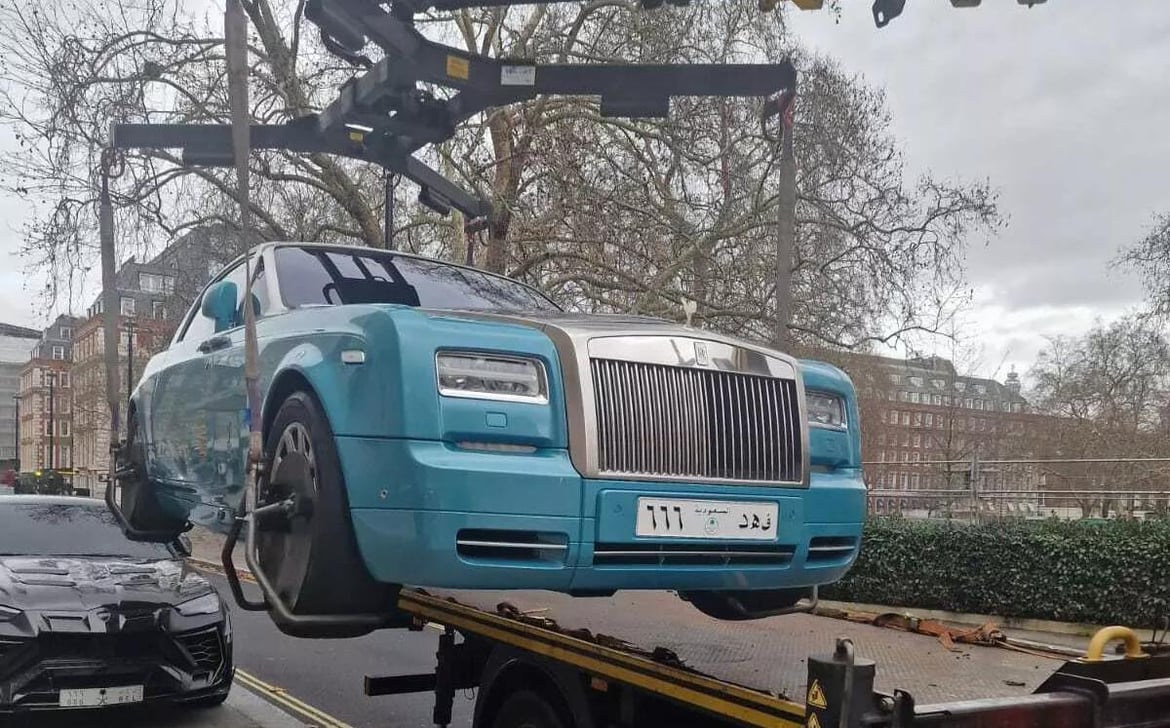
London has reached a point where patience has worn thin. After years of wealthy foreigners treating some of the city’s most exclusive streets as personal playgrounds, authorities have begun towing exotic cars that block pavements and rack up fines without consequence. The flashpoint this week was a turquoise blue Saudi-registered Rolls-Royce, photographed on Grosvenor Square outside the Chancery Rosewood hotel.

The $340,000 coupe was lifted by a Westminster City Council truck and quietly relocated several streets away, a measured move that cleared the footway while still sending a message to its owner. It was not impounded, but the symbolism was unmistakable. London has had enough.

The Rolls-Royce was not alone. A yellow Lamborghini with Saudi plates and a parking ticket stuck to its windscreen sat nearby, joined by a Ferrari with Saudi plates, a classic Jaguar E-Type, and at least one Mercedes G-Wagen, as reported by Carscoops. All of them were parked directly on the pavement, turning the wide footway into a private forecourt and forcing pedestrians to step into the street. The setting added weight to the story.

This was happening at the former US Embassy site, which has been transformed into the ultra-luxury Chancery Rosewood, where top suites are quoted at around £20,000 (almost $27,000) a night. Residents say the pavements outside the hotel have been inundated with supercars for months, and they have grown tired of navigating around them.

For Westminster City Council, the issue is simple. Penalty charge notices do not work on cars wearing foreign plates. London boroughs in Band A, like Westminster, can issue fines of up to £160 (about $215) for serious contraventions and £110 (roughly $150) for lesser ones, cut in half if paid within 14 days. But the owners of these vehicles arrive with such staggering wealth that a PCN is little more than a minor inconvenience. When the car is a Saudi-registered Rolls-Royce flown into the UK for the season, a ticket does not change behavior. That is why Westminster has begun physically removing or relocating vehicles rather than leaving another slip of paper under a wiper blade.
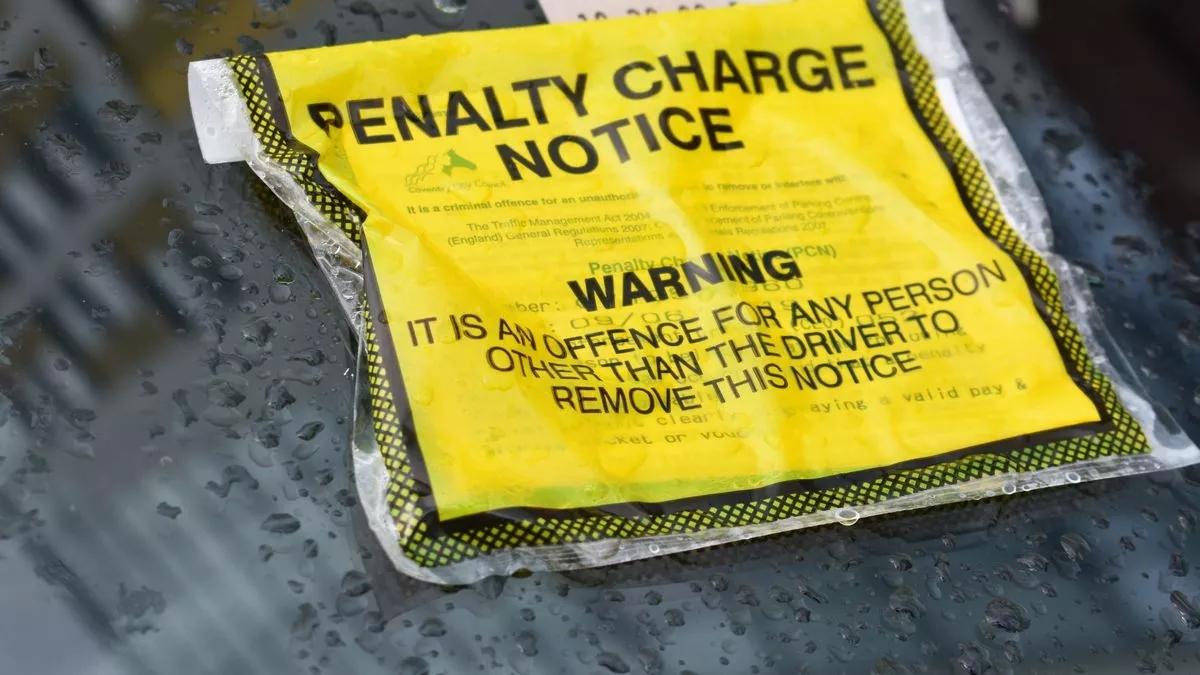
Even the more serious costs associated with towing barely register. If a vehicle is taken to a pound, release fees sit at around £280 (~$375), with daily storage at £55 (~$75) on top of the original PCN. National guidance puts the removal charges for a standard car at £150 to £200 (~$200-270) before storage, rising if the job is complicated. For an owner who has paid to ship a luxury car across continents, these sums are pocket change. That financial imbalance is at the heart of Westminster’s frustration.

The backdrop to all this is London’s famous supercar season. Every summer, wealthy visitors from the Gulf descend on Knightsbridge, Mayfair, and the West End, often basing themselves near Harrods and Park Lane. What follows is a rolling parade of hyper-expensive cars, documented by car-spotter channels and tourists who treat the streets as open-air exhibitions. Most of the Saudi cars arrive by air freight. Carriers such as Emirates SkyCargo and Qatar Airways regularly move Ferraris, Lamborghinis, and Rolls-Royces from Riyadh or Dubai to Heathrow. The cost generally falls between $20,000 and $33,000 per car each way, a figure that sits in the same range as a handful of unpaid parking fines or a week of secure parking in Mayfair.

This is the tension London faces. The city welcomes visitors who boost its economy, but residents are tired of supercar owners blocking pavements, ignoring rules, and overwhelming local streets. Westminster’s latest move signals a shift. Tickets are no longer enough, and the quiet relocation of a turquoise-blue Rolls-Royce may be the first step toward a firmer response to a seasonal problem that London no longer wants to tolerate.