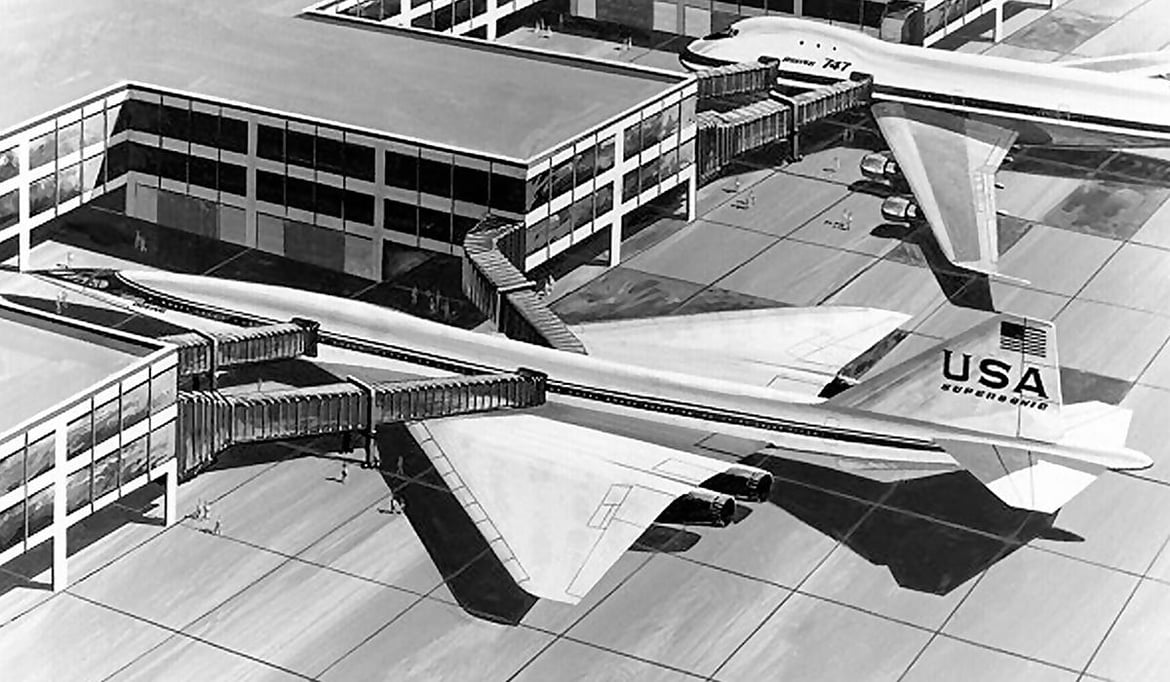
In the late 1960s, Los Angeles nearly became home to one of the most futuristic aviation projects ever conceived: a man-made island airport in the Pacific Ocean. The idea was to extend the city’s aviation frontier westward into the sea, giving rise to what planners called “Santa Monica Island,” an offshore gateway designed for a new generation of supersonic jets. It was a proposal that perfectly captured the optimism of the era, when the United States was racing to build its own Concorde and believed no engineering challenge was too great to overcome.

A few miles off the coast between Santa Monica and Marina del Rey, the island was imagined as both an airport and a self-contained city, per a report by LAist. Subway tunnels would link it to the mainland, with one spur connecting to LAX and another off the Pacific Coast Highway near the Santa Monica Pier. Two parallel 15,000-foot runways were planned to extend out into the ocean, allowing supersonic transports to take off and land over water. This design would minimize the deafening roar of jet engines over surrounding neighborhoods, one of the most persistent problems facing airports across the country.
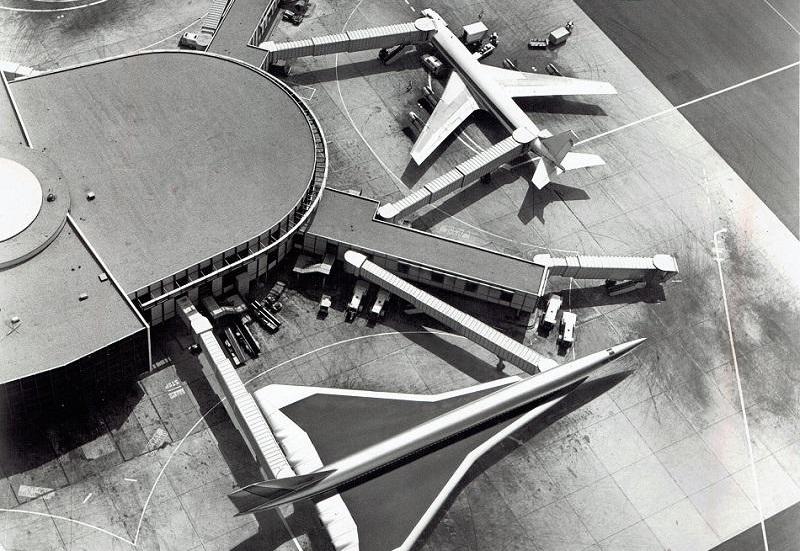
In 1968, architect R. Donald Jaye produced a series of detailed renderings for what he called Santa Monica Island. The images, now part of the Los Angeles Herald Examiner collection, show a stunning blend of architecture, aviation, and urban planning.

The island featured a commercial district, hotels, apartments, and even an aerospace university to nurture the next generation of engineers. Cultural venues, parks, beaches, and a sports center were all built into the plan, wrapping around the airfield like a floating metropolis. It was a vision of air travel not just as transportation, but as the nucleus of a modern city built for the supersonic age.
The concept fit neatly into a broader late-1960s planning trend that sought to push high-impact infrastructure offshore. As the US government poured money into the development of its own supersonic aircraft, designers and policymakers began to realize that the sound of progress was becoming intolerably loud. Offshore airports were seen as a way to contain both the noise and the political backlash, a futuristic compromise between ambition and environmental reality.

America’s supersonic dream
The roots of the offshore airport idea lay in America’s Supersonic Transport (SST) program, launched in 1963 under President John F. Kennedy. The program aimed to produce a commercial aircraft capable of flying more than twice the speed of sound while carrying roughly 300 passengers. Boeing’s 2707, chosen as the winning design, promised speeds of Mach 2.7 and a capacity of up to 300 people, making it faster and larger than the Concorde. The US government covered most of the development costs, viewing the project as essential to maintaining technological supremacy during the Cold War.

But by the end of the decade, the dream was losing altitude. The SST faced mounting opposition from environmentalists, scientists, and community groups alarmed by the potential damage from sonic booms and high-altitude pollution. Costs ballooned, technical challenges multiplied, and Congress ultimately canceled funding for the program in 1971. The pressures that grounded the Boeing 2707 also sank the bold airport concepts designed to support it, including Santa Monica Island.

Other experimental sites met similar fates. In Florida, the Everglades Jetport was planned as the world’s largest airport, five times the size of New York’s JFK, with six runways and its own high-speed monorail system. Construction began in 1968 but was halted a year later after environmental studies warned of catastrophic ecological damage to the surrounding wetlands. The site still exists today as a single abandoned runway, reclaimed by nature and remembered as a relic of misplaced optimism.

In hindsight, Santa Monica Island was never just an airport proposal; it was a statement about how people in the Jet Age imagined the future. The Herald Examiner renderings of subway tubes, causeways, and a floating city surrounding a runway stand as visual reminders of a time when engineering imagination knew no limits. The plan promised to turn jet noise from a neighborhood nuisance into an ocean-facing solution. What remains today are those haunting images of a city that never existed — a monument to a supersonic dream that never took off.