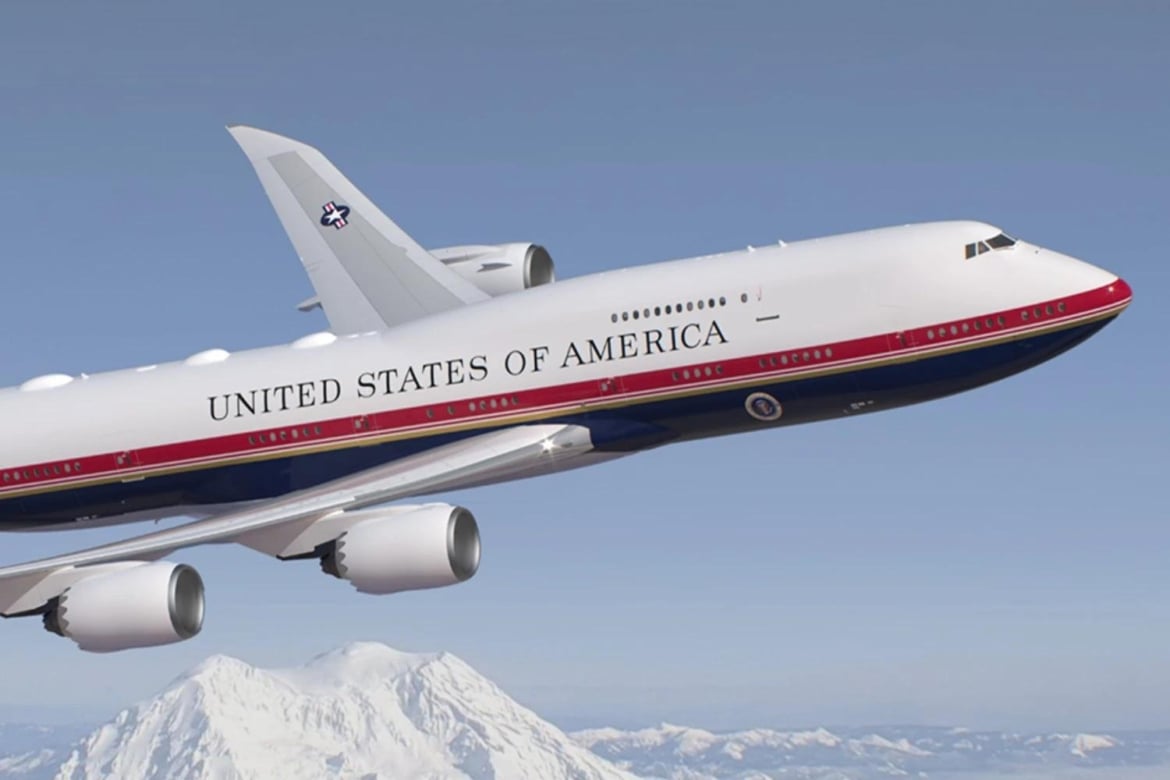
The new Air Force One color story has been told as a matter of taste, as if a presidential preference simply repainted an icon and moved on. The more revealing version sits underneath the fuselage, where a darker belly was quietly abandoned because it collided with physics, certification rules, and the unforgiving realities of heat management on a complex military aircraft.
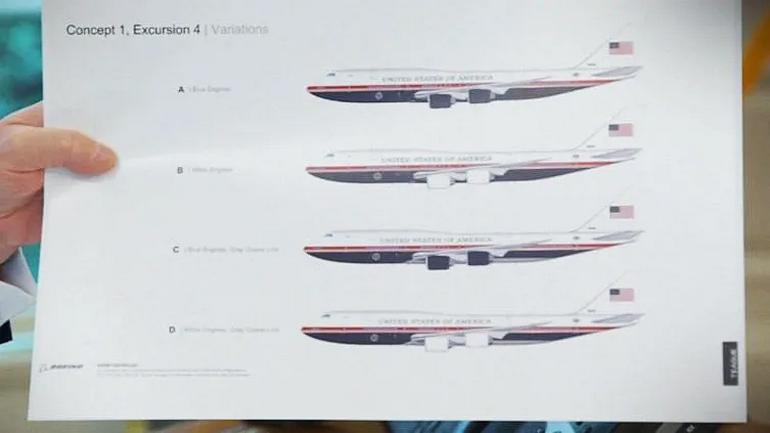
When a darker underside was first proposed by the US leader, the US Air Force signaled that the issue was not visual identity but thermal behavior. A darker coating absorbs more solar energy than a lighter one, which raises skin temperatures during ground soak, taxi, and other low-cooling phases of operation. That might sound academic until it intersects with real hardware mounted along the belly, where communications antennas, fairings, and mission systems sit exposed to those temperature swings.

Where aesthetics met thermal limits
At the physics level, the problem is straightforward and difficult to negotiate. Dark paint absorbs more heat, and white paint reflects more of it. NASA guidance treats this as foundational knowledge, and the Federal Aviation Administration echoes the consequence in practical terms. A black-painted composite surface can exceed 160°F, while the same structure in white tends to remain closer to 140°F. The margin to the industry’s typical structural limit of around 180°F starts to look less generous once you consider localized hot spots and the uneven heating that occurs across a large aircraft.

That is where the Air Force’s reference to “commercial components” becomes critical. On aircraft like the C-32A and the future VC-25B, not every piece of equipment is bespoke from the ground up. Some systems are derived from commercially certified hardware that was originally approved within a specific temperature envelope. If a darker belly pushes those local conditions beyond what those components were certified for, the aircraft does not simply get warmer. It steps outside its approved configuration.

The first repainted C-32A offers a rare glimpse into how that tension is being resolved, as pointed out by the Air & Space Forces Magazine. Observers noted that the aircraft retains a lighter section around the belly, precisely where antennas and specialized equipment are concentrated. The implication is hard to ignore. The final look of the executive fleet appears to be less a pure expression of presidential taste and more a negotiated settlement between design ambition and thermal engineering.

Certification is where the real cost hides
Once temperatures shift, certification follows. The Air Force warned in 2023 that a darker underside could trigger additional qualification testing under FAA standards, and that phrase carries weight. Environmental qualification for airborne equipment is typically governed by RTCA DO-160, a framework that defines how systems must perform across temperature, altitude, and environmental extremes. If the installation environment changes, the approval basis can change with it.

In practical terms, that means engineers would need to model how the darker paint alters heat absorption across different phases of flight and ground operation. If the analysis shows higher localized temperatures, affected components may require requalification testing to prove they still operate reliably. That can involve laboratory testing, aircraft-level validation, or even redesign measures such as added insulation, shielding, or relocation of sensitive equipment.

This is why a color decision can cascade into schedule pressure and engineering workload. It is not about repainting metal. It is about ensuring that every system mounted on that surface continues to function within certified limits under new thermal conditions. It is also important to separate perception from reality. There is no indication that a darker belly would have made a Boeing 747-8I structurally unsafe or operationally compromised in a broad sense. The aircraft itself is not at risk of overheating in the way a casual reading might suggest. The issue is far more precise and therefore more difficult. It concerns localized thermal margins around specific components, especially where commercial-derivative equipment is adapted for a highly specialized presidential role.

What emerges from this episode is a more nuanced story than a simple change in livery. The darker underbelly was not rejected outright, but it appears to have been trimmed back where it mattered most. The lighter patch on the C-32A’s underside reads like a quiet concession to engineering reality, a signal that even the most symbolic aircraft in the world cannot escape the constraints of heat, materials, and certification.
In the end, the paint scheme that will define the next generation of presidential aircraft is likely not the one that was originally imagined in full. It is a compromise shaped as much by thermal loads and regulatory margins as by aesthetics, which makes the underside of Air Force One less a stylistic flourish and more a case study in how ambition yields to physics.