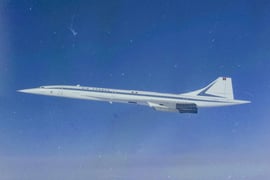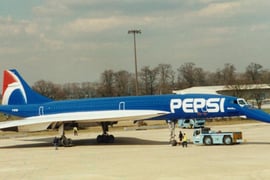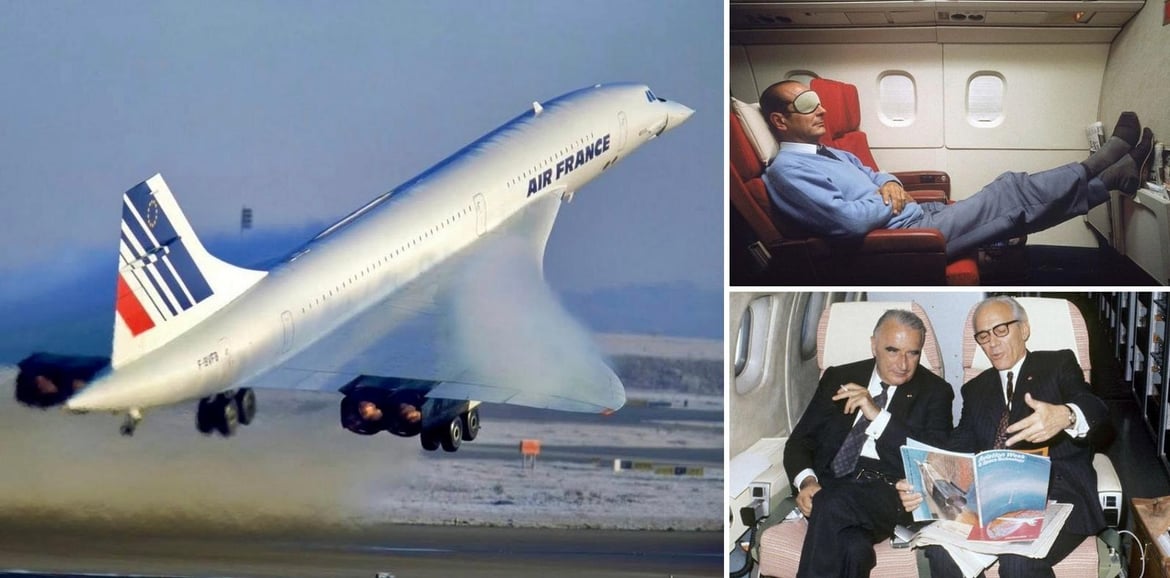
The Concorde was more than a technological masterpiece. It was a flying statement of ambition and national pride, a spearhead of Franco-British engineering that could outrun the sunrise and shrink continents into mere hours. With its delta wings, droop nose, and four Olympus turbojets pushing it past Mach 2, it offered something no other airliner could match.

And no leader embraced this capability more than François Mitterrand, who served 14 years as President of France. For him, the Concorde became a tool of statecraft and mobility that no other head of government possessed, allowing him to cross oceans at twice the speed of sound while the rest of the world flew subsonic.

France never operated a dedicated presidential supersonic aircraft. There was no equivalent to Air Force One in the Concorde fleet. Instead, for every long-range mission, Air France took one of its commercial Concordes out of service and transformed it over 48 hours.

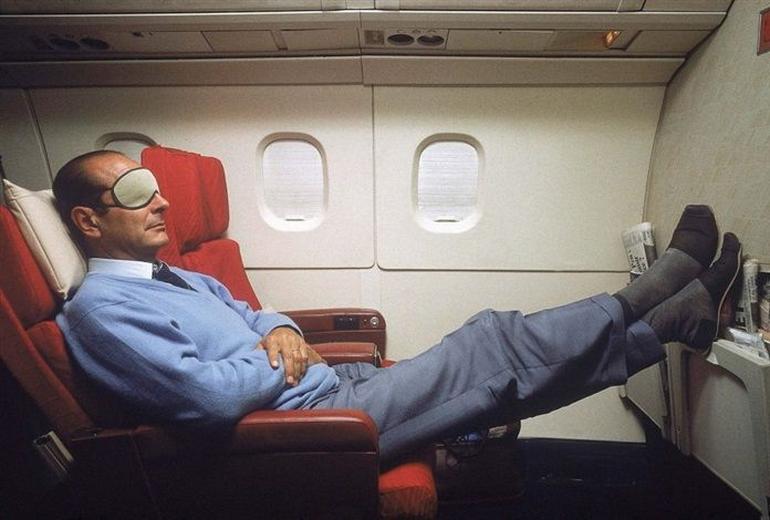
The standard 100-seat layout was removed and replaced with a configuration designed for only 56 passengers, as noted by La Dépêche. This temporary transformation was known internally as the Presidential Kit. It turned the front third of the cabin into an airborne suite that allowed the French head of state to work, dine, negotiate, and rest while travelling twice as fast as any other leader on earth.

The first zone in this forward section was the dining and lounge area. Three large armchairs faced a table that could seat four more people, creating a small space where meals, briefings, and negotiations took place. This was not luxury for luxury’s sake but a working room in a supersonic fuselage, designed so conversations could continue across continents without interruption. Just behind it sat the enclosed office. Here a wide presidential armchair and a real desk replaced the normal rows of seats. Two additional chairs allowed advisers or a foreign minister to join working sessions. A long wardrobe ran down one side of the cabin, providing space for formal wear required for arrivals in distant capitals.

The third zone was the most unusual of all: the bedroom. Supersonic flight was not designed for comfort; yet, the presidential kit was equipped with two beds lengthwise along the aisle. It allowed the President and a key staffer or doctor to sleep flat during long legs to the Americas, Africa, or the Pacific. No other world leader had anything comparable at double the speed of sound. Behind this forward suite, the rear cabin was kept far closer to Concorde’s normal 2×2 seating. It accommodated ministers, senior advisers, and a tiny press pool. The noise and tightness of this area created a hierarchy that was both physical and political, separating the presidential space from everyone else on board.

Communications upgrades were another defining feature. Before modern avionics suites existed, secure phone systems and encrypted radio boxes were added almost as separate modules. A dedicated pilot trained in diplomatic communications often joined the crew solely to manage these links with the Élysée and French command centers. A fax machine and photocopier were installed in the rear cabin. It seems quaint now, but at the time it was revolutionary. Documents could be copied, amended, and transmitted while crossing oceans at twice the speed of sound. It was messy by modern standards, literally bolted onto the Concorde’s civil systems, but it worked.
Only one of three requisitioned Concordes received this conversion for each mission. The other two remained in standard configuration as immediate backups. After the trip, the kit was removed and the aircraft restored to commercial service within two days. This flexibility allowed France to maintain its supersonic routes while still offering its head of state a flying office unmatched anywhere in the world.

There were quirks. On one mission to Mururoa, secure HF transmissions interfered with Concorde’s brake sensors, triggering false overheat warnings. It revealed how improvised these presidential communications really were. Still, the system functioned well enough for the President to crisscross the world at speeds competitors could not match.

No one used the modified Concorde more than François Mitterrand. Throughout his two seven-year terms, he relied on it for almost every official long-range journey. From G7 summits in the United States to visits in Indonesia, Djibouti, Lima, Dakar, and Bogota, he logged nearly 600 hours per year aboard the aircraft. His dependence became a point of fascination and criticism. As Guy Cervelle, former head of special flights at Air France, put it, “The Concorde had become his personal toy.”

For France, the presidential Concorde was more than a means of travel. It was a demonstration of capability, a show of state power at twice the speed of any rival aircraft. It allowed the French President to be physically present in capitals hours ahead of counterparts flying subsonic jets. It compressed diplomacy into tighter windows and projected the idea that France could move faster than the rest of the world. The Concorde jet itself never belonged to the presidency. Yet once transformed by the Presidential Kit, it became a unique symbol of national ambition, political confidence and technological supremacy streaking across the sky at Mach 2.