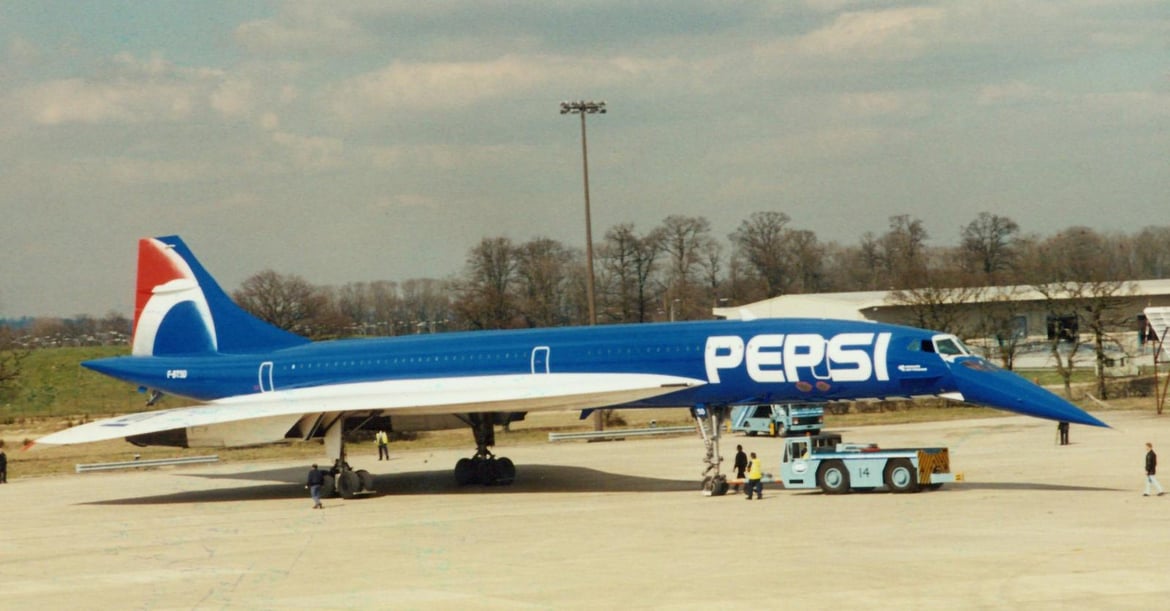
In the spring of 1996, one of the most ambitious and unusual marketing projects in aviation history took to the skies. Air France’s Concorde F-BTSD, known as “Sierra Delta,” was temporarily repainted in a vivid cobalt-blue Pepsi livery as part of Pepsi’s global “Project Blue” rebrand. The aircraft, instantly recognizable for its sleek, needle-like shape, now carried the bold Pepsi logo across its fuselage and tail. For several weeks, it toured major cities in Europe and the Middle East, hosting media and VIP flights. It was a spectacular sight and a daring collaboration between engineering prestige and consumer branding. Yet behind the beauty of the blue jet lay a technical limitation that few outside the project knew: this Concorde could not safely reach its full Mach 2 cruising speed.

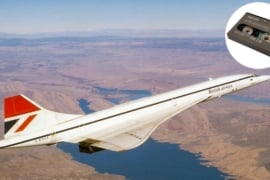
Concorde’s original white paint was not chosen for design flair but for performance. At speeds of up to Mach 2, the aircraft’s skin was subjected to immense frictional heating. The nose of the jet could reach temperatures well above 100°C, while the fuselage typically reached around 90°C. To manage this, engineers used a special, highly reflective white paint that helped dissipate heat efficiently. It was a vital part of Concorde’s design philosophy, keeping the airframe within safe thermal limits during long supersonic flights across the Atlantic.
Pepsi’s striking blue, however, was a different story. Dark colors absorb far more heat than they reflect, and when tested on Concorde’s aluminum skin, this quickly became a problem. The engineers at Air France Industries and Aérospatiale calculated that sustained flight at Mach 2 with the blue paint would raise surface temperatures dangerously close to the structural tolerance of the fuselage, as pointed out by Avions Legendaires.

In response, they imposed strict limits. During its Pepsi campaign, Sierra Delta was advised not to remain at Mach 2 for more than about twenty minutes. The aircraft was also cleared to operate freely below approximately Mach 1.7, which meant most flights during the promotional tour were planned at subsonic or reduced supersonic speeds.

To further protect the aircraft, a clever compromise was made. Only the fuselage received the dark blue finish, while the wings remained white. This was not a matter of design balance but thermal management, as the wings housed fuel tanks that acted as heat sinks during high-speed flight. Even with this precaution, engineers observed that the blue-painted panels heated up faster and cooled down more slowly than expected. The short-lived experiment confirmed once again that Concorde’s reflective white finish was essential for safe operation at its top speed.
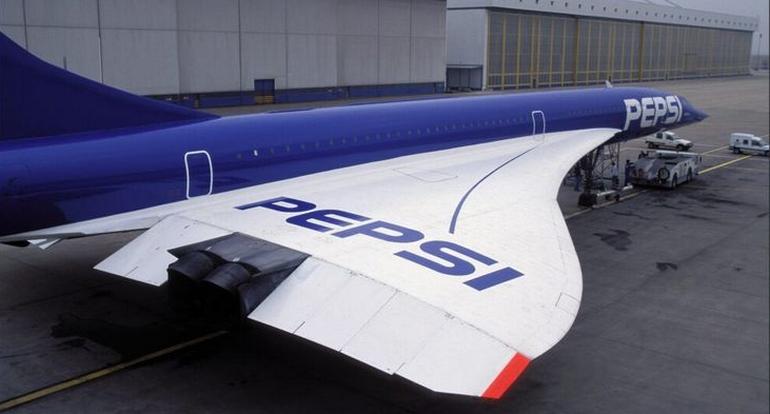
The Pepsi x Concorde collaboration was just one part of a massive marketing effort. Pepsi’s “Project Blue” rebrand reportedly cost around 500 million dollars worldwide. Within that global budget, the repainting and eventual restoration of the Concorde were relatively minor expenses, estimated in the low six figures. The launch event at London Gatwick was a lavish affair that featured celebrity guests, special lighting effects, and international media coverage. For Pepsi, the blue Concorde symbolized the spirit of progress and modernity that the company wanted to project in the 1990s.

When the promotional flights ended a few weeks later, Sierra Delta was repainted in its standard Air France white and returned to normal service. The blue phase left only minor traces of overheating near certain seals and window edges, but no lasting damage. The aircraft continued to fly until its retirement in 2003 and now rests at the Air and Space Museum in Le Bourget.

The Pepsi Concorde remains one of the most curious moments in aviation history, when the world’s fastest airliner briefly traded performance for publicity. It stands as a reminder that even at the cutting edge of technology, the laws of physics always have the final word.