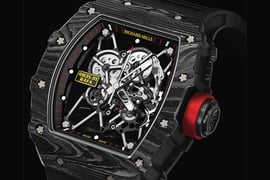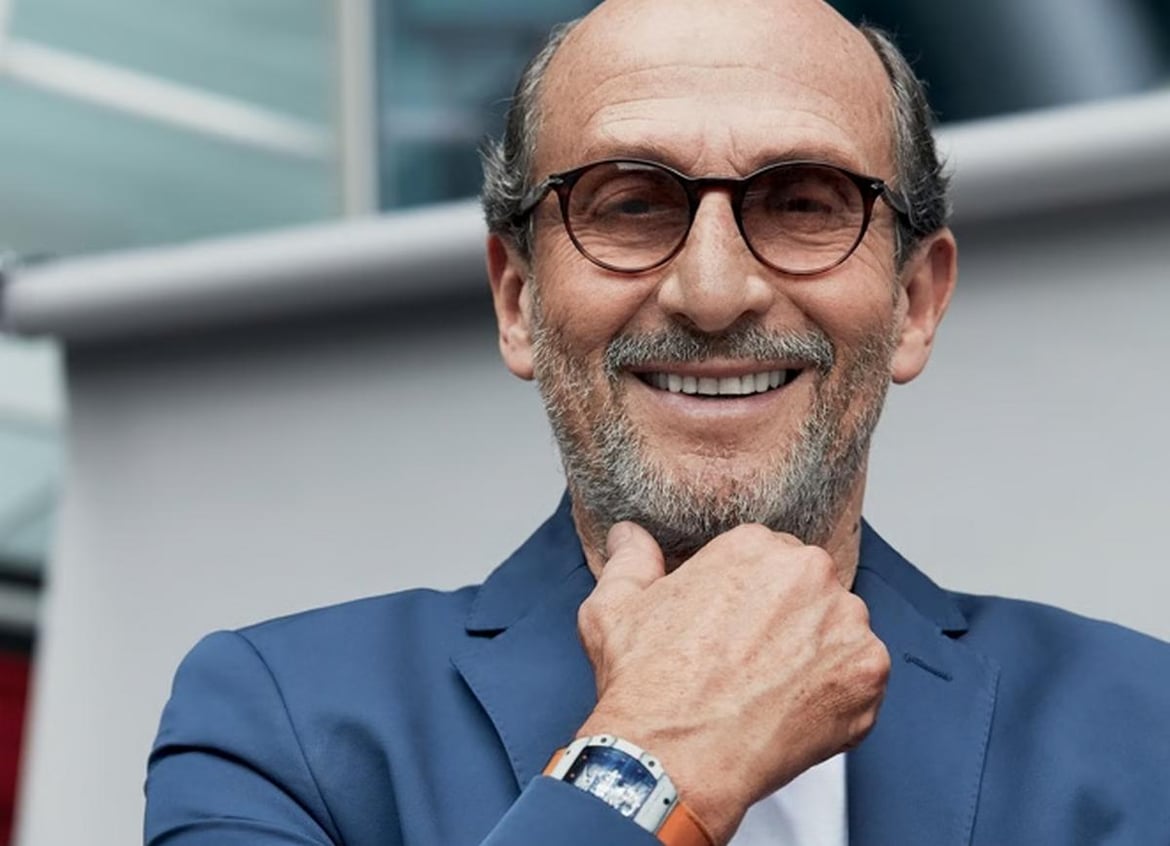
Sometimes it takes an outsider to break the wheel, and that’s exactly what Richard Mille did for Richard Mille, the brand. He wasn’t born into any Swiss watchmaking family, and he didn’t inherit a seat at the table. He earned it. A 1951-born industry veteran, Mille became fluent in one language above all: watches. By the time he launched his own label, he had already spent decades climbing the ladder, including a defining chapter at Mauboussin, the prestigious French jewelry house with nearly two centuries of history. Precious gold and diamonds didn’t interest him, and luckily, Mauboussin didn’t want him dabbling in that lane either. He wasn’t brought in to play the jewelry game on a wrist.

Mille was tasked with modernizing the house and launching a serious watch division. The irony is that even as he ran Mauboussin’s watch division (eventually becoming its CEO and a shareholder), he believed in ideas that went against the old-school playbook. The seed to rid himself of the rigidity of the watch world was sown here, and by 1999, he co-built his own brand with Dominique Guenat. Still, one cannot argue that watchmaking, even without being “in the family,” was very much part of his system growing up. So let’s turn back time on the timepiece to understand the man behind “the racing machine on the wrist.”

The first watch he didn’t wear, he took apart-
Born in Draguignan, France, to a chartered accountant father and a homemaker mother, Richard had a simple and humble childhood. It was only when he was eight that he received his first watch. Unlike other kids who would brandish the accessory at every chance they got, Mille did the opposite. He played with it, not to show it off, but to understand it, a habit he would echo years later when he introduced the RM 001 to the world. It did not take long for him to dismantle the watch and study its mechanics. That is a very telling sign in a child. To open up a first watch and study how it works is not a lesson that can be taught. It points to an inherent curiosity about the product itself, the kind of curiosity that would later become a signature. Years later, the founder of the eponymous brand put his philosophy bluntly: “What I do is very provocative, it is a rupture, but at the same time, there is a lot of legitimacy to the products. I compensate for my lack of history with a pure, genuine product.”

The marketer and the maverick of the watch world-
Richard Mille studied marketing at the University Institute of Technology (IUT) in Besançon, France, and he has only ever worked in the watch industry. His path ran through companies like Finhor, Matra, and Mauboussin before he launched Richard Mille in 2001.
What makes him different is that he never positioned himself like a traditional bench watchmaker. Mille operates more like a watch “conceptor,” the person who imagines the whole machine, then orchestrates the engineers, suppliers, and specialists to make it real. The disruptor finally got to work on his dream of revolutionizing modern horology, and he did it not by leaning on classic marketing muscle, but by mastering the product itself. The catalyst was his ever-present curiosity, the same instinct that nudged him to ditch the old luxury shorthand of gold and platinum and replace it with the engineering mindset of Formula 1 and aerospace. No small feat, but Mille pulled off what many would have called unattainable, and in 2001, he introduced the RM 001 Tourbillon.

The biggest risk for the love of a watch-
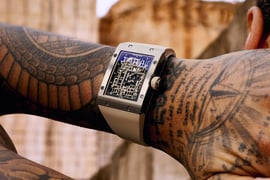
When he created the first Richard Mille model (the RM 001), Mille invested much of his own capital and resources into its development, to the point where he had almost nothing left for traditional marketing. It would be fair to assume he did not want to go down that road anyway, and he played it his way. The giant booths, budgets, and extravaganza were replaced with prototype-first selling and private meetings instead of splendid spectacles. The bet was truly on the product, and the product was exceptional. It arrived with a titanium baseplate and an ergonomic tonneau shape.

Instead of hiding the mechanics behind tradition, the RM 001 put performance cues right on the dial, including torque and power-reserve indicators that made it feel closer to instrumentation than jewelry. Most importantly, it refused to behave like the fragile tourbillons collectors were used to babying. The RM 001 was robust, a fact Mille famously proved by throwing the watch on the floor to demonstrate its shock resistance. Limited to only 17 pieces at the time, and priced at around $135,000, it sent shock waves through the industry. The world had tasted the insanity of Richard Mille watches, and Mille kept growing, not with the glint of gold, but with materials and engineering that sounded more like a lab report than a jewelry catalog. Carbon TPT, graphene, and Alusic helped shape masterpieces that would go on to command million-dollar price tags.

The most expensive watches on the most well-known wrists-
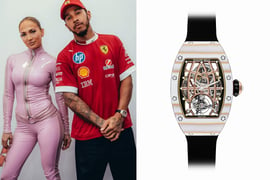
Since its launch in 2001, Richard Mille has created a vast catalog of models and variations, many of them instantly recognizable from across a room. One of the most talked-about is the RM 27 line built around Rafael Nadal, a watch that turned a tourbillon into something that could survive real sport. The RM 27-04, often cited at around $2.5 million depending on configuration and market, became a symbol of ultra-light, extreme engineering, built to endure the violent, repeated impacts of match play. In Mille’s world, athletes are not just ambassadors, they’re the test pilots. The wrist becomes a proving ground, and the match becomes the marketing. What advertisement could sell that as convincingly as a legend wearing it in real life?

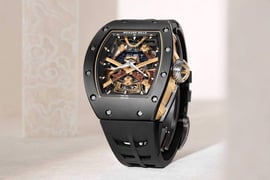
Outside of sports, the RM 52-05 proved that no wish was too outlandish. Pharrell Williams, musician and Louis Vuitton creative director, brought his fascination with space and Mars into a timepiece that features a dial with a hand-painted grade 5 titanium engraving of an astronaut’s helmet. The visor reflects “Mars” using high-fired Grand Feu enamel, blending a traditional craft with Richard Mille’s modern, sci-fi aesthetic. Then there is the sapphire chapter, where transparency becomes a flex in itself. Richard Mille’s sapphire-cased creations pushed machining and finishing to extremes, using solid sapphire components to turn the case into a crystal-clear showcase for the movement.

It is amazing how far a little boy tinkering with his first timepiece could go, giving a world of horology, centuries deep in tradition, something new to play with. First an idea, then a prototype, then hundreds of timepieces that broke the norm to make way for novelty and niche.