Luxury travelers often joke that shopping in Europe can pay for the trip, but with America’s new tariff regime that logic no longer holds. The case of Patek Philippe’s September 2025 price hikes shows just how complicated the arithmetic has become. On paper, London looks like a bargain compared with New York. In reality, once customs declarations and tariffs come into play, the apparent savings collapse into a costly mirage.

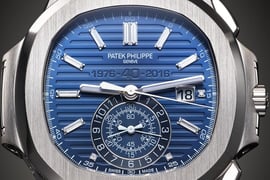
On September 15, Patek Philippe increased its US retail prices by about 15 percent in response to the latest round of tariffs on Swiss watches. In a recent report, WatchPro cited the example of the Cubitus in gold, which until mid-September sold for $80,346. That same watch now sits in showcases at $92,496, and with the average 7.7 percent state sales tax included, a buyer pays about $99,618 before walking out of the boutique. In London, by contrast, the identical watch is still listed at £65,600, which converts to roughly $88,000. At first glance, the Atlantic divide makes London look like a far cheaper place to buy.

The math gets more intriguing when you add the idea of a luxury trip. A round-trip first-class ticket from New York to London typically ranges from $4,100 to $6,500. Two nights at the Four Seasons on Park Lane, where rooms hover around $880 a night, adds another $1,760. Add the flight and hotel to the London sticker price, and the total sits between $93,900 and $96,300. That figure is still lower than the nearly $100,000 total a buyer faces in the United States. For a moment, it seems possible that someone could enjoy a glamorous getaway and come home with a new watch, all while spending less than they would in their own city.

The trouble begins when that buyer returns home. US Customs and Border Protection requires travelers to declare new purchases. Only $800 of value is exempt, leaving the rest subject to duties. Watches fall into one of the most complex tariff categories in the Harmonized Tariff Schedule. Components such as the case, strap, and even the movement can each be assessed separately, and under current policy, the additional tariffs on Swiss watches add up to about 41%.

Using the Cubitus example, a traveler declaring the London purchase faces a dutiable value of about $87,200 after the exemption. Apply the 41 percent tariff, and roughly $35,700 is added to the cost. That pushes the true landed price to about $129,600, far higher than the $99,618 paid if the same watch is bought domestically. The elegant notion of turning a shopping trip into a savvy arbitrage collapses once the border is crossed.

Luxury watch enthusiasts are well aware that customs enforcement can be strict. Failure to declare goods can result in heavy fines, confiscation, and possible penalties far beyond the savings of an overseas purchase. In this environment, the smart buyer may be better off swallowing the higher American retail price rather than attempting to play the numbers.
What looks like a clever loophole at first glance is really an illustration of how tariffs distort global luxury markets. A flight to London and a stay at one of the city’s most prestigious hotels may deliver memories, but it no longer delivers a discount on a Patek Philippe. For American collectors, the once-romantic idea of watch shopping abroad has become a costly illusion shaped by trade policy rather than taste.