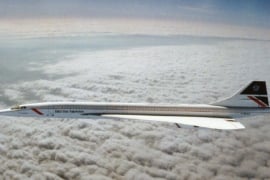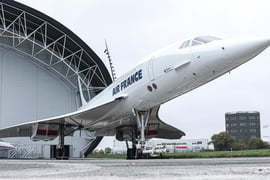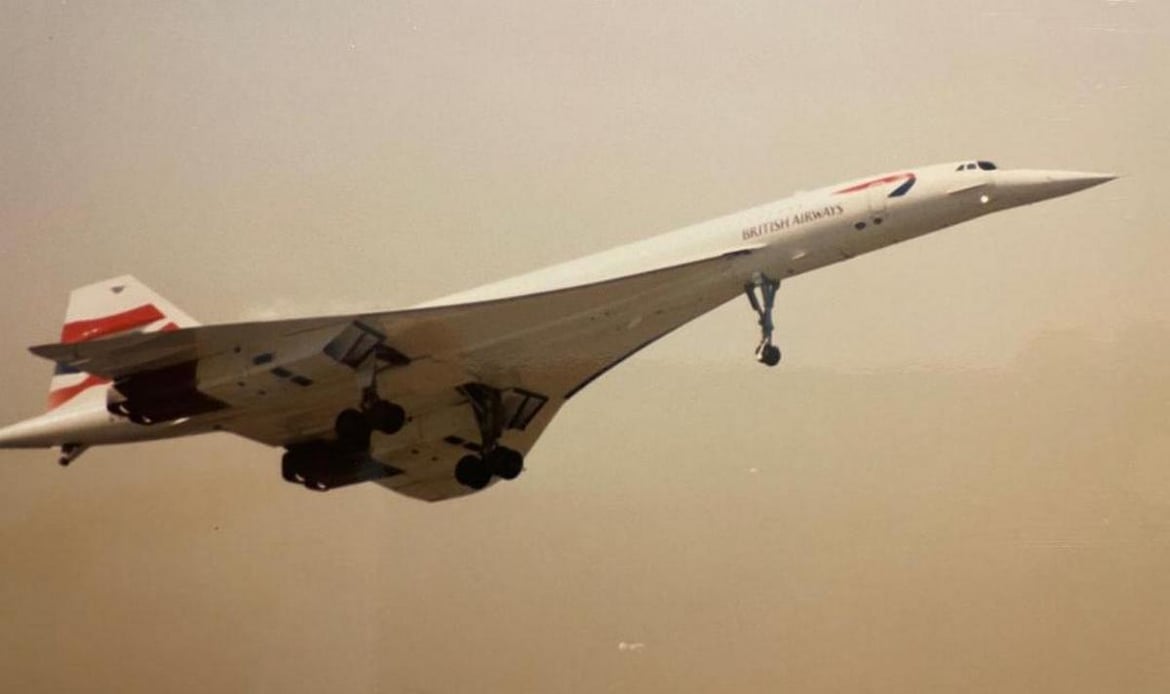
A supersonic jet slicing across the Atlantic at twice the speed of sound to deliver wine sounds like a myth, but in Seattle, it once happened in full daylight and with cameras rolling. Only after the wheels touched down at Boeing Field did the detail sink in. This was November 15, 1984, and the aircraft was none other than a British Airways Concorde on its first-ever visit to the city.
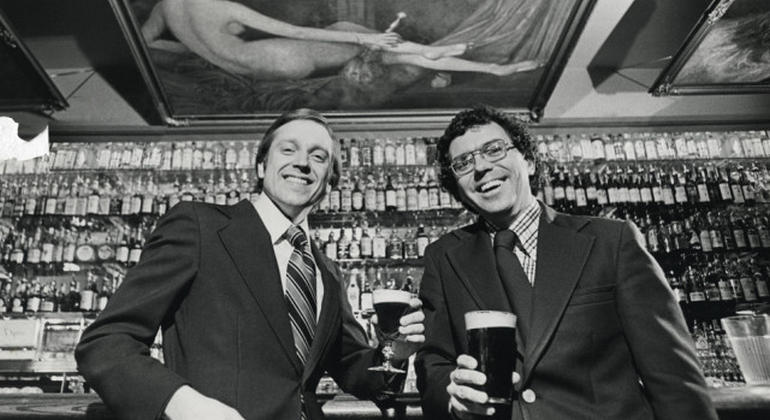
On board sat restaurateur Mick McHugh, partner Tim Firnstahl, a small group of guests, and in the cargo hold, hundreds of cases of Beaujolais nouveau so fresh the grapes still felt like a memory, as pointed out by Historylink. Seattle treated the moment as a spectacle. The world’s fastest airliner arriving not for diplomats or heads of state but to accelerate a wine party and give the Northwest bragging rights.

The stunt worked because of tradition. Beaujolais nouveau, made from Gamay grapes in the Beaujolais region south of Burgundy, is bottled within weeks of harvest and celebrated across France each autumn. Young, juicy, bright with red fruit and meant to be enjoyed without fuss, it carries a legal deadline. No bottle may be opened or sold before the official release at midnight in France on the third Thursday of November. That rule turned time itself into a commodity.

If McHugh and Firnstahl could load 218 to 219 cases onto Concorde in London, then sprint across the Atlantic at twice the speed of sound, they could serve the first legal sips in Washington before anyone else. Each bottle became a trophy, each glass clinked like a victory bell.

Reality added humor. Other importers beat them to the first pour using slower airplanes but faster paperwork. Yet no one else could claim to have chartered Concorde for a drink. That alone made the venture unforgettable. The next day, the plane returned to the sky for what Seattle called a Flight to Nowhere. A fundraising run for the Museum of Flight, it climbed beyond fifty thousand feet where the horizon bends, and the atmosphere fades to indigo.

Passengers looked out through Concorde’s famously small windows and saw a world that seemed both close and distant. Then the jet arced home, engines easing back toward Boeing Field, leaving a trail of stories that would outlive the buzz of the night before. On November 17 the needle nosed eastward from Seattle Tacoma International Airport, and Concorde was gone.

Flying Concorde was never about convenience. Baggage rules were strict.
Flying Concorde was never about convenience. Baggage rules were strict. Passengers could bring one medium carry on and one briefcase, together weighing only about 12 kilograms (roughly 26.5 lbs.). The main bag could measure no more than roughly 45 x 35 x 20 centimeters. Concorde offered speed, not space. Narrow aisles, tight seating, windows smaller than postcards. The airplane’s luxury lived in acceleration and altitude rather than surface area.

At the center of the tale stands Mick McHugh. Not a tech magnate or an aviation executive, but a pub man with a grin and a sense of occasion. A Seattle University profile once painted him as a joyful Irishman who built some of the city’s most beloved rooms: the coffeehouse 92 Yesler, the exuberant Jake O’Shaughnessy’s, and the legendary F.X. McRory’s Steak Chop and Oyster House in Pioneer Square. Along with Firnstahl, he ran a six-restaurant empire, later split by the flip of a silver dollar tossed from the top of the Space Needle. It was a coin toss that felt like theater, fitting for a pair who once booked a supersonic jet for wine.

McHugh’s career sparkled with stunts. He invited artist LeRoy Neiman to paint his bar live during a St. Patrick’s Day surge. He served Washington’s first draft Guinness, helped usher in Redhook microbrew, and even gifted a ring to Pope John Paul II to replace one the pontiff had given away in Brazil. F.X. McRory’s closed in 2017 after four decades, and many lamented the passing of an era. But McHugh stayed present. In 2023, he appeared in a business column as the hospitality mind behind the Seattle Kraken’s 32 Bar and Grill, still bussing tables at lunch, still fussing over details, still conjuring the spirit of the old room.
The Concorde flight now feels like a legend, a postcard from a Seattle that took risks for joy rather than profit. A chef with a plan, a jet built for speed, and crates of wine hurtling toward a city ready to celebrate. Some stories ferment like grapes into something deeper. They become history poured into a glass, remembered with a smile.