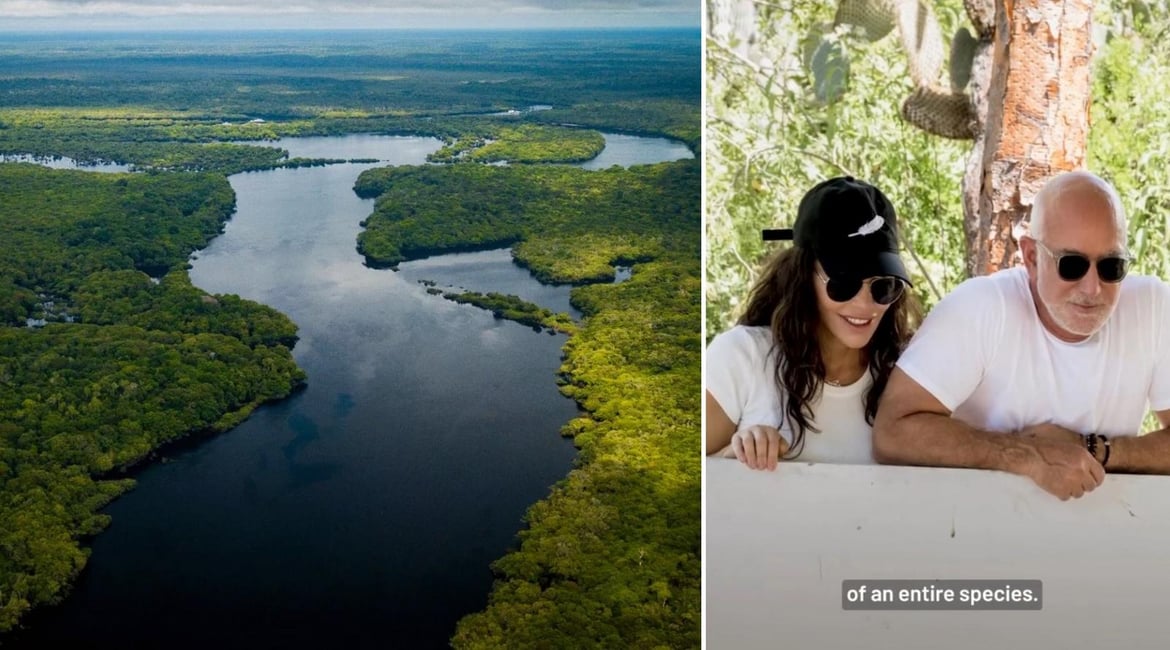
The Amazon can look perfectly healthy from space while its wildlife quietly disappears beneath the green canopy. Jeff Bezos and Lauren Sánchez Bezos are backing an effort to close that blind spot, with more than $14 million from the Bezos Earth Fund awarded through the Andes Amazon Fund and World Resources Institute to help build Amazon.ia, an AI-powered environmental intelligence system designed to monitor biodiversity across the rainforest.
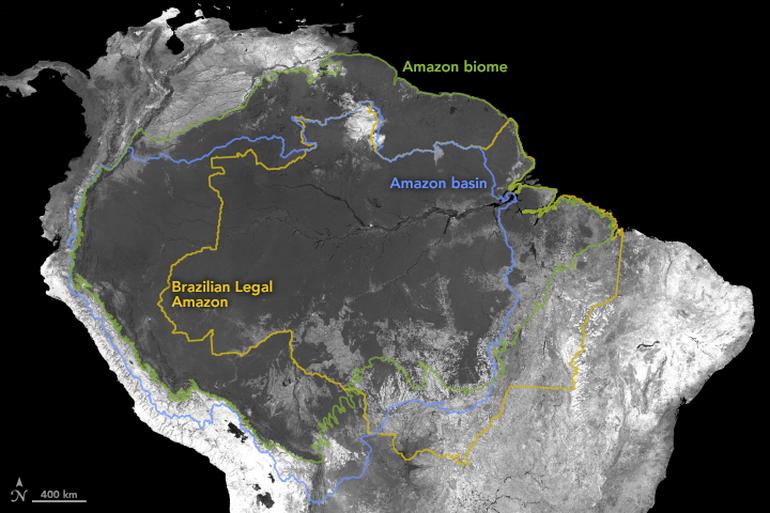
Amazon.ia is being developed as a continuously updated biodiversity monitoring system that could eventually cover roughly 6 million square kilometers, or 2.32 million square miles, across the Amazon biome. According to the initiative, its network will combine satellite imagery with camera traps, bioacoustic recorders, hydrophones and environmental DNA, using artificial intelligence to turn those different streams of information into a clearer picture of what is happening across one of the planet’s most difficult ecosystems to monitor.

An AI system designed to see beyond the canopy
The distinction is crucial because satellites can already identify deforestation, fallen trees, fragmentation, and changes in vegetation, but they cannot determine whether an apparently intact forest is becoming biologically quieter. Amazon.ia is designed to detect changes in wildlife and ecosystem health, determine whether protected areas are actually preserving biodiversity, identify conservation and restoration projects that are producing measurable results, and potentially alert authorities when wildlife diversity unexpectedly falls.
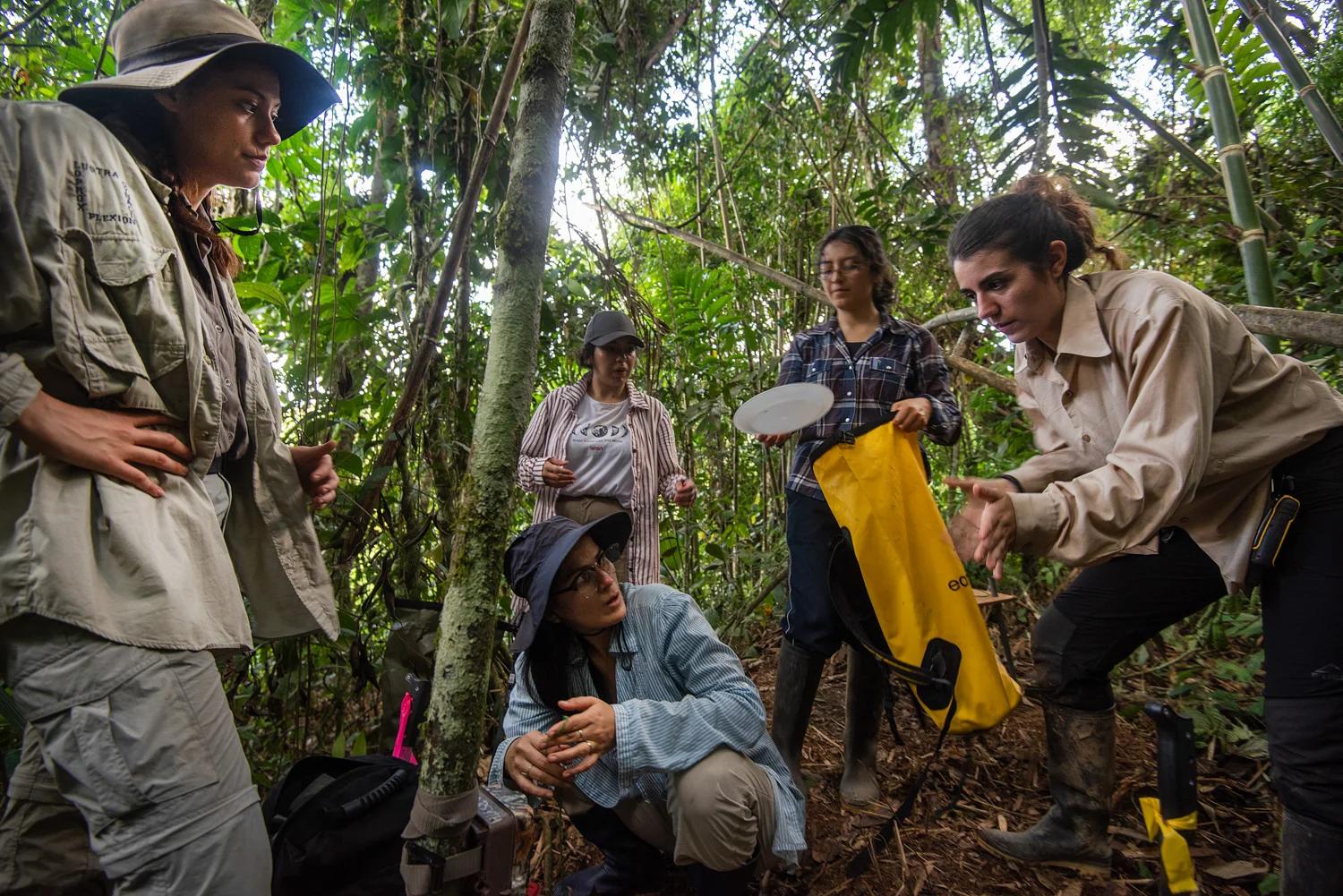
The system will draw on near-daily satellite imagery, hyperspectral observations, and measurements of forest structure, while camera traps will record animals that move through the forest, including nocturnal species that scientists may rarely encounter directly. Solar-powered acoustic recorders will listen for birds, frogs, insects and mammals, while underwater microphones will be capable of detecting the echolocation clicks of Amazon river dolphins and vocalizations from Amazonian manatees. Environmental DNA adds another layer by allowing researchers to identify animals and plants from genetic traces left in water, soil and insect samples, even when the species itself is never photographed.

Artificial intelligence will perform several jobs across the network. Models will identify species from images, calls, clicks, and genetic material, while some processing will take place directly inside monitoring equipment in remote forests. At Mamirauá, neural networks are being used within monitoring modules so that enormous quantities of raw audio and video do not have to travel through unreliable forest connections, with systems instead identifying useful events locally and transmitting smaller amounts of information by radio or satellite.

The technology will also combine otherwise disconnected information through multimodal AI, linking satellite observations with photographs, sounds, environmental DNA and weather data. That could allow the system to recognize an unexpected decline in mammal diversity, detect the disappearance of familiar bird calls or establish that wildlife is beginning to return to restored habitat.

A $100 million effort to understand a living rainforest
Amazon.ia is expected to require approximately $100 million to operate for 10 years, while its organizers told Anthropocene that around $20 million had been raised when the initiative launched, making the Bezos Earth Fund responsible for roughly 70% of its initial financing. The project ultimately aims to create standardized biodiversity information across countries and research sites, replacing fragmented monitoring programs that often cover small areas and disappear when short-term funding ends.

The species connected with the initial monitoring sites include Amazonian manatees, Amazon river dolphins such as the boto-vermelho, tucuxi dolphins, jaguars, tapirs, giant anteaters, white-lipped peccaries, ocelots, short-eared dogs, macaws, monkeys, frogs, reptiles, insects and fish.

In Ecuador’s Yasuní forests, scientists have already documented a significant decline in insect-eating birds despite the forest appearing intact and protected, making Amazon.ia’s ability to determine whether such changes are isolated or widespread particularly important.

The project is intended to cover an area roughly 8.6 times the size of Texas and make its resulting information openly accessible through Global Nature Watch’s Horizon platform. It is being developed with Amazonian institutions and communities alongside technology and conservation organizations, with Planet as a founding technology partner and Microsoft’s AI for Good Lab among its participants, while the Bezos connection comes through the Bezos Earth Fund rather than Amazon.com.

The wider conservation story also has a striking personal connection. On October 5, Lauren Sánchez Bezos highlighted Fernanda, the only confirmed living Fernandina giant tortoise, whose species went unrecorded for 113 years before Fernanda was discovered in 2019 and genetically identified in 2021.

Sánchez Bezos wrote, “Almost gone is not gone,” while linking Fernanda’s story to the $200 million Phoenix Species Project, backed jointly by the Bezos Earth Fund and Re:wild, which was co-founded by actor and environmentalist Leonardo DiCaprio.
The underlying challenge Amazon.ia is trying to solve is simple to describe but extraordinarily difficult to measure. A forest can remain green in a satellite photograph while quietly losing the animals, insects and sounds that make it a functioning ecosystem. By combining what satellites see above the canopy with what cameras, microphones, hydrophones, and DNA samples reveal below it, Bezos and Sánchez Bezos are helping fund an attempt to make those hidden changes visible before they become impossible to reverse.