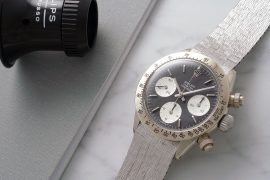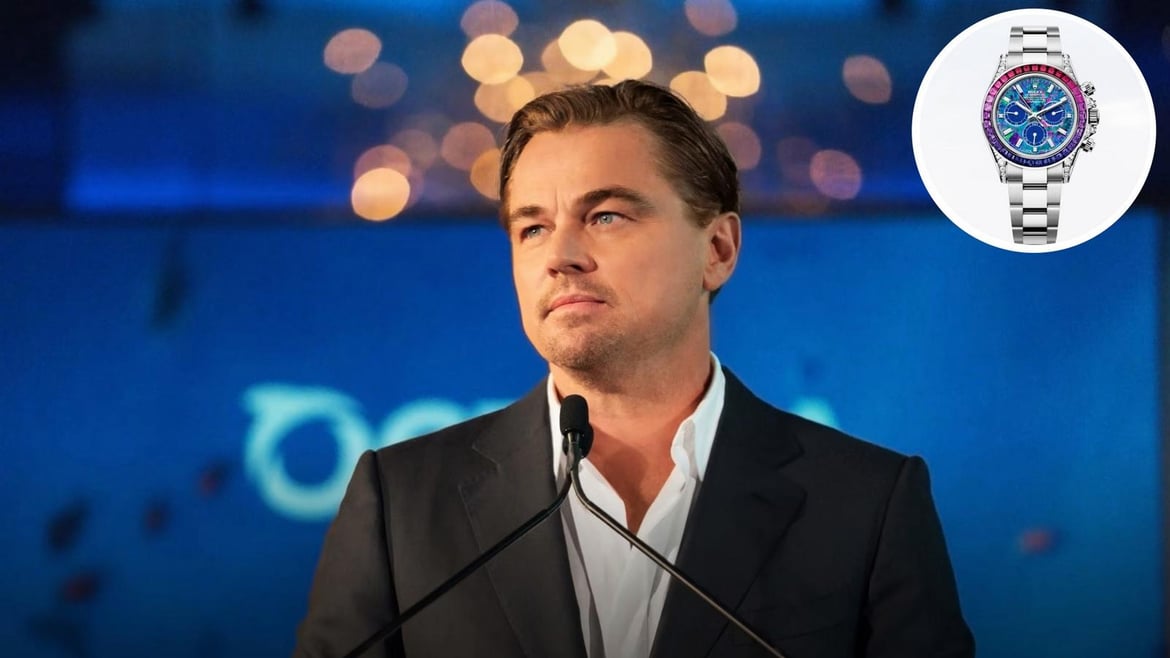
Four extraordinarily rare Rolex Daytonas have done something few luxury watches ever could, turning the theater of high-end collecting into a vehicle for philanthropy on an extraordinary scale. The quartet of one-of-a-kind “Four Seasons” Daytonas sold at a private Phillips auction in London for a combined £37.3 million (approximately $49.4 million), creating the largest single consignment to a charity auction according to Phillips.
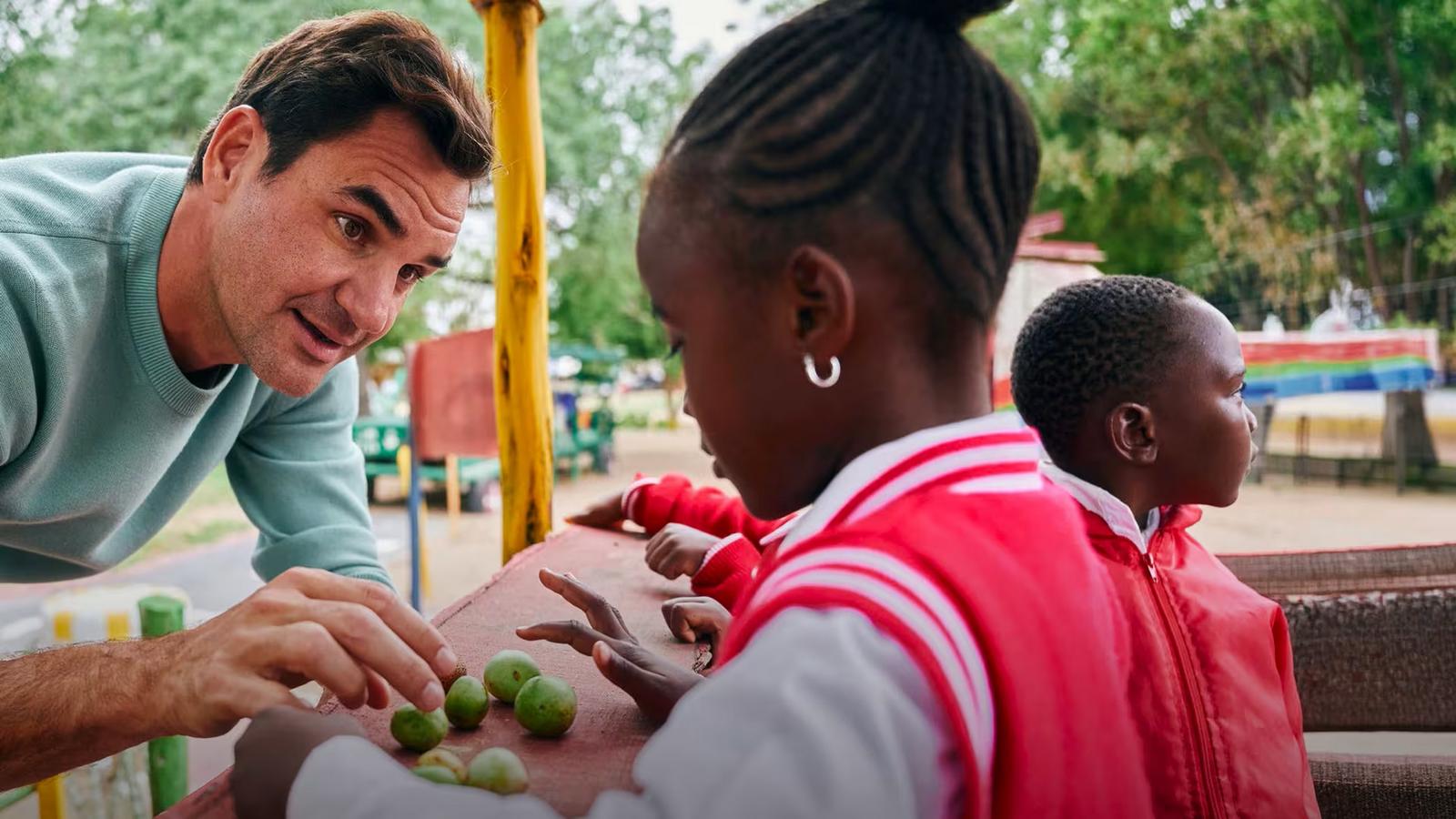
The proceeds will be divided equally between Roger Federer’s Federer Foundation and Leonardo DiCaprio-supported Re:wild. Each organization stands to receive £18.65 million, or about $24.7 million. The watches themselves are a remarkable combination of precious metals, unusual stones and elaborate gem-setting, but their ultimate significance lies beyond their cases and dials. Neither charity has announced which specific projects will receive the auction money, so the scale of their existing work offers the clearest picture of what such a contribution could eventually support.
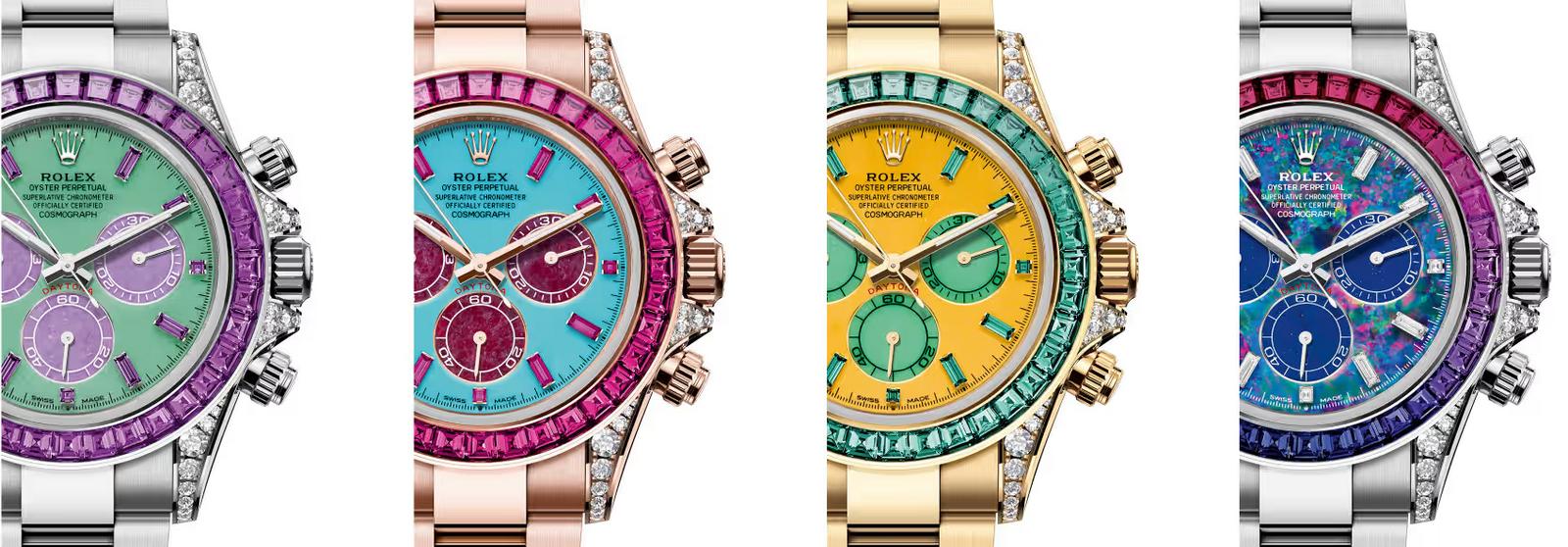
The auction itself had all the drama expected from a collection of watches this unusual, with three of the winning bidders participating by telephone and one bidding from inside the room, as pointed out by GQ Magazine. Bids began at £500,000 (about $660,000) and climbed rapidly through million-pound increments before settling at levels that few conventional watch auctions ever approach. The Summer Daytona in Everose gold ultimately claimed the highest price at £10.3 million (13.6M), narrowly ahead of the yellow-gold Autumn model at £10.2 million (13.5M) and the platinum Winter at £10 million (13.2M). The white-gold Spring Daytona sold for £6.8 million (9M), bringing the combined result to £37.3 million. With every pound destined for charitable causes, the competition was ultimately about far more than owning an exceptional Rolex.

Where the money could make a difference
The Federer Foundation focuses on something considerably more fundamental than luxury, working with governments and local partners to improve preschool and foundational education across Lesotho, Malawi, Namibia, South Africa, Zambia and Zimbabwe. Its strategy now reaches from age three into the early primary years, with literacy, numeracy and physical and social development among its priorities. In Zambia, an Early Learning Kiosk is being piloted in 160 government schools, using tablet-based resources to help teachers follow children’s development and involve parents.
In Zimbabwe, the locally developed Stela school-readiness assessment has been incorporated into teacher education at all 14 training colleges, with more than 3,000 newly trained early childhood teachers a year expected to encounter the system. By the end of 2025, the foundation said its work had reached 3.82 million children and contributed to the training of more than 72,000 teachers.

The potential scale of the Rolex contribution is striking when placed beside the foundation’s recent finances. The organization recorded CHF 12.7 million (15.2M) in donations and CHF 8.71 million (10.4M) in program spending in 2025, which means an equal share of the auction proceeds would be larger than its entire donation income for that year. Its 2030 ambitions include helping 50% more children access education, increasing by 25 percent the number of children able to read for meaning by age 10 and helping unlock $1 billion for the early and foundational learning sector.

These are strategic goals rather than promises about how the Rolex money will be spent, but they demonstrate the breadth of the foundation’s ambitions. Roger Federer has previously described the emotional importance of seeing children gain access to education, including the transformative effect of a first book and a knowledgeable educator. In that context, a watch auction involving some of the world’s most valuable collectors has an unusually tangible connection to classrooms and children far removed from the world of haute horology.

DiCaprio’s Re:wild approaches the challenge from another direction, working with local and indigenous conservation partners to protect habitats and recover threatened species. The organization says it works with more than 600 partners, with more than 590 million acres in active conservation and 276 threatened species being actively conserved. Its 2030 strategy includes recovering priority species, strengthening protection of important habitats, and directing at least 20% of its land and water conservation funding toward Indigenous peoples and local communities. One current example is the Phoenix Species Project, launched with a $200 million multiyear commitment to help recover 100 species across 30 countries, although there has been no announcement connecting the Rolex proceeds to that initiative. Re:wild has also reported approximately $8.5 million in fire-related investments in Brazil during 2023 and 2024, supporting 979 firefighters across eight states and 55 Indigenous associations.

The most revealing example of Re:wild’s work may be Lulingu, an eastern lowland gorilla rescued from wildlife trafficking as an 18-month-old. After years of veterinary care, local expertise and monitoring, she was eventually returned to the wild in the Democratic Republic of the Congo and gave birth in May 2026.

Her story illustrates why conservation cannot always be reduced to a single purchase, donation or dramatic intervention, since protecting a species can require years of sustained work by people operating far from the spotlight. Re:wild’s audited accounts for the fiscal year ending June 2025 recorded $67.5 million in contributions and grants and $74.8 million in program spending, putting the prospective $24.7 million Rolex share into considerable financial perspective. The organization says core donors cover its operating costs so that additional donations can support its programs, although the eventual destination of this particular gift remains undecided publicly.

That uncertainty is important because the Rolex auction was never simply about attaching a charitable label to four spectacular watches. Rolex could have placed the Daytonas with collectors privately, but instead turned them into four separate lots whose rarity, craftsmanship, and philanthropic purpose collided in one extraordinary evening. The result was a sum large enough to rival the annual financial scale of major charitable organizations, while giving collectors an opportunity to own watches that may never be replicated. What began as four highly complicated expressions of Rolex gem-setting therefore ended as a substantial potential investment in education, species recovery and conservation. In the end, the most valuable thing about these Daytonas may not be the precious metal, the exotic stones or the prices they commanded, but what their sale can eventually make possible for people and the natural world.