Mark Zuckerberg’s Crescent Park neighbors are wealthy enough not to be easily impressed by small tokens of appreciation. The quiet Palo Alto enclave, where the median sale price in July 2025 was about $6.3 million, has long been home to business executives, Stanford professors and lawyers who expect a certain level of peace. However, that balance was shaken when the Meta chief began buying houses in the area, ultimately acquiring more than 11 properties since 2011 at a cost exceeding $110 million. What followed was years of construction, an expanding private compound and a stream of gifts aimed at pacifying residents when the disruption became unbearable.

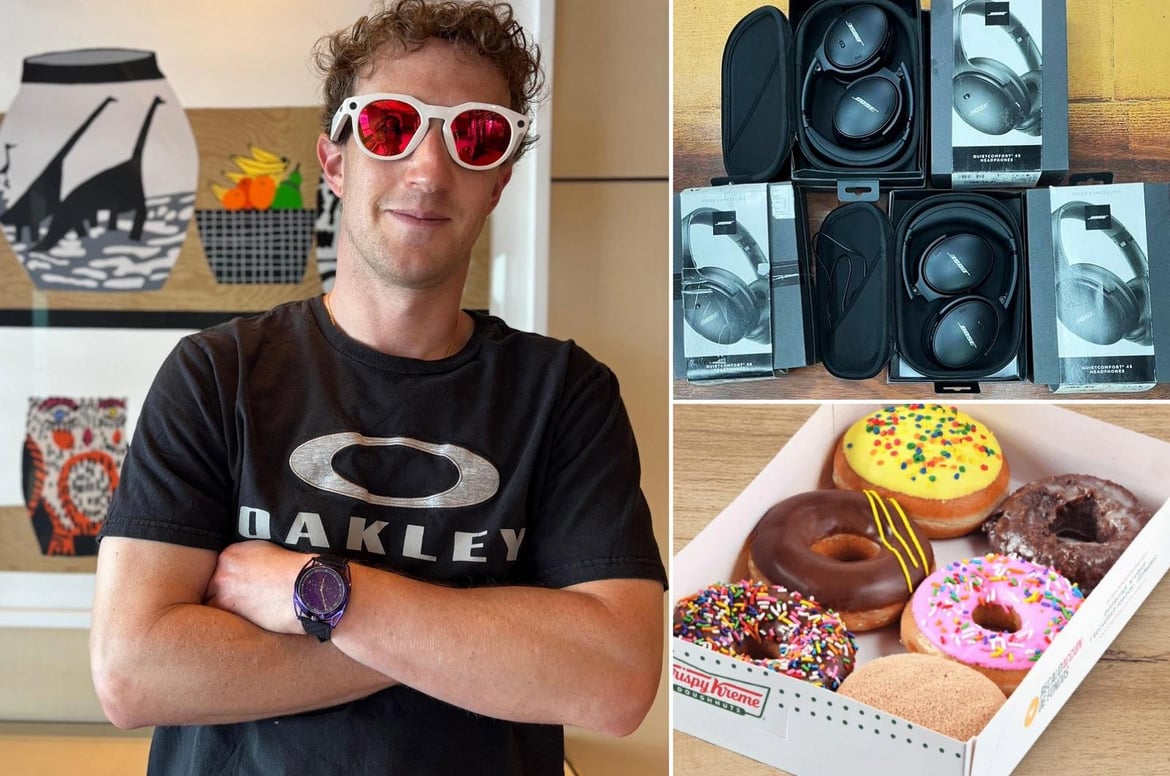
Among the offerings were boxes of Krispy Kreme doughnuts, bottles of sparkling wine, chocolates and even noise canceling headphones, as pointed out by the New York Times. To some, these were amusingly offbeat attempts at neighborhood diplomacy. To others, they were insulting, suggesting that the solution to relentless drilling, truck traffic and party noise was to drown it out with sugar or technology. The headphones in particular have become a symbol of the awkwardness of living beside a billionaire who insists on reshaping a neighborhood to his own liking.

The compound itself is a spectacle. Five of the homes have been combined into a gated complex with guest houses, gardens, a pickleball court, a hydrofloor pool and a seven foot statue of Priscilla Chan in silver robes. Beneath the manicured surface are more than 7,000 square feet of underground space that neighbors refer to as bunkers. One house has been converted into a private school for the couple’s children, with four teachers and staff serving just a small group of students, despite city codes that do not permit such use in the neighborhood.

Residents say the small gifts have done little to mask the larger imbalance. Construction debris flattened car tires and blocked driveways. Streets became shipping docks for deliveries to the compound. Even community rituals have been disrupted. Block parties that once filled the streets have dwindled, though Zuckerberg’s staff did send an ice cream cart to one of the diminished gatherings as a gesture of goodwill. Security vehicles, once criticized for idling noisily in front of homes, now sit quietly in electric models. Staff are reimbursed for ride shares to keep their own cars out of the neighborhood. Notices are distributed when large events are planned, but neighbors argue these adjustments remain cosmetic compared to the upheaval.

The tension has not been confined to Crescent Park. Reports have circulated widely about the city’s role in accommodating the billionaire. Palo Alto Daily Post recounted how police affixed tow away signs to public trees for hours on a weekday evening because Zuckerberg was hosting a backyard barbecue, with the city’s dignitary unit assisting. For residents, the scene crystallized a sense of preferential treatment.

City leaders are aware of the frustration. Councilmember Greer Stone has said Zuckerberg has been finding loopholes around local zoning laws and has announced he is working on legislation to prevent a repeat of the situation. His concern is that Palo Alto should not become a “gilded city on a hill” where even affluent residents feel like their neighborhood is being remade without their consent.

Despite these gestures and promises, the mood in Crescent Park remains strained. Neighbors describe feeling occupied by an expanding fortress, out of place in a setting that once prided itself on open doors and close ties. Zuckerberg’s staff may continue to deliver doughnuts and headphones, but in a neighborhood where every home costs millions, such tokens are unlikely to erase years of noise, disruption and surveillance. The compound stands as a reminder that even in one of America’s richest enclaves, peace and privacy can be fragile when one man’s vision outweighs the community’s.