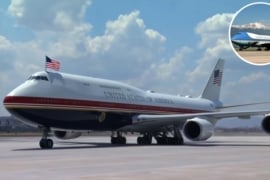
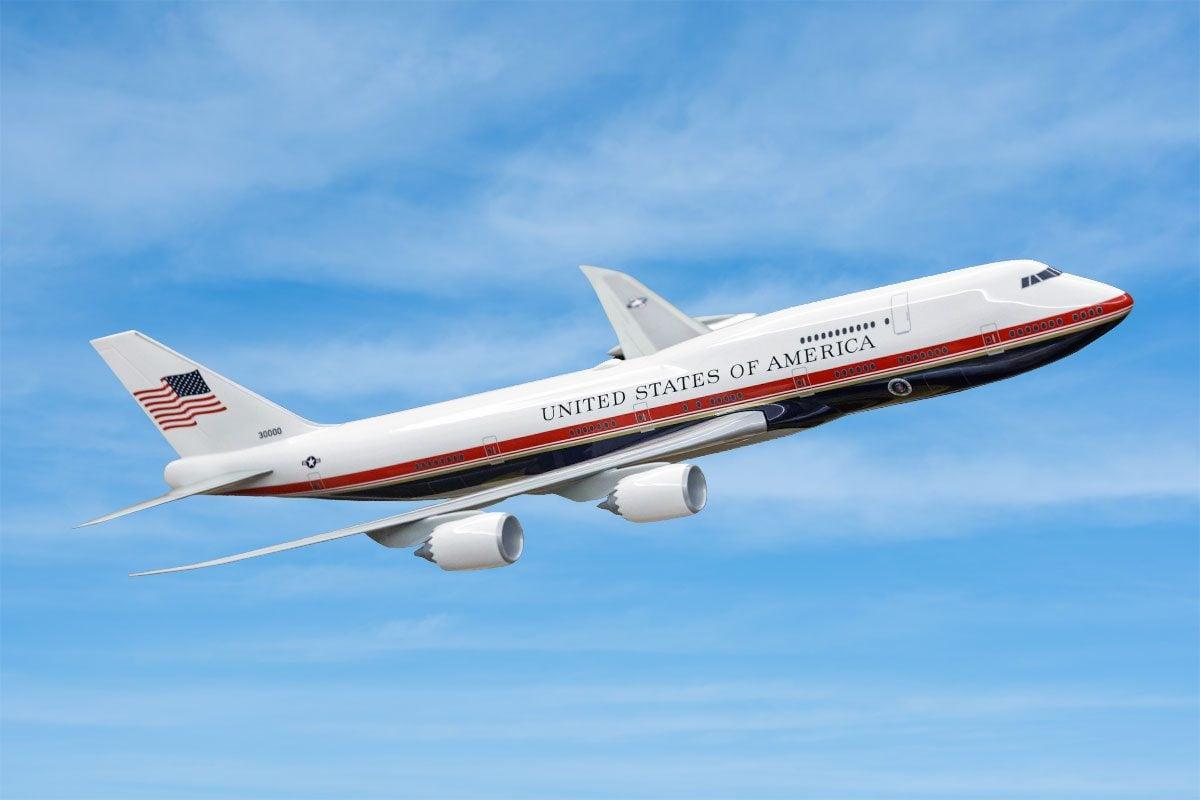
The next Air Force One jets are so much larger than the current presidential aircraft that the United States military ended up spending more than $320 million building them an entirely new home. The current VC-25A fleet, which has carried American presidents since the George H. W. Bush era, is based on the Boeing 747-200B. Their replacements, known as the VC-25B, are derived from the far larger Boeing 747-8 Intercontinental, an aircraft that stretches more than 18 feet longer and nearly 30 feet wider than the jets they are replacing.

That size difference sounds modest on paper until it collides with military reality. The Boeing 747-8 is not simply a refreshed jumbo jet with modern interiors and updated avionics. It is larger, heavier, and operationally more demanding to the point that the existing Air Force One infrastructure at Joint Base Andrews could no longer properly support it. According to the DoD, official Air Force construction documents stated plainly that the size and weight of the 747-8 exceeded the capabilities of the existing VC-25A hangar and that no other hangars at Andrews could meet the new presidential aircraft requirements.

Air Force One did not just need a new jet, it needed a new ecosystem
The result was the construction of the Presidential Aircraft Recapitalization Complex, a massive purpose-built aviation facility designed specifically for the future two-aircraft VC-25B fleet. Early design discussions described the project as a roughly $250 million development, while Air Force budget documents later listed a $254 million request. By the time the main construction contract was awarded in 2018, the figure had climbed to $298.2 million, with options pushing it to $315.5 million. A later federal project sheet ultimately described the facility as a $322 million, 380,000 square foot hangar complex.

What emerged at Joint Base Andrews was not simply a larger garage for a bigger airplane. It was effectively an entire Air Force One operating ecosystem built from the ground up around the demands of presidential aviation. The complex included a two-bay hangar, aircraft access taxiways, parking aprons, lighting systems, engine run-up pads, administrative areas, warehouse space, secure storage facilities, maintenance support areas, and specialized airfield infrastructure.

The project also included a Type III aircraft refueling system with operational fuel storage tanks, a fuel transfer line, emergency generators, automatic transfer switches, communications systems, and hardened utility support. The facility was designed to function less like a conventional aircraft shelter and more like a self-contained operational node capable of supporting some of the most sensitive aircraft in the American military inventory.

That distinction matters because Air Force One is not treated like a commercial airliner with a presidential paint scheme. These aircraft are flying command centers carrying secure communications, defensive systems, and continuity-of-government capabilities. Their support infrastructure has to operate at the same level of readiness and redundancy as the aircraft themselves.
The delayed VC-25B program may already have an unexpected guest
The new complex also reshaped parts of Joint Base Andrews itself. The Air Force environmental review triggered relocations across the base, including the hazardous cargo pad, military working dog facilities, Explosive Ordnance Disposal training areas, and even portions of the golf course. Andrews reportedly reduced its golf facilities from 54 holes to 45 holes as construction tied to the presidential recapitalization effort spread across the installation.

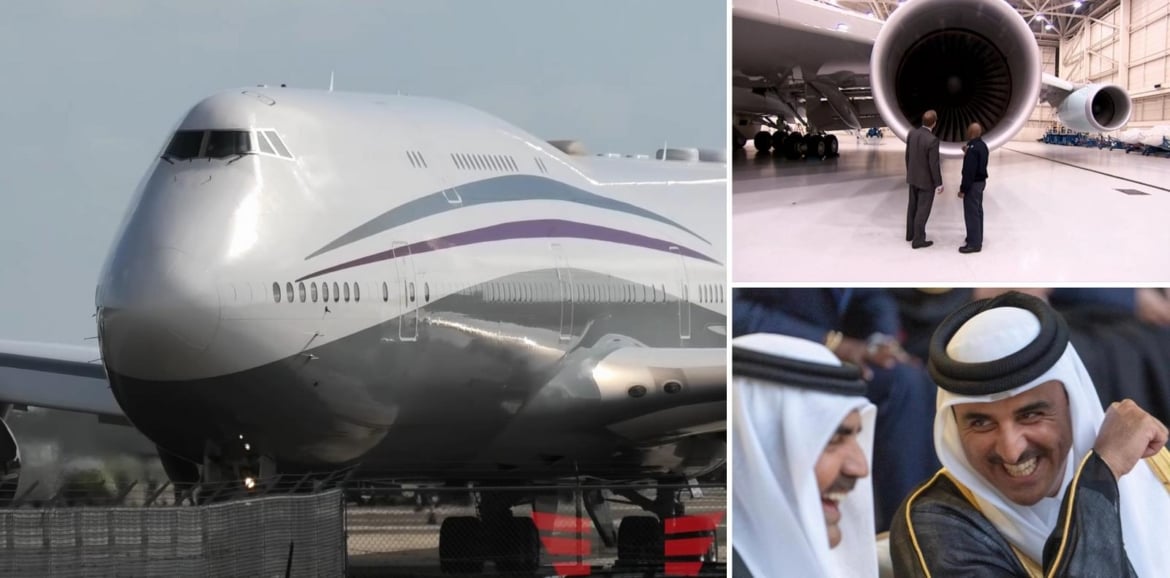
What makes the story even more interesting now is the parallel arrival of the Qatar-gifted Boeing 747-8 that has reportedly been modified to serve as the interim or bridge Air Force One aircraft while the delayed VC-25B program continues drifting toward at least 2028. Like the VC-25B, that aircraft is also based on the Boeing 747-8 platform, which means it is substantially larger than the current VC-25A fleet still flying today.

There is no official confirmation regarding where the interim aircraft will ultimately be stationed. Still, the logic is difficult to ignore. The United States Air Force has already spent hundreds of millions of dollars building a specialized facility specifically because the 747-8 platform was too large and heavy for the existing Air Force One setup. With the permanent VC-25B fleet still years away from entering service, the newly modified bridge aircraft could potentially end up using the same purpose-built infrastructure that was originally constructed for its delayed successors.

In a strange way, the hangar story explains the scale of the entire Air Force One replacement saga better than the aircraft themselves. The next presidential jets became so large that America had to redesign part of its most famous air base around them.