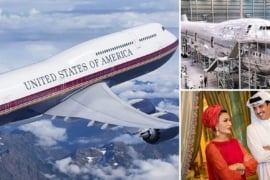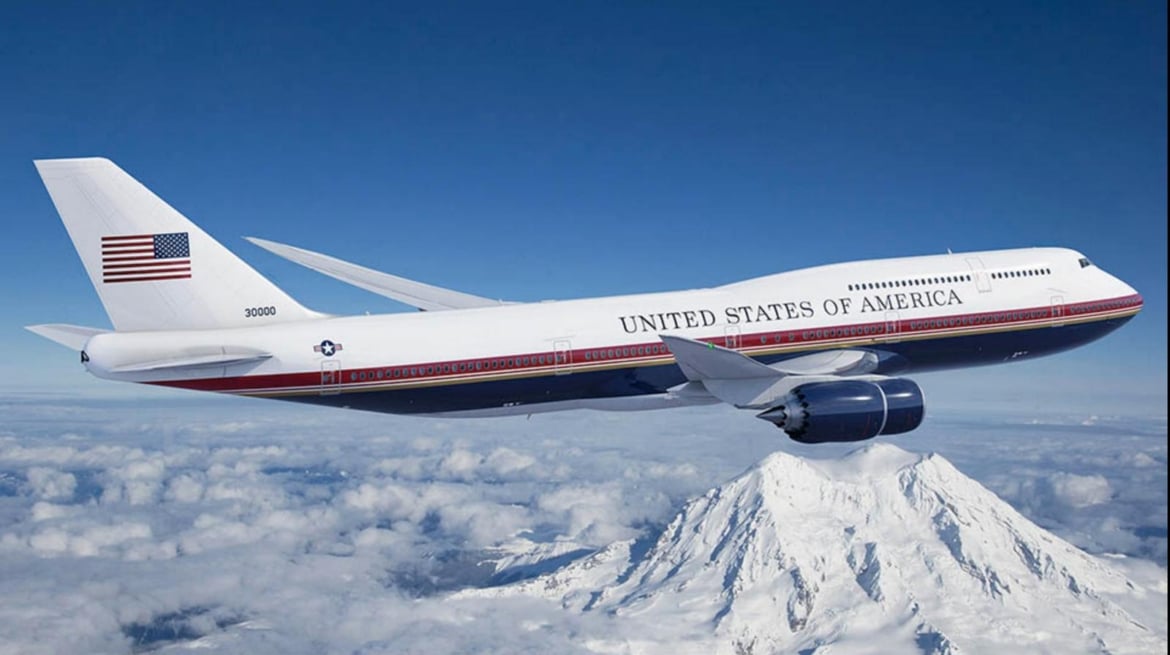
The future of Air Force One is now unfolding through two very different Boeing 747s. One is a heavily delayed next-generation presidential aircraft program that has consumed billions and slipped years behind schedule. The other is a Qatar-gifted Boeing 747 already undergoing paint work after flight testing and expected to enter service in time for America’s 250th Independence Day celebrations on July 4. Together, they have created one of the strangest transitions in modern presidential aviation, where an interim aircraft is arriving before the official replacement program is ready.

At the same moment the temporary aircraft moves closer to service, the U.S. Air Force has quietly increased spending again on Boeing’s long-troubled VC-25B program. The US Department of Defense awarded Boeing a fresh $125 million contract modification for what it described as “initial long lead spare parts” for two “fully mission capable” VC-25B aircraft, the highly modified Boeing 747-8 jets intended to become the next permanent Air Force One fleet. Importantly, this is not an order for another aircraft. It is an early sustainment and readiness purchase designed to make sure the future presidential jets actually have the parts ecosystem required to operate reliably once delivered.

The Air Force is spending more money to buy time
The wording of the contract matters because it reveals how worried the Air Force has become about future readiness gaps. Long-lead spare parts are components that can take months or even years to source, especially for a niche fleet as specialized as the VC-25B. In practical terms, the Air Force is acknowledging that waiting until the aircraft are delivered to begin building a spare-parts pipeline would be operationally reckless.

Even the funding structure shows caution. While the modification ceiling stands at $125 million, only about $41.9 million in fiscal year 2026 research, development, test, and evaluation funding was immediately obligated. This is not one giant cash injection arriving all at once. It is a phased expansion inside a much larger contract structure.

The distinction between a cost overrun and a fresh order is equally important. Technically, this looks more like an added government purchase for readiness and sustainment than a direct bailout of Boeing’s fixed-price development problems. Previous VC-25B spare-parts modifications were reportedly treated separately from the original engineering and manufacturing development effort.

Yet for taxpayers, the topline number still keeps growing. The original 2018 fixed-price agreement for the two aircraft was valued at roughly $3.9 billion, while the publicly disclosed contract value has now climbed to about $4.445 billion, representing at least a $545 million increase above the original deal.
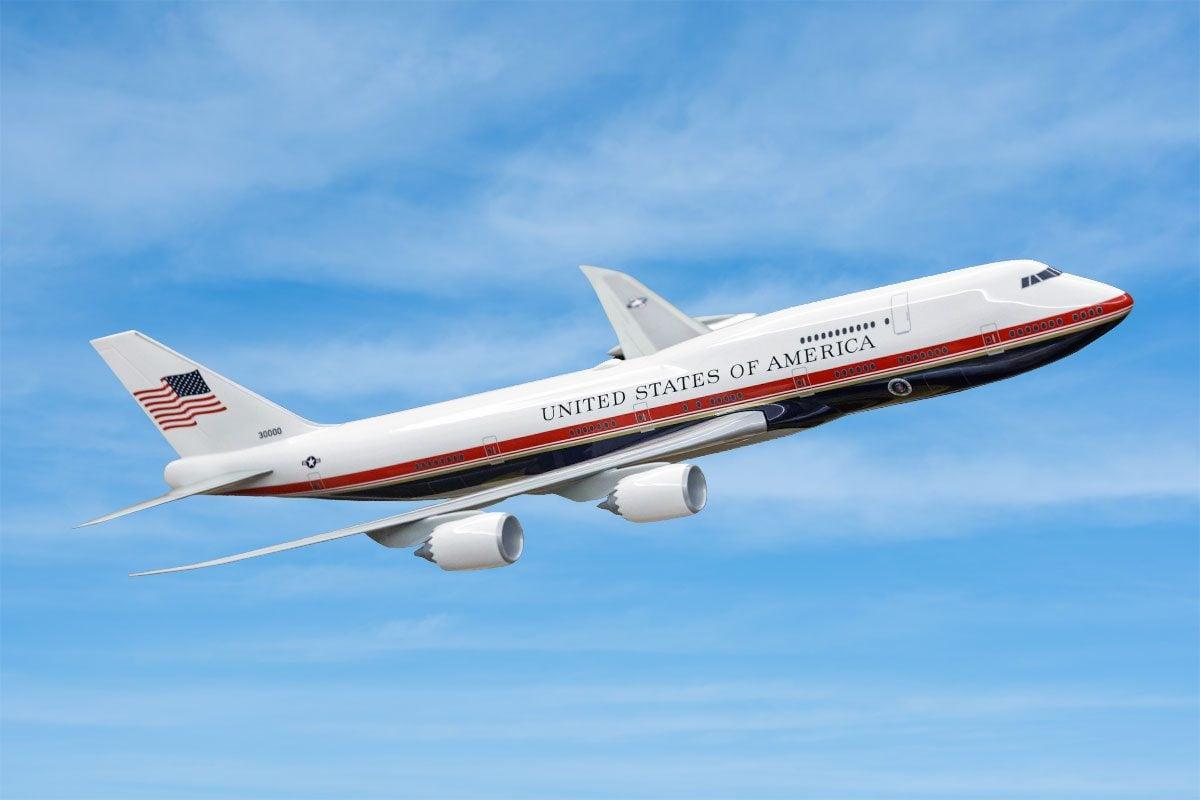
Separately, Boeing itself has absorbed enormous financial damage because the agreement was signed as a fixed-price contract. Reports have placed Boeing’s losses on the VC-25B effort at roughly $2.4 billion, while the broader program’s total cost footprint has reportedly crossed the $5 billion mark.

A presidential fleet held together by multiple 747s
The Air Force is now building the VC-25B sustainment ecosystem through several parallel strategies at once. Alongside these long-lead spare-parts contracts, budget documents for fiscal year 2027 reportedly include another $34.2 million request for fully mission-capable spares covering engines, airframe systems, readiness infrastructure, and training systems.

The service has also started assembling an unusual support network around retired Boeing 747-8 aircraft from across the world. In December 2025, the Air Force purchased two former Lufthansa Boeing 747-8i jets for roughly $400 million. One aircraft is intended for training crews and maintenance personnel, while the second is effectively becoming a donor aircraft for spare parts as the aging VC-25A fleet approaches retirement.

That strategy reveals how difficult sustaining a customized 747 fleet has become in the modern aviation industry. Boeing no longer produces the 747 commercially, suppliers have disappeared, subcontractors have gone bankrupt, inflation has reshaped manufacturing costs, and evolving security threats have repeatedly forced redesigns and requirement changes inside the VC-25B program.

Those delays are precisely why the Qatar-gifted 747 suddenly matters so much. While Boeing’s official next-generation Air Force One aircraft remain years away from service, the interim aircraft has already completed flight testing and is now moving through its paint phase before entering operational use during the July 4 celebrations marking the 250th anniversary of the United States.

For Boeing, the symbolism is impossible to ignore. The company that once defined American aviation is now watching an interim presidential aircraft reach the runway while its official Air Force One replacement program continues fighting delays, redesigns, supplier collapses, and rising costs deep into the second half of the decade.