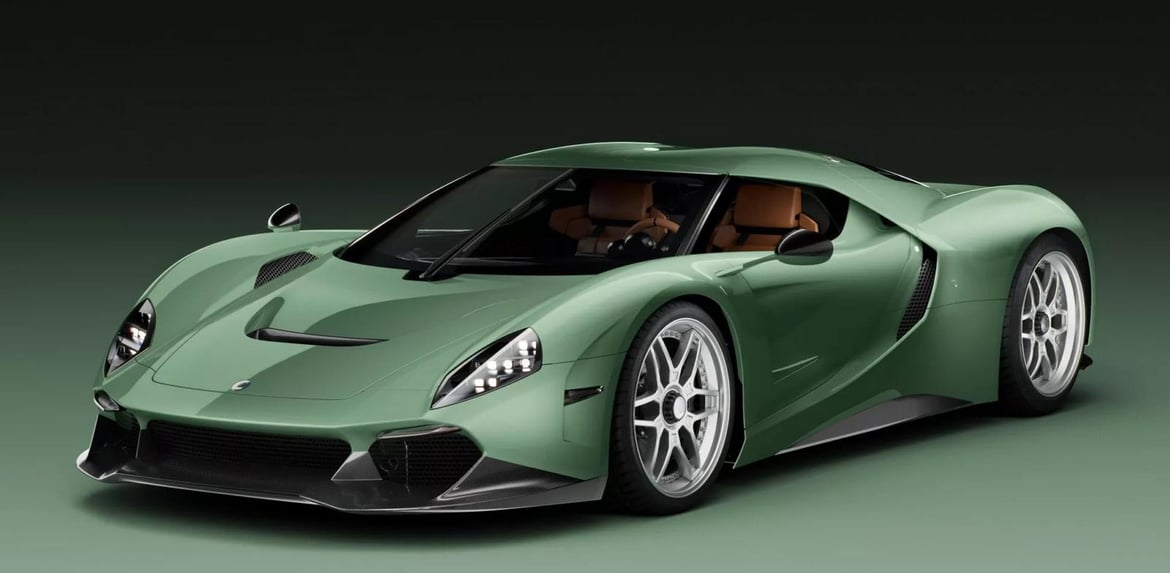
The hypercar world has become obsessed with electrification, touchscreens, and technology that distances drivers from the road. Capricorn Engineering thinks that’s precisely the wrong direction. Their new Capricorn 01 Zagato, with design by Zagato, is a rejection of those trends. It pairs a supercharged Ford V8 with a five-speed manual gearbox and absolutely no digital interference.

Capricorn will handbuild all 19 examples at its German facility, with production beginning in the first half of 2026. Each car costs $3.5 million before taxes, positioning the 01 Zagato firmly in collector territory.

Capricorn Group has been perfecting lightweight construction since 1933. The German family-run technology company supplies metallic and non-metallic lightweight components to several industries across Europe. The 01 Zagato represents Capricorn’s first complete vehicle and brings that engineering precision to every detail.

At its heart sits a heavily modified 5.2-liter Ford V8 fitted with a supercharger and completely reworked by Capricorn engineers. The intake system, exhaust, cooling, rotating assembly, and dry sump lubrication are all bespoke. The result is an engine producing over 888 horsepower and 738 pound-feet of torque while spinning to a 9,000 rpm redline, stratospheric for an American V8. All that power channels exclusively to the rear wheels through a dogleg five-speed manual transmission, the kind of mechanical connection that modern hypercars have abandoned.

That stunning bodywork comes from Zagato, the legendary Italian design house taking its first steps into hypercar territory. The Milan coachbuilder created a form that is sculptural and functional, with butterfly doors harking to some of the most beautiful cars ever built. The surfaces are pure and muscular, with a timelessness typical of Zagato designs. Buyers can specify exposed carbon fiber weave or full Connolly leather interiors, depending on their preference.

The chassis follows LMP1 racing architecture with a carbon fiber monocoque that keeps weight below 2,645 pounds dry. Capricorn rejected massive wings and aggressive aerodynamic devices in favor of body-integrated airflow management. Every surface has been sculpted to generate downforce through hollowed shapes and flowing lines rather than bolt-on components.

Inside, the cabin is strictly analog. There are no touchscreens competing for attention, no digital displays offering unnecessary information. The focus stays entirely on the mechanical connection between driver, machine, and road. It’s a deliberate choice that defines the entire project.