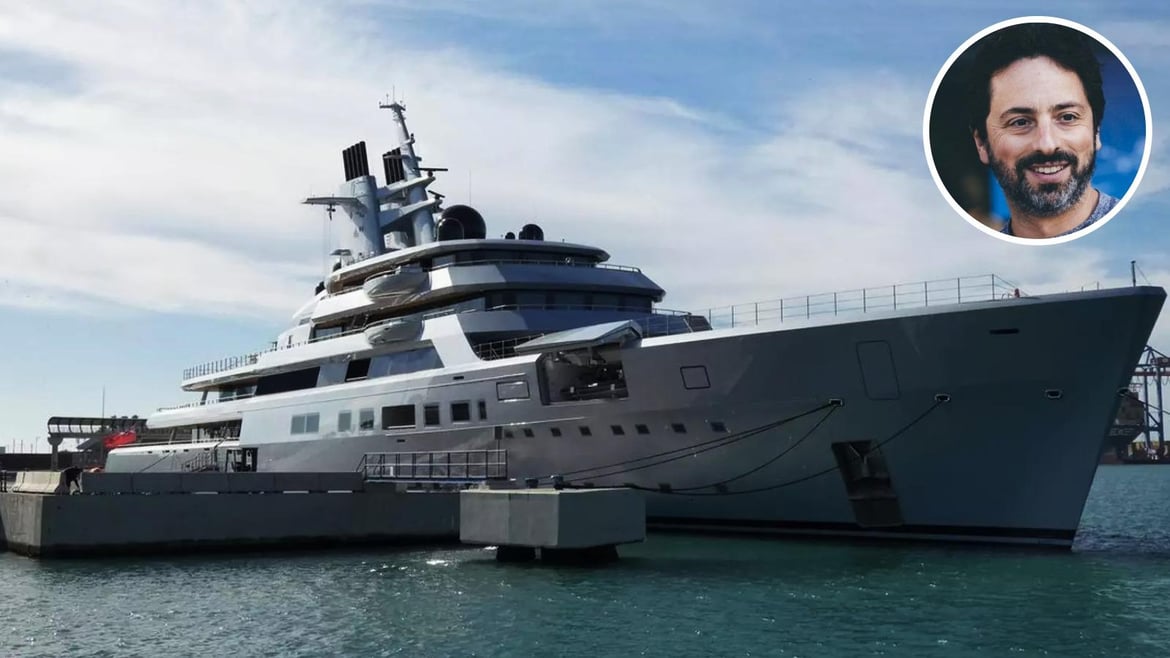
When Sergey Brin’s superyacht Dragonfly entered the Port of Málaga, it instantly became the most expensive private vessel ever to dock there. At 466 feet (142 meters) long and displacing 9,408 gross tons, this $450 million floating fortress eclipses even Walmart heiress Nancy Walton Laurie’s $300 million Kaos, both in size and operational scale. Dragonfly is a self-contained oceanic ecosystem that consumes the power of a small cruise ship, making it as much a feat of marine engineering as a symbol of modern billionaire ambition.

Built by the German shipyard Lürssen, Dragonfly’s immense volume places it in an entirely different energy class from typical superyachts. Her gross tonnage means she carries the same auxiliary systems as a compact passenger liner, from industrial-grade chillers to complex water treatment and electrical distribution systems.

Once moored, propulsion shuts down and the so-called “hotel load” takes over, powering every comfort and essential onboard function. This includes HVAC systems, lighting, galleys, laundry rooms, elevators, audiovisual systems, stabilization hydraulics, and extensive spa and pool complexes. Essentially, every system that keeps life aboard stable and luxurious draws continuously on electricity, even when the yacht sits still.

Among these, HVAC is the undisputed heavyweight. Maintaining precise temperature and humidity across dozens of interior zones requires enormous energy, especially on a vessel designed for both tropical and temperate climates. Even in Málaga’s mild November weather, humidity control remains constant, and every door opened to the sea air forces the system to recalibrate. Industry analyses consistently highlight HVAC as the single largest consumer of power aboard large yachts, surpassing lighting, galleys, and even water treatment.

Dragonfly’s multiple pools and jacuzzis add another layer of energy demand. Pool circulation and filtration pumps must run continuously, while heating cycles fight constant heat loss to ambient air and wind. Even when “idling,” these systems operate in the background to maintain water quality. Add to that the domestic hot water needs of up to 50 crew members and several guests, and the energy load mounts quickly. If the vessel’s freshwater production systems are running, desalination and purification plants add further strain, pushing the draw into the range usually reserved for boutique cruise ships.

Industry data suggests that yachts in the 120 to 150-meter range typically consume between 300 and 1,000 kilowatts at berth, depending on climate, guest activity, and hotel systems. Dragonfly, with her complex systems and vast interior volume, likely operates toward the higher end of that range. Using 700 kilowatts as a reasonable steady-state estimate, her daily electrical consumption reaches approximately 16,800 kilowatt-hours. That is roughly the same as 580 average American homes combined.

In Málaga, where marina and service markups significantly raise port electricity costs, such a draw translates to extraordinary daily expenses. The port’s published tariffs and local reporting indicate that a large yacht consuming 7,200 kilowatt-hours per day pays between €1,650 and €3,600, roughly $1,900 and $4,160, depending on the negotiated rate and energy provider. Scaling that up for Dragonfly’s estimated 16,800 kilowatt-hours per day gives a daily electricity cost of between €3,864 and €8,400, which is approximately $4,480 to $9,744 per day simply to keep the onboard systems running while docked.
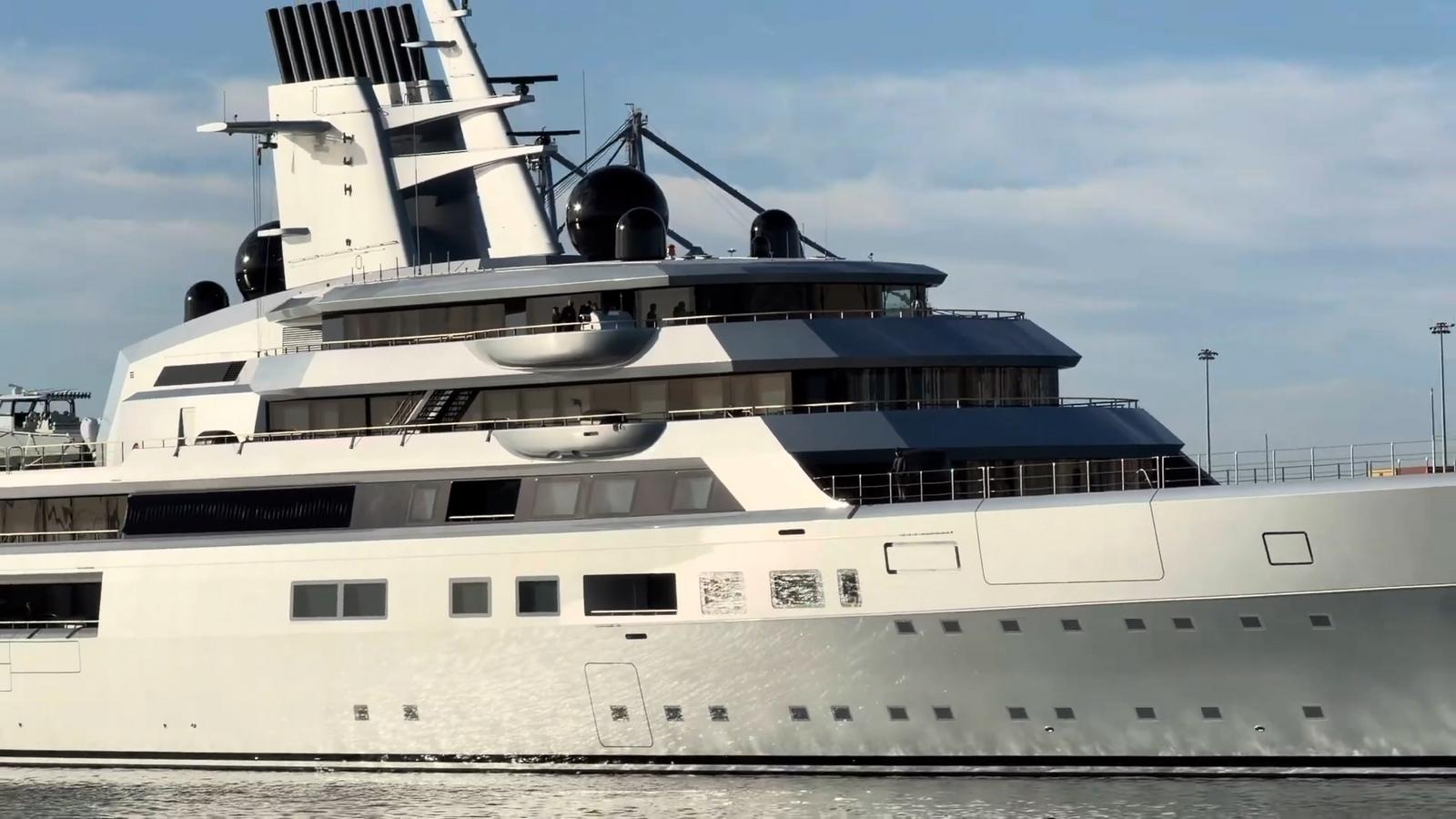
These figures do not account for maintenance, provisioning, or fuel, which together can exceed $30 million annually. Yet they highlight how Dragonfly operates closer to maritime infrastructure than private leisure. Her electrical systems, life-support hardware, and environmental management architecture belong to the domain of small cruise ships or research vessels.

In port, Dragonfly is not merely a yacht but a power-hungry micro-city tethered to shore energy. The numbers reveal how the evolution of luxury has crossed into industrial territory, where a private vessel now mirrors the complexity of a commercial ship. For Málaga, hosting Dragonfly is both an engineering showcase and a reminder that the world’s elite no longer just sail, they bring floating cities wherever they go.