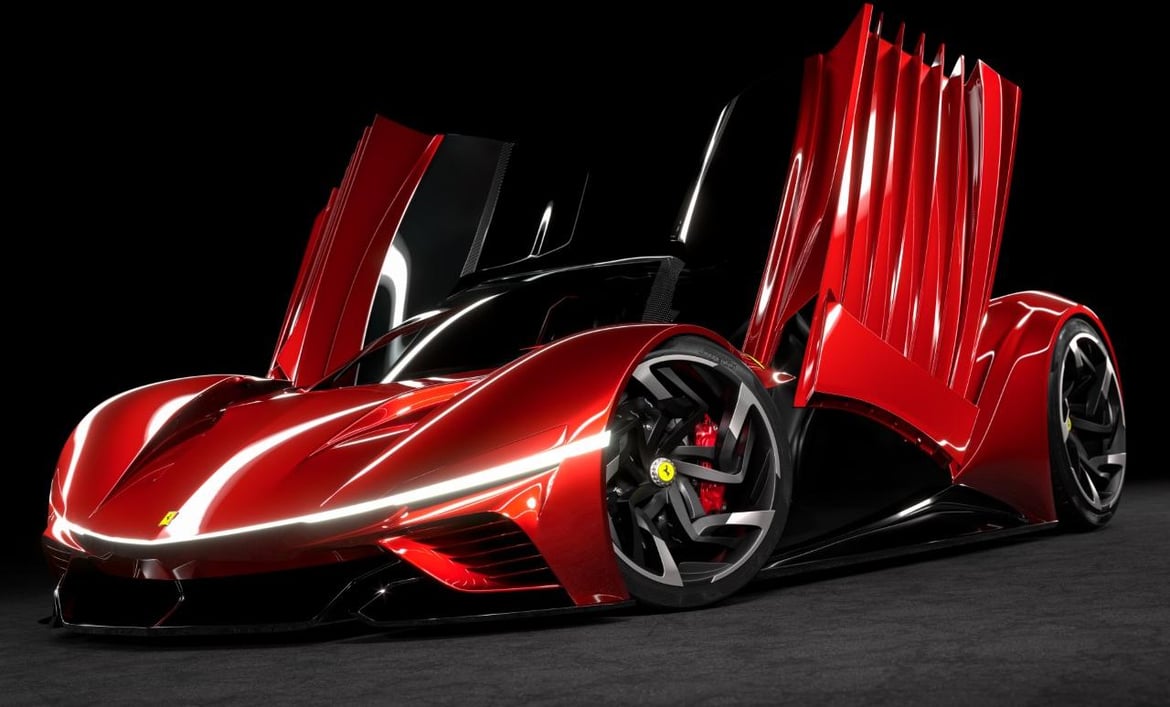
Ferrari has officially delayed the launch of its first-ever all-electric vehicle, pushing its arrival further into the future as demand for high-performance EVs among its clientele remains virtually nonexistent. Originally slated for a full reveal in the spring of 2026 following an October 2025 preview, the groundbreaking model was intended as a low-volume introduction to the electric era for Maranello.

However, internal sources have now confirmed that both the debut model and its more mainstream follow-up have been put on ice, with the latter postponed until at least 2028, as reported by Road & Track. The reason is simple: Ferrari’s traditional buyers aren’t showing interest in battery-powered supercars. And if they needed more evidence, they’ve likely been paying close attention to the lackluster market performance of the all-electric Mercedes-Benz G-Wagon.

The G580, Mercedes’ fully electric version of the iconic G-Class, was supposed to be a showcase of luxury EV capability. With a quad-motor powertrain and superior off-road potential compared to its combustion siblings, it ticked all the boxes on paper. But in reality, it’s barely making a dent.

According to a report by Inside EVs, only 1,450 units were sold through April 2025, while the gas-powered variants, including the highly desirable Mercedes-AMG G63, moved 9,700 units in the same period. For context, the G63 continues to be so popular that back in 2022, Mercedes had to stop taking new orders altogether as all build slots were spoken for until 2025. Wait times for the V8-powered G-Class have consistently ranged from six to eighteen months, underlining the disconnect between the electric offering and consumer preference.

This pattern isn’t lost on Ferrari. The failure of the G580 is a cautionary tale, highlighting the fundamental challenge of selling electric versions of luxury performance icons. Just like the G-Class, Ferrari’s identity is inextricably tied to the visceral thrill of driving, a thundering engine, razor-sharp handling, and the emotional drama of every gear shift. Replacing that with silent acceleration and a synthetic soundscape hasn’t proven appealing to the high-end buyer. Mercedes even tried to mimic the G63’s exhaust note using a system called “G-Roar,” but while that novelty may intrigue reviewers, it hasn’t moved the needle in the showroom.

Ferrari’s first EV was never meant to be a volume seller. It was envisioned as a limited-run, larger-than-usual model, neither an SUV nor a core replacement, built to serve as a symbolic first step toward electrification. However, internal discussions reportedly describe it as “atypical” and not something that fits easily within the brand’s traditional mold. The follow-up EV, which Ferrari had much bigger plans for, was expected to be the real test: a series-production model aimed at 5,000 to 6,000 units over five years. Now, that plan has been shelved due to what sources describe as “zero” real demand.

What’s more telling is that Ferrari’s competitors are experiencing similar resistance. Porsche has slowed its rollout of new electric models, Lamborghini has postponed its first EV to 2029, and Maserati has scrapped its planned electric MC20 entirely. The overall sentiment among luxury buyers is clear: they aren’t quite ready to let go of internal combustion—not when sound, soul, and sensation still carry more weight than sustainability. Ferrari, ever sensitive to brand image and customer expectations, seems to have chosen pragmatism over pressure. Unlike Lamborghini, which previewed its Lanzador concept nearly five years ahead of its launch, Ferrari is opting for secrecy and caution, aware that the first impression of an EV could have long-term consequences.

The delay, while frustrating to some, gives Ferrari more time to refine its EV platform, explore battery innovations, and perhaps most importantly, gauge whether the market will evolve. For now, it seems that electrification in the ultra-luxury space remains a theoretical exercise rather than a practical necessity. And with examples like the G580 gathering dust in showrooms while the roar of the G63 still commands a premium, Ferrari’s restraint might be its smartest move yet.

Luxury EV Market Struggling
The high-end EV segment is currently in flux. While mainstream electric vehicles gain ground, luxury brands face resistance from buyers who value tradition over transition. The emotional engagement offered by V8s and V12s hasn’t been replicated by silent drivetrains and synthetic audio enhancements. As a result, even well-engineered EVs like the G580 are struggling to justify their existence. Until technology can match or exceed the drama and experience of combustion engines, brands like Ferrari may continue to proceed with extreme caution in the electric space.